Two products can mention the same appetite pathway and still do very different things. That is the problem with reading “GLP-1 support” as though it were a single, well-defined benefit.
OEA, or oleoylethanolamide, is a lipid involved in satiety signaling. Researchers have studied how it interacts with pathways that include PPAR-alpha and, in laboratory models, GLP-1 secretion. OEA is not a GLP-1 medication, and those mechanisms do not establish that an OEA supplement produces medication-like effects in people.¹˒²
The science is interesting enough without making that leap. Understanding it helps you ask much better questions about appetite supplements.
OEA and GLP-1 are different molecules
OEA is a lipid, a type of fat-derived molecule. GLP-1 is a peptide hormone. Both appear in discussions of appetite, but they are not interchangeable signals.
One way to think about the distinction is to separate the signal, the receptor that detects it and the outcome you care about. A substance may influence one part of a signaling network without reproducing the effects of a medicine acting elsewhere in that network.
Our OEA ingredient guide covers the broader background. This article focuses on the GLP-1 connection and the gap between a plausible mechanism and a demonstrated benefit.
The PPAR-alpha finding: an important starting point
Early research showed that OEA activates PPAR-alpha, a receptor involved in aspects of lipid metabolism. In experiments with mice, OEA's effects on feeding depended on the presence of that receptor.¹
This helped explain a possible route through which OEA influences satiety. It was mechanistic work, not evidence that a person taking an OEA capsule would experience a particular amount of appetite reduction or weight loss.
That distinction is not a weakness in the research. Different study designs answer different questions. The problem comes when marketing presents an early mechanistic result as though the final consumer outcome has already been established.
Where GLP-1 enters the picture
A 2009 study investigated OEA and the receptor GPR119 in intestinal L-cell models and rats. The researchers found that OEA could stimulate GLP-1 secretion through a GPR119-dependent process in those experimental settings.²
Some of the cells were derived from a human cell line. That still does not make the experiment a clinical trial in people. Cells in a laboratory do not reproduce everything that happens when someone swallows a supplement, digests it and uses it over time.
The result supports further investigation. It does not establish an oral dose that boosts GLP-1 by a clinically useful amount in everyday consumers, and it does not demonstrate equivalence to a prescription drug.
What human OEA research adds
Human studies can move the discussion closer to practical use, but study details still matter.
A 2018 randomized, double-blind trial enrolled 60 adults with obesity and compared OEA with placebo over 60 days. The OEA group received 250 mg daily. The researchers reported changes in appetite-related measures and anthropometric outcomes; 56 participants completed the study.³
It was a small trial of OEA, not a trial of every OEA-containing supplement. It was also not a comparison with semaglutide or a study designed to establish benefits after GLP-1 treatment ends.
When you read a supplement claim, ask whether it preserves those details. “Studied for appetite” is a different statement from “replaces a weight-loss medication.”
Why the finished formula matters
A product containing OEA may also contain several other ingredients at different amounts. Research on one component cannot automatically establish the performance of that combination.
Finished-formula research answers a more directly relevant question: what happened when people took the product as a whole? Even then, the design and population determine what can reasonably be concluded.
Testing a combination also does not, by itself, prove that the ingredients are synergistic. Demonstrating that the combined effect exceeds individual effects requires the right comparisons. This is a useful distinction when a product's story moves from “studied together” to “works better together.”
What Mimio's formula study found
Mimio's published randomized, placebo-controlled trial evaluated its complete formula for eight weeks in 42 older adults with overweight and elevated HbA1c. Twenty-three received Mimio and 19 received placebo.⁴
One reported result was improvement in mealtime appetite ratings in 91% of the Mimio group versus 47% of the placebo group. That describes the proportion of participants whose ratings improved, not a 91% reduction in hunger.⁴
The study was small, short and funded by Mimio Health. It provides product-specific appetite evidence in the population studied; it does not establish medication-equivalent weight loss, muscle preservation or prevention of regain after stopping a GLP-1.⁴
You can review Mimio's research alongside the published paper. Seeing the outcome, the comparison group and the limitation together is more informative than a percentage on its own.
What is in the current Mimio formula?
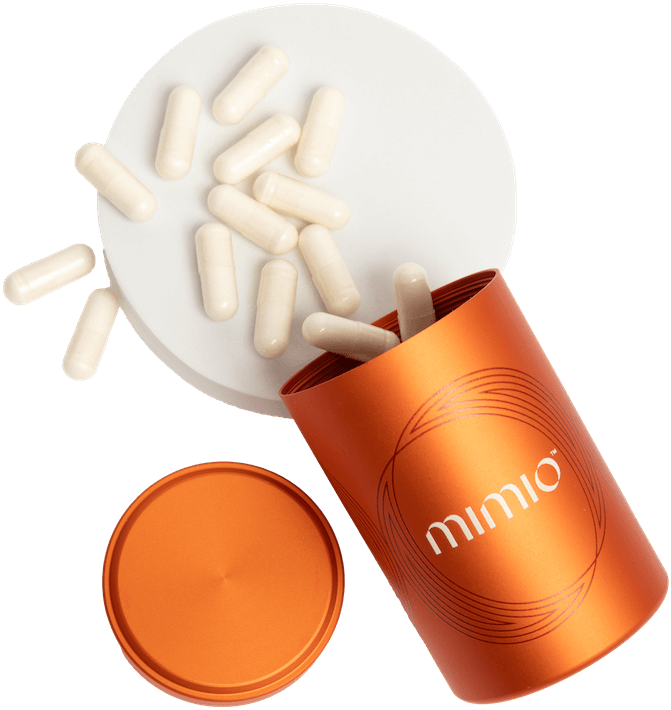
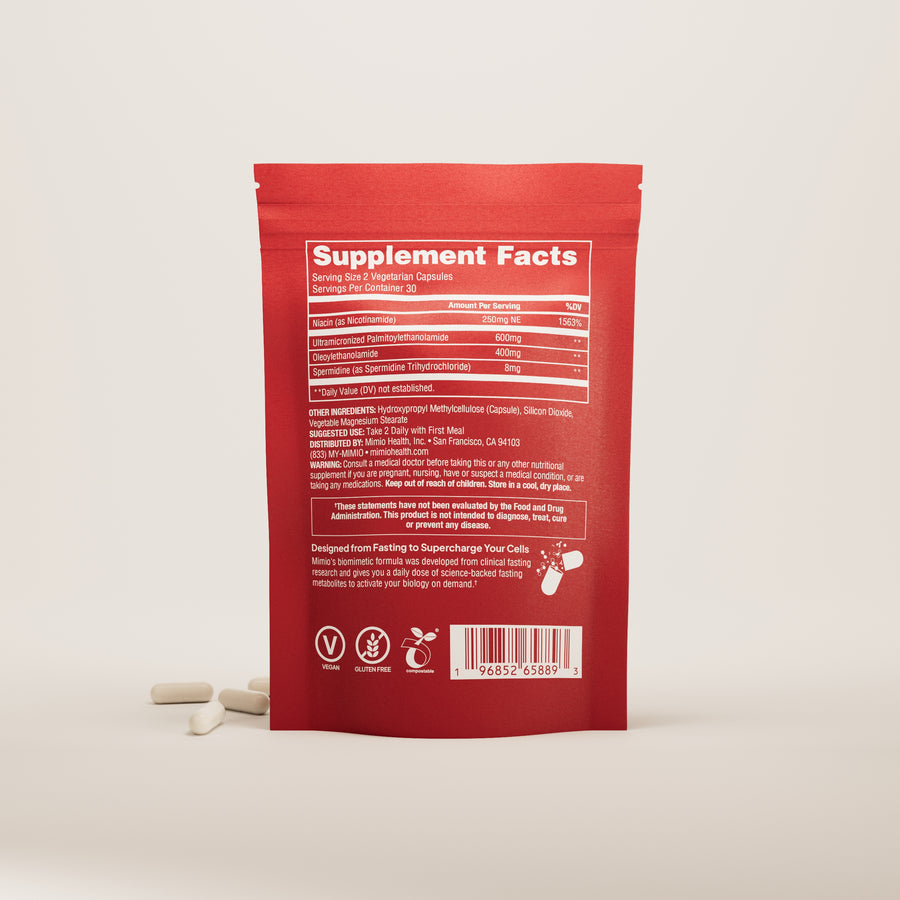
The product label lists four main ingredients per two-capsule serving:
- Oleoylethanolamide: 400 mg.
- Ultra-micronized palmitoylethanolamide: 600 mg.
- Nicotinamide: 250 mg.
- Spermidine: 8 mg.
Those amounts describe the current product, not a recommendation to combine the ingredients yourself. The OEA amount also differs from the dose in the individual-ingredient trial described above. That is one reason ingredient and finished-formula evidence should remain distinguishable.
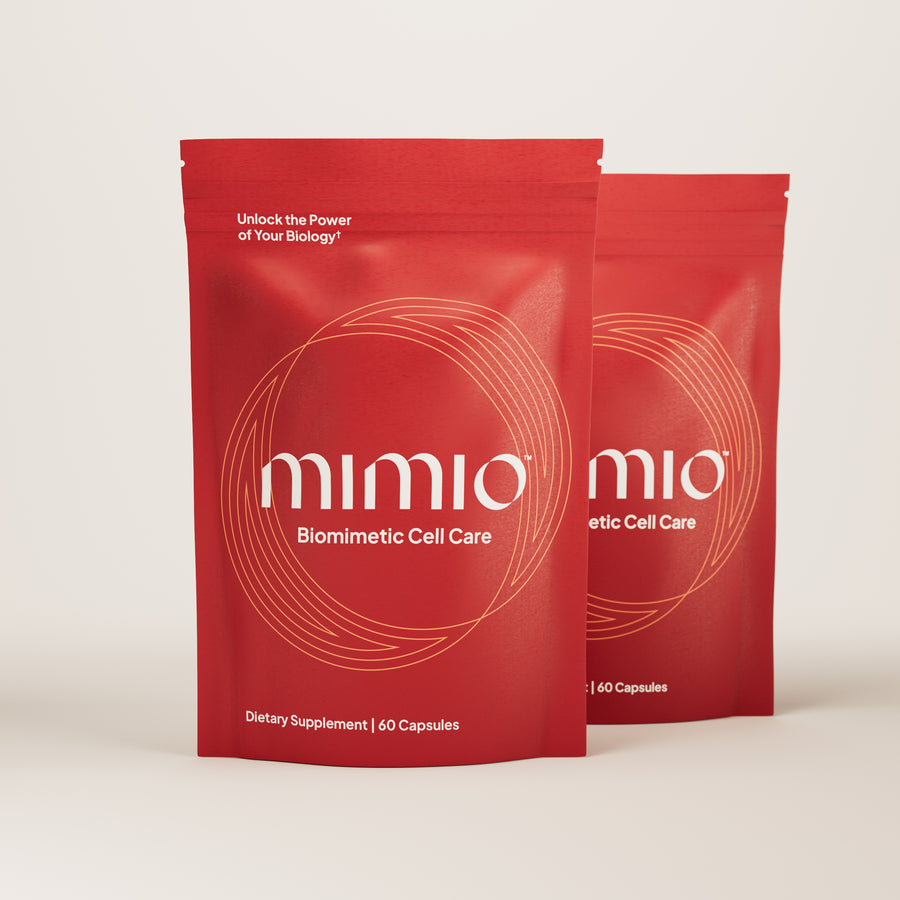
For the current label, directions and purchasing options, see Mimio Biomimetic Cell Care.
Three claims worth reading carefully
“Boosts GLP-1”
Ask where the effect was measured. Was it in cells, animals or people? Was the study testing the exact product and dose? Did the change lead to a meaningful outcome for participants?
“Clinically studied”
Find the study. Look for the number of participants, duration, comparison group and what researchers measured. The phrase may refer to an ingredient rather than the formula you are considering.
“Works like a GLP-1”
Ask what “like” means. Similar language about appetite does not establish similar efficacy, safety, dosing or medical indications. A direct comparison would need appropriate clinical evidence.
A responsible product explanation should make these distinctions easier to understand, not leave you to infer them from a row of citations.
If you already take a GLP-1 medication
Do not assume that adding another appetite-related product will improve your result. If you are having trouble eating enough, reducing appetite further may be an unhelpful goal.
Show your clinician or pharmacist the ingredient list and explain what you hope to change. The relevant question is whether the product fits your situation and other medicines. Mimio's trial was not designed to establish the safety or effectiveness of pairing the formula with GLP-1 treatment.
If your main concern is a side effect, weight change or returning hunger after stopping medication, start with the prescribing team. Supplement research cannot resolve a medication-management question by itself.
Frequently asked questions
Is OEA a natural GLP-1?
No. OEA and GLP-1 are different molecules. OEA has been studied for interactions with appetite-related pathways, including GLP-1 secretion in preclinical models, but it is not the hormone or a prescription GLP-1 receptor agonist.
Does OEA increase GLP-1 in humans?
The cell and animal study described here does not establish a clinically meaningful increase from an oral supplement in people. Human appetite findings should not be recast as proof of that specific mechanism without measuring it appropriately.
Does Mimio's research prove it works after semaglutide?
No. Its finished-formula study addressed a different population and question. Preventing regain or controlling rebound appetite after medication withdrawal would require directly relevant research.
Why does Mimio include more than OEA?
Mimio is formulated around several compounds connected with fasting biology. Evaluate the complete formula and its research as well as the evidence for each ingredient. Neither type of evidence should silently stand in for the other.
The strongest reason to understand this science is practical: it helps you choose a product for what has actually been studied. That is a much firmer basis for a decision than a familiar hormone name on a label.
Educational information only. Discuss dietary supplements with a qualified clinician, particularly when using prescription medication.
Related reading
References
- Fu J, Gaetani S, Oveisi F, et al. Oleylethanolamide regulates feeding and body weight through activation of the nuclear receptor PPAR-alpha. Nature. 2003;425:90-93. doi:10.1038/nature01921.
- Lauffer LM, Iakoubov R, Brubaker PL. GPR119 is essential for oleoylethanolamide-induced glucagon-like peptide-1 secretion from the intestinal enteroendocrine L-cell. Diabetes. 2009;58(5):1058-1066. doi:10.2337/db08-1237.
- Laleh P, Yaser K, Abolfazl B, et al. Oleoylethanolamide increases the expression of PPAR-Α and reduces appetite and body weight in obese people: A clinical trial. Appetite. 2018;128:44-49. doi:10.1016/j.appet.2018.05.129.
- Grant AD, Erfe MCB, Kazaryan A, et al. A novel fasting mimetic (Mimio) creates fasting-like benefits to hunger control, oxidative stress, and cardiometabolic health in humans. Sci Rep. 2026;16:7812. doi:10.1038/s41598-026-38495-7.