If you have been reading about fasting-related supplements, you have probably seen two molecules with almost identical names show up side by side: PEA and OEA. They look like typos of each other, they belong to the same chemical family, and they are closely related to the signaling your body uses to manage energy and inflammation. So it is fair to ask whether the difference actually matters, or whether the two letters are marketing noise.
The difference is real, and it is useful. PEA and OEA are both fatty acid ethanolamides that activate the same master receptor, PPAR-alpha, but they specialize in different jobs: PEA centers around inflammation control and cellular protection, while OEA supports appetite regulation and fat metabolism. Think of them as two members of the same sports team who play different positions.
Here is how they compare, when each one matters, and why a formula built to mimic fasting (or a supplement like Mimio’s Biomimetic Cell Care) uses both rather than picking one.
The quick answer
|
PEA (palmitoylethanolamide) |
OEA (oleoylethanolamide) |
|
|---|---|---|
|
Family |
Fatty acid ethanolamide |
Fatty acid ethanolamide |
|
Built from |
Palmitic acid + ethanolamine |
Oleic acid + ethanolamine |
|
Primary receptor |
PPAR-alpha1 |
PPAR-alpha2 |
|
Specializes in |
Inflammation and discomfort signaling, immune balance, cellular protection |
Appetite regulation, satiety, fat metabolism |
|
Best known for |
The body's built-in "keep inflammation proportionate" signal |
The "you feel satisfied and stop eating" signal |
|
Made by the body |
Yes, on demand |
Yes, on demand |
Both are things your body already produces. Neither is a foreign compound. That shared foundation is why they tend to be discussed and used together.
What they have in common
PEA and OEA are siblings in a class of molecules called fatty acid ethanolamides, sometimes called lipid mediators because they carry signals between cells using fat-based chemistry. They share two important traits.
They both act through PPAR-alpha. This is the key overlap. PPAR-alpha is a cellular receptor that helps regulate inflammation and energy metabolism, and it is one of the same pathways the body engages during fasting. PEA activates it as an anti-inflammatory signal,1 and OEA activates it as a satiety and fat-metabolism signal.2 That shared receptor is why both are considered fasting-associated signaling compounds rather than ordinary supplements.
They are both made on demand. Your cells produce these molecules in response to need, not on a constant drip. Supplementing is less about introducing something new and more about reinforcing a signal the body already uses. Both also sit within the PPAR-alpha signaling the body relies on during a fast, which is the link to the broader science of fasting benefits in a pill.
Where they differ
This is the part worth understanding, because the specialization is what determines which molecule is relevant to a given goal.
PEA is the protection and inflammation specialist. Palmitoylethanolamide is the molecule your body ramps up in tissues that are stressed or inflamed, as a way of keeping the inflammatory response proportionate.1 It also supports your endocannabinoid system and helps keep immune-type cells measured.4 Its research base is strongest around inflammatory and discomfort signaling. If you want the full mechanism and research detail, see the complete guide to palmitoylethanolamide (PEA).
OEA is the appetite and metabolism specialist. Oleoylethanolamide is the molecule most associated with the feeling of satiety. It is released in the gut in response to dietary fat and signals to the brain that you are satisfied, while also supporting fat metabolism.2 Human research on OEA supplementation has focused on appetite and weight management.5 For the deeper breakdown, see the complete guide to oleoylethanolamide (OEA).
So when people ask "PEA vs OEA, which is better," the honest answer is that it depends entirely on what you are trying to support. They are not competing for the same job. And sometimes, they are best paired together.
Which one do you need?
|
Your goal |
The more relevant molecule |
|---|---|
|
Inflammation, recovery, cellular protection |
PEA |
|
Appetite regulation, satiety, fat metabolism |
OEA |
|
Broad cellular and longevity benefits of fasting |
Both (the combination reflects what the body does during a fast) |
That last row is the one most single-ingredient products gloss over, so it is worth sitting with.
Why a fasting formula uses both
During a real fast, your body does not rely on a single signaling lipid. It shifts a coordinated set of metabolites and pathways at once, including PPAR-alpha signaling, alongside changes in autophagy, NAD+ metabolism, and AMPK activity. The benefits of fasting come from that orchestra playing together, not from any single instrument.
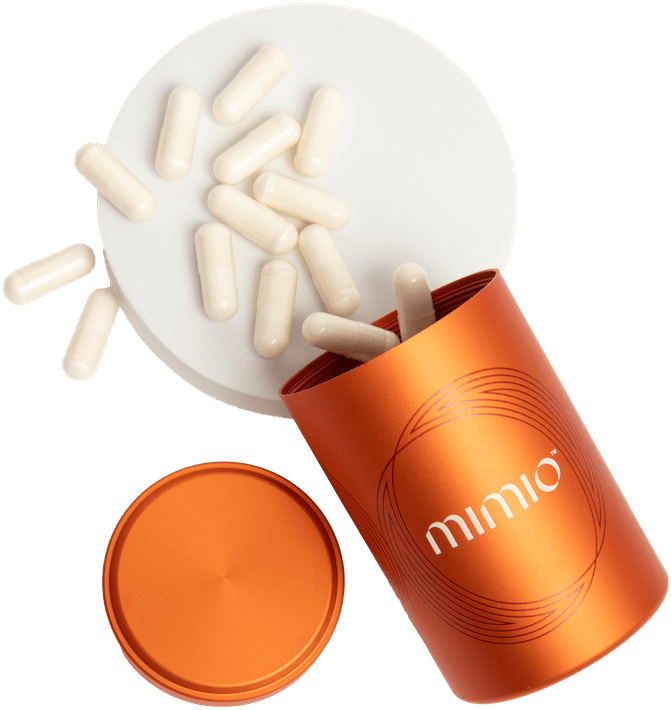
This is the reasoning behind a systems approach to fasting-mimetic supplementation. Rather than isolating one fatty acid ethanolamide, Mimio Biomimetic Cell Care was built around the broader metabolic signature the body produces during a 36-hour fast, using a system of biomimetic metabolites that includes both PEA and OEA. The intent is to recreate the signaling environment of a fast more completely than activating one pathway in isolation can. The research behind the formulation is published on the Mimio science page.
The honest framing: if you have a single, specific goal, a single-ingredient PEA or OEA product is a reasonable and well-researched choice. If your goal is the fuller set of cellular and metabolic benefits associated with fasting, the value is in the combination.
The bottom line
PEA and OEA are not interchangeable, and they are not rivals. They are two specialized members of the same molecular family. PEA handles inflammation and cellular protection. OEA handles satiety and fat metabolism. Both work through PPAR-alpha, and both are most useful as part of the coordinated fasting response rather than in isolation. Knowing which one maps to your goal is what turns two confusing acronyms into a useful decision.
Frequently asked questions about PEA vs OEA
What is the difference between PEA and OEA?
PEA and OEA are both fatty acid ethanolamides that act through PPAR-alpha. PEA leans toward inflammatory and discomfort signaling and cellular protection, while OEA leans toward appetite regulation, satiety, and fat metabolism. They are complementary, which is why they often appear together in fasting-mimetic formulas.
Are PEA and OEA the same thing?
No. They are closely related molecules in the same chemical family, built from different fatty acids (palmitic acid for PEA, oleic acid for OEA), and they specialize in different functions. They share the same primary receptor but do different jobs.
Can you take PEA and OEA together?
Yes. Because both are compounds the body produces naturally, they are commonly used together, and a fasting-mimetic approach is built on the idea that the combination better reflects what the body does during a fast. Check with your healthcare provider before starting any new supplement if you take medication or manage a health condition.
Which is better for weight management, PEA or OEA?
OEA is the molecule more directly associated with satiety and fat metabolism, and it is the one studied for appetite and weight management in humans. That said, no fatty acid ethanolamide is a weight-loss drug, and the honest framing is appetite and metabolic support, not rapid weight loss.
These statements have not been evaluated by the Food and Drug Administration. This product is not intended to diagnose, treat, cure, or prevent any disease.
References
-
Lo Verme J, Fu J, Astarita G, et al. The nuclear receptor peroxisome proliferator-activated receptor-alpha mediates the anti-inflammatory actions of palmitoylethanolamide. Mol Pharmacol. 2005;67(1):15-19. https://pubmed.ncbi.nlm.nih.gov/15465922/
-
Fu J, Gaetani S, Oveisi F, et al. Oleoylethanolamide regulates feeding and body weight through activation of the nuclear receptor PPAR-alpha. Nature. 2003;425(6953):90-93. https://pubmed.ncbi.nlm.nih.gov/12955147/
-
Rodríguez de Fonseca F, Navarro M, Gómez R, et al. An anorexic lipid mediator regulated by feeding. Nature. 2001;414(6860):209-212. https://pubmed.ncbi.nlm.nih.gov/11700558/
-
Facci L, Dal Toso R, Romanello S, et al. Mast cells express a peripheral cannabinoid receptor with differential sensitivity to anandamide and palmitoylethanolamide. Proc Natl Acad Sci USA. 1995;92(8):3376-3380. https://pubmed.ncbi.nlm.nih.gov/7724569/
-
Tutunchi H, Saghafi-Asl M, Ostadrahimi A. A systematic review of the effects of oleoylethanolamide, a high-affinity endogenous ligand of PPAR-alpha, on the management and prevention of obesity. Clin Exp Pharmacol Physiol. 2020;47(4):543-552. https://pubmed.ncbi.nlm.nih.gov/31868943/