The healthy aging supplements with the clearest evidence are usually the least glamorous. Protein helps older adults meet muscle-supporting intake. Creatine improves strength and lean mass when paired with resistance training. Vitamin D and B12 matter when status is genuinely inadequate. Omega-3 findings are promising but modest, and multivitamins may offer a small cognitive benefit.
Meanwhile the exciting end of the shelf, the compounds marketed as age reversal, is where the evidence thins out fastest.
The short version: no supplement has been proven to stop aging or extend human lifespan. The strongest healthy aging supplements are the ones with a narrow, verifiable job: protein and creatine for muscle, vitamin D and B12 for correcting deficiency, omega-3 and multivitamins for modest and specific effects. NAD+ boosters, spermidine, resveratrol, and senolytics are active research areas, not proven interventions. The useful question is never "does this work," it's "what exactly does the research show it does, and in whom."
What "works" actually means
A supplement can work in at least four different ways, and conflating them is how the category earned its reputation.
- It corrects a deficiency. B12 prevents real problems caused by low B12. That does not make high-dose B12 a longevity therapy for someone whose levels are already fine.
- It supports a functional outcome. Creatine plus resistance training improves strength and lean mass. Those results matter to healthspan even if no trial measured lifespan.
- It changes a biomarker. Raising NAD+ or shifting a methylation clock is interesting. A biomarker is not automatically better mobility, fewer diseases, or more years.
- It makes someone feel different. That can matter, but it's the outcome most vulnerable to placebo and the weakest proof of a biological claim.
This guide ranks by human outcomes and practical relevance rather than converting every statistically significant lab value into an anti-aging promise.
The evidence table
|
Supplement |
Best-supported healthy aging role |
Evidence in people |
What it does not prove |
|---|---|---|---|
|
Protein powder |
Closes an intake gap, supports muscle protein synthesis |
Strong when it helps achieve adequate protein, especially alongside resistance exercise¹ ² |
That more is always better, or that powder itself extends life |
|
Creatine monohydrate |
Improves strength and lean mass gains with resistance training |
Multiple trials and meta-analyses, including in older adults³ |
That it reverses aging or works without training |
|
Vitamin D |
Corrects deficiency, supports bone and mineral physiology |
Strong for deficiency; broad prevention results are mixed and high doses can harm⁴ |
That routine high-dose use prevents falls, cancer, or heart disease in everyone |
|
Vitamin B12 |
Corrects or prevents deficiency with low intake or impaired absorption |
Strong for deficiency and defined risk groups⁵ |
That extra B12 creates energy when status is already adequate |
|
Omega-3 |
Supports specific cardiovascular indications; small effects on some aging clocks |
A three-year older-adult trial found small post hoc clock changes⁶ |
That one gram daily adds years of life |
|
Daily multivitamin |
May modestly support cognition in some older adults |
Large randomized COSMOS analyses found a small cognitive benefit⁷ |
That it prevents dementia or replaces a varied diet |
|
Mimio fasting mimetic |
Supports appetite, digestive, glucose, lipid, and oxidized-LDL outcomes |
One eight-week randomized placebo-controlled trial of the finished formula⁸ |
Longer life, younger biological age, or athletic performance |
|
NR or NMN |
Raises NAD+-related metabolites |
Consistent biomarker changes, mixed clinical outcomes⁹ ¹⁰ |
That higher NAD+ automatically improves healthspan |
|
Spermidine |
Biologically plausible, under active study |
Early trials; a 12-month cognition trial missed its primary endpoint¹¹ |
Proven cognitive protection or longer life |
|
Resveratrol |
Mechanistic and metabolic research |
Mixed human evidence, limited long-term outcome data¹² |
A red-wine shortcut to longevity |
|
Senolytics |
Experimental clearance of senescent cells |
Small early trials; phase 2 has not established routine benefit¹³ ¹⁴ |
That over-the-counter fisetin is a proven anti-aging protocol |
Tier 1: Support muscle, the most actionable healthspan target
Muscle is not cosmetic retirement planning. Strength underwrites walking speed, balance, glucose disposal, independence, and the ability to recover from illness or a week in bed. Resistance training is the signal. Protein and creatine help the body answer it.
Protein: useful when it solves an actual gap
Older adults generally need a stronger protein signal per meal than younger adults. Expert consensus commonly puts healthy older adults at roughly 1.0 to 1.2 grams per kilogram of body weight daily, with higher needs in active or recovering people and individualized guidance for kidney disease.¹
A protein supplement is simply convenient food. Whey, casein, soy, or pea blends help when appetite, travel, dental issues, or schedule make meals inconsistent. Powder is not superior to adequate food by default.
What to look for: a meaningful dose per serving, a complete amino acid profile, few ingredients you don't need, and independent lot testing.
Creatine: among the best-supported additions to training
Creatine monohydrate helps regenerate cellular energy during short, demanding efforts. In older adults doing resistance training, meta-analysis found greater gains in lean tissue and strength with creatine than with training alone.³
The operative phrase is with resistance training. Creatine doesn't substitute for lifting, and the scale may rise because muscle holds more water. That's expected physiology, not fat gain.
Plain creatine monohydrate has the deepest evidence base. Novel forms mostly add cost. People with kidney disease or complex medication lists should ask a clinician first.
Tier 2: Correct deficiencies and match the supplement to the person
The closer a supplement sits to solving a measured problem, the stronger its case.
Vitamin D: treat low status, not the fear of aging
Vitamin D is essential for calcium metabolism and bone health. Low sun exposure, limited intake, malabsorption, darker skin, and certain conditions raise the risk of inadequate status. A blood test plus clinical context should guide treatment.
Routine megadosing is not a healthy aging strategy. Large prevention trials have not shown universal reductions in chronic disease, falls, or fractures among already-sufficient adults, and excess vitamin D can cause high calcium and kidney problems.⁴
Vitamin B12: especially relevant when absorption declines
B12 deficiency affects blood cells and the nervous system. Risk climbs with strict vegan diets, pernicious anemia, gastrointestinal surgery or disease, and long-term metformin or acid-suppressant use. Older adults also absorb food-bound B12 less efficiently.⁵
Supplementation is highly effective when it corrects inadequate status. It is not a general energy booster when levels are already normal.
Magnesium and the other basics
Magnesium is essential and inadequate intake deserves attention. But "essential nutrient" does not mean "proven anti-aging supplement." Use diet, symptoms, medications, and where appropriate lab testing to establish a reason. Some forms cause diarrhea and magnesium can impair absorption of certain medicines.
The same logic governs iron, calcium, and folate: valuable when indicated, useless or harmful when taken blindly.
Tier 3: Promising and Proven
Omega-3: real aging data, but keep the magnitude in view
Omega-3 fatty acids have established nutritional roles and specific clinical uses. The aging question is less settled.
In a post hoc analysis of 777 adults from the three-year DO-HEALTH trial, one gram daily produced small changes across several DNA methylation aging clocks. The estimated effect was measured in months, varied by clock, and was sometimes additive with vitamin D and home exercise.⁶
That's credible and genuinely interesting. It is not evidence that a fish oil capsule extends life or prevents disability. Anyone on anticoagulants, preparing for surgery, or considering high doses should involve a clinician.
Multivitamins: a small cognitive signal
Randomized COSMOS studies in older adults found a modest benefit from daily multivitamin use on global cognition and some memory outcomes.⁷ It is not a dementia treatment and it does not establish that everyone needs one.
The reasonable use case is nutritional insurance for a predictably incomplete diet, not permission to stop eating plants, protein, and fiber.
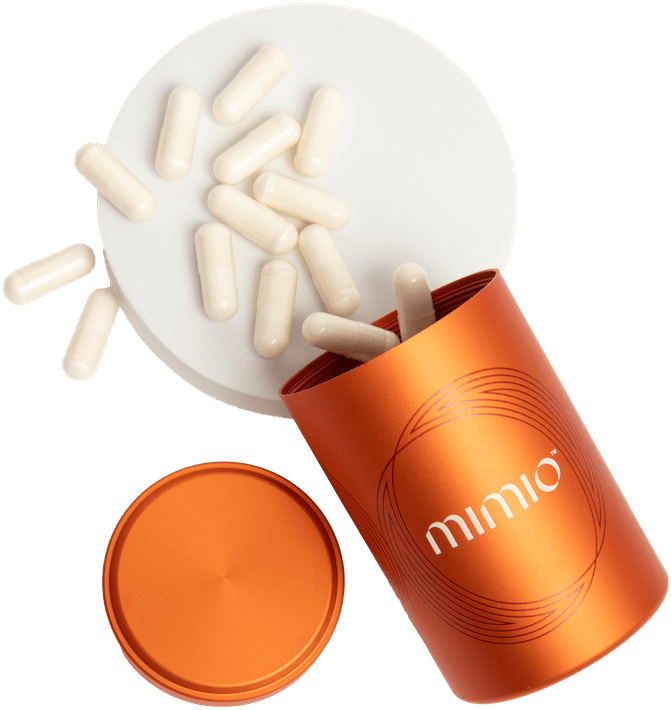
Mimio: product-specific human data with a product-specific job
Most supplements in the longevity aisle are sold on the strength of ingredient research: a study on one compound, in isolation, often in cells or mice. Mimio was tested the other way around.
The formula combines nicotinamide, PEA, OEA, and spermidine at doses derived from research into the molecules that rise during a 36-hour human fast. The finished product, not the ingredient list, went into a randomized, double-blind, placebo-controlled trial.⁸
That trial enrolled adults averaging 62 years old who were overweight with elevated HbA1c. Across eight weeks, participants taking Mimio showed improvements in hunger and satiety, bloating and abdominal pain, fasting glucose, several cholesterol measures, LDL particle number, and oxidized LDL. Adverse event rates did not differ significantly between groups.⁸
The claim that earns is precise: a clinically studied fasting mimetic formula with human evidence for specific metabolic and digestive outcomes in the population studied. Not life extension, and not a substitute for the training and nutrition that do the heavy lifting. In a category where almost nothing has been tested as a finished product in people, that specificity is the differentiator.
Read how fasting mimetics work, then review the published research before considering Mimio Biomimetic Cell Care.
Tier 4: Biomarkers are moving faster than outcomes
NAD+ boosters: NR and NMN
Nicotinamide riboside and nicotinamide mononucleotide raise NAD+-related metabolites in humans. That proves absorption and target engagement. It does not prove better health.
A trial of NR in people with mild cognitive impairment raised blood NAD+ but did not improve cognition over the study period.⁹ A short NMN trial reported higher NAD and some changes in walking distance and self-reported health, but ran only 60 days.¹⁰
Worth studying. "Raises NAD+" and "slows aging" remain different claims.
Spermidine: compelling biology, uncertain supplement outcomes
Spermidine participates in cellular processes tied to autophagy and has attracted heavy longevity interest. Pilot work was encouraging enough to justify larger trials.
In the 12-month SMARTAGE randomized trial, spermidine was safe and shifted some secondary measures, but did not significantly improve the prespecified primary cognitive outcome versus placebo.¹¹ A useful reminder that plausible mechanisms don't always become measurable clinical benefits.
Resveratrol: famous mechanism, inconsistent translation
Resveratrol activates pathways of real interest in metabolic and aging research, but human trials vary widely in dose, duration, and population. Recent reviews still describe mixed findings and insufficient evidence for broad anti-aging use.¹²
It may affect specific metabolic measures in selected groups. That is a much narrower statement than "resveratrol slows human aging."
Tier 5: Experimental means experimental
Senescent cells stop dividing and release inflammatory signals. Compounds that selectively clear them are called senolytics, and the concept is among the most interesting in geroscience.
It is also not ready for a do-it-yourself stack. Early human studies of dasatinib plus quercetin have been small and disease-specific.¹³ In a phase 2 trial in postmenopausal women, intermittent dasatinib plus quercetin did not significantly improve the primary bone endpoint for the full study group.¹⁴ Fisetin trials are still resolving dose, safety, and outcome questions.
Quercetin and fisetin being sold as supplements does not make experimental senolytic protocols proven or safe. Dasatinib is a prescription cancer drug with serious potential adverse effects. This is clinical trial territory.
The interactions most people never check
This is the least discussed part of the category and the part most likely to cause actual harm.
- Blood thinners. Vitamin E can inhibit platelet aggregation and antagonize vitamin K-dependent clotting factors, so large doses taken alongside warfarin or similar anticoagulants can increase bleeding risk, especially when vitamin K intake is low.¹⁵ Ginkgo carries a similar warning.¹⁶ Fish oil is the more nuanced case, and worth getting right: doses of 2 to 15 grams a day of EPA and DHA may increase bleeding time by reducing platelet aggregation, and fish oil might prolong clotting times when taken with warfarin. Most research indicates 3 to 6 grams a day does not significantly affect anticoagulant status, and a 2014 review concluded omega-3s do not affect the risk of clinically significant bleeding.¹⁷ The practical answer is periodic INR monitoring rather than avoidance.¹⁷
- Blood pressure and heart medications. ACE inhibitors, ARBs, and potassium-sparing diuretics all reduce urinary potassium excretion, so adding a potassium supplement can push toward hyperkalemia.¹⁸ Licorice is the one people underestimate. Glycyrrhizin can cause irregular heartbeat and, in large amounts or over the long term, cardiac arrest, and the risk rises for anyone with hypertension, heart or kidney conditions, or a high-salt diet.¹⁹ In a randomized crossover trial, 100 milligrams a day of glycyrrhizic acid, an amount the EU and WHO consider probably safe, raised home blood pressure by an average of 3.1 mmHg.²⁰
- Thyroid medication. Calcium carbonate supplements interfere with levothyroxine absorption, and simultaneous iron and levothyroxine can produce clinically significant reductions in levothyroxine efficacy. The guidance on the levothyroxine product labels is specific rather than vague: do not take levothyroxine within 4 hours of a calcium or iron supplement.²¹ ²²
- Metformin and long-term acid suppressants. Metformin might reduce B12 absorption and significantly reduce serum B12 concentrations. Proton pump inhibitors and H2 blockers slow the release of gastric acid and interfere with B12 absorption from food, which can lead to deficiency.⁵ This is one of the clearest cases for testing rather than guessing.
- Surgery. Stop times vary by supplement rather than following a single rule. The intervals in the anesthesiology literature run from at least 24 hours for ephedra and kava, to 36 hours for ginkgo, to 5 days for St John's wort, to at least 7 days for garlic and ginseng.²³ Many surgical teams ask for a longer buffer, and there is now a formal perioperative consensus statement covering dietary supplements specifically.²⁴ Tell your surgical team everything you take, including anything labeled natural.
Bring the actual bottles or a photo of the labels to your next appointment. Pharmacists are free, underused, and very good at this.
A rough guide by decade
- 50s. Establish resistance training and protein intake. Check vitamin D and B12 rather than assuming. This is the decade where habits matter more than products.
- 60s. Muscle preservation becomes the priority. Creatine plus training has the strongest evidence here. Review medication interactions as prescriptions accumulate.
- 70s and beyond. Absorption declines and appetite often falls. Protein adequacy, B12 status, and fall prevention outrank anything on the longevity shelf.
Five questions before you buy
- What exact outcome do I want? "Longevity" is too vague. Strength, dietary sufficiency, triglycerides, and appetite regulation are different jobs.
- Was the finished product tested in people like me? Ingredient studies don't automatically validate a proprietary blend.
- Was the outcome meaningful, or was it a biomarker? Both can be useful. They should be labeled honestly.
- What did the study fail to show? A trustworthy brand can answer without changing the subject.
- What could this interact with? Review prescriptions, conditions, surgery timing, and pregnancy with a pharmacist or clinician.
Look for transparent dosing, third-party lot testing, realistic language, and a real way to contact the company. A proprietary blend and a countdown timer are not evidence.
What outranks every supplement on this page
Supplements sit near the top of the healthspan hierarchy, not at its base. The highest-return actions remain progressive resistance and aerobic exercise, adequate protein and fiber, consistent sleep, avoiding tobacco, moderating alcohol, age-appropriate screening, vaccination, dental care, fall prevention, and real social connection.
A supplement can be genuinely useful without outranking any of those.
If you want a ranked category comparison next, see our Best Longevity Supplements 2026 guide.
Frequently asked questions
What are the best supplements for healthy aging?
It depends on the job. Protein and creatine are well supported for muscle and strength when paired with training. Vitamin D and B12 are valuable when status is inadequate. Omega-3 and multivitamins have real but modest human evidence. No supplement has been proven to stop aging.
What are the top 5 supplements for longevity?
Ranked by strength of human evidence rather than marketing, a defensible five would be protein, creatine, vitamin D where deficiency exists, B12 where absorption or intake is impaired, and omega-3. Every compound marketed specifically for longevity, including NAD+ boosters and senolytics, currently sits behind those five in evidence quality.
Which two vitamins should not be taken together?
Calcium and iron compete for absorption and are best separated by a few hours, as are calcium and thyroid medication. High-dose zinc taken long term can interfere with copper status. Fat-soluble vitamins A, D, E, and K are also the ones most capable of accumulating to harmful levels, so stacking multiple products containing them warrants a look at total intake.
Which vitamin should seniors not take?
There's no vitamin that's universally off limits, but several deserve caution. High-dose vitamin E has been associated with increased risk in some trials. Excess vitamin A can affect bone and liver health. Routine high-dose vitamin D without documented deficiency offers no established benefit and carries real risk. The honest answer is that dose and individual status matter far more than the vitamin itself.
Can supplements reverse biological age?
No supplement has convincingly reversed whole-body human aging. Some trials report small changes on individual epigenetic clocks, but clocks frequently disagree with each other, and a lower clock reading is not the same as fewer diseases, better function, or more years.
Do NAD+ supplements work?
NR and NMN reliably raise NAD+-related metabolites in human blood. Evidence that this produces durable improvements in cognition, physical function, or disease risk is still limited and inconsistent. Target engagement is not a health outcome.
Is creatine safe for older adults?
Creatine monohydrate has been studied extensively and is generally well tolerated. It increases water held in muscle and therefore body weight, which is expected. Older adults with kidney disease, complex conditions, or medication concerns should seek individualized guidance.
Is Mimio an anti-aging supplement?
"Anti-aging" is too broad to mean much. Mimio is a fasting mimetic biomimetic cell care formula. Its eight-week randomized trial found specific appetite, digestive, glucose, lipid, and oxidized-LDL outcomes in the population studied. It's one of the few products in this category tested as a finished formula in humans.
Medical note: dietary supplements can interact with medications and may be inappropriate during pregnancy, before surgery, or with certain medical conditions. This article is educational and is not individualized medical advice.
These statements have not been evaluated by the Food and Drug Administration. This product is not intended to diagnose, treat, cure, or prevent any disease.
References
-
Bauer J, Biolo G, Cederholm T, et al. Evidence-based recommendations for optimal dietary protein intake in older people: a position paper from the PROT-AGE Study Group. J Am Med Dir Assoc. 2013;14(8):542-559. https://pubmed.ncbi.nlm.nih.gov/23867520/
-
Jäger R, Kerksick CM, Campbell BI, et al. International Society of Sports Nutrition position stand: protein and exercise. J Int Soc Sports Nutr. 2017;14:20. https://pubmed.ncbi.nlm.nih.gov/28642676/
-
Devries MC, Phillips SM. Creatine supplementation during resistance training in older adults: a meta-analysis. Med Sci Sports Exerc. 2014;46(6):1194-1203. https://pubmed.ncbi.nlm.nih.gov/24576864/
-
National Institutes of Health, Office of Dietary Supplements. Vitamin D: fact sheet for health professionals. https://ods.od.nih.gov/factsheets/VitaminD-HealthProfessional/
-
National Institutes of Health, Office of Dietary Supplements. Vitamin B12: fact sheet for health professionals. https://ods.od.nih.gov/factsheets/VitaminB12-HealthProfessional/
-
Bischoff-Ferrari HA, et al. Individual and additive effects of vitamin D, omega-3 and exercise on DNA methylation clocks of biological aging in older adults. Nat Aging. 2025. https://www.nature.com/articles/s43587-024-00793-y
-
Vyas CM, Manson JE, Sesso HD, et al. Effect of multivitamin-mineral supplementation versus placebo on cognitive function: COSMOS-Clinic. Am J Clin Nutr. 2024. https://ajcn.nutrition.org/article/S0002-9165%2823%2966342-7/fulltext
-
Rhodes CH, et al. A novel fasting mimetic (Mimio) creates fasting-like benefits to hunger control, oxidative stress, and cardiometabolic health in humans. Sci Rep. 2026;16:7812. https://www.nature.com/articles/s41598-026-38495-7
-
Nicotinamide riboside supplementation in mild cognitive impairment: a randomized trial. 2023. https://pubmed.ncbi.nlm.nih.gov/37994989/
-
Nicotinamide mononucleotide supplementation in healthy middle-aged adults: a randomized trial. GeroScience. 2023. https://pubmed.ncbi.nlm.nih.gov/36482258/
-
Wirth M, Schwarz C, Benson G, et al. Effects of spermidine supplementation on cognition and biomarkers in older adults with subjective cognitive decline: the SMARTAGE randomized clinical trial. JAMA Netw Open. 2022. https://pubmed.ncbi.nlm.nih.gov/35616942/
-
Resveratrol supplementation in older adults: a review of human evidence. 2024. https://pubmed.ncbi.nlm.nih.gov/38433010/
-
Justice JN, Nambiar AM, Tchkonia T, et al. Senolytics in idiopathic pulmonary fibrosis: results from a first-in-human, open-label, pilot study. EBioMedicine. 2019;40:554-563. https://pubmed.ncbi.nlm.nih.gov/31542391/
-
Dasatinib plus quercetin and skeletal health in postmenopausal women: a phase 2 randomized trial. Nat Med. 2024. https://pubmed.ncbi.nlm.nih.gov/38956196/
-
National Institutes of Health, Office of Dietary Supplements. Vitamin E: fact sheet for health professionals. https://ods.od.nih.gov/factsheets/VitaminE-HealthProfessional/
-
National Center for Complementary and Integrative Health. Ginkgo. Updated February 2025. https://www.nccih.nih.gov/health/ginkgo
-
National Institutes of Health, Office of Dietary Supplements. Omega-3 fatty acids: fact sheet for health professionals. https://ods.od.nih.gov/factsheets/Omega3FattyAcids-HealthProfessional/
-
National Institutes of Health, Office of Dietary Supplements. Potassium: fact sheet for health professionals. https://ods.od.nih.gov/factsheets/Potassium-HealthProfessional/
-
National Center for Complementary and Integrative Health. Licorice root. Updated April 2025. https://www.nccih.nih.gov/health/licorice-root
-
af Geijerstam P, Joelsson A, Rådholm K, Nyström FH. A low dose of daily licorice intake affects renin, aldosterone, and home blood pressure in a randomized crossover trial. Am J Clin Nutr. 2024;119(3):682. https://pubmed.ncbi.nlm.nih.gov/38246526/
-
National Institutes of Health, Office of Dietary Supplements. Calcium: fact sheet for health professionals. https://ods.od.nih.gov/factsheets/Calcium-HealthProfessional/
-
National Institutes of Health, Office of Dietary Supplements. Iron: fact sheet for health professionals. https://ods.od.nih.gov/factsheets/Iron-HealthProfessional/
-
Ang-Lee MK, Moss J, Yuan CS. Herbal medicines and perioperative care. JAMA. 2001;286(2):208-216. https://pubmed.ncbi.nlm.nih.gov/11448284/
-
Preoperative management of surgical patients using dietary supplements: Society for Perioperative Assessment and Quality Improvement (SPAQI) consensus statement. Mayo Clin Proc. 2021;96(5). https://pubmed.ncbi.nlm.nih.gov/33741131/