Aging may feel like it sneaks up on us, but beneath the surface, your cells are keeping score. Not in a metaphorical sense, but in a measurable, biological way. That biological “scorecard” is your epigenetic clock, one of the most powerful predictors of your healthspan, longevity trajectory, and aging rate.
If chronological age counts how many birthdays you’ve had, your epigenetic clock measures how efficiently your cells are functioning as you move through life. And here’s the exciting part: this clock is malleable. Unlike your DNA sequence, which is fixed from birth, your epigenetic expression can shift in response to lifestyle choices, stress, nutrition, sleep quality, and even metabolic states like fasting.
Think of it as the ultimate plot twist in the biology of aging: your genes don’t control your destiny, your daily choices do.
In this deep dive, we’ll unpack the science of the epigenetic clock, how it works, why it matters, and the surprising ways you can slow, stabilize, and even reverse biological aging. We’ll also explore how cellular-stress states like a 36 hour fast and fasting-mimetic pathways support youthful epigenetic patterns.
Let’s dive in.
What Exactly Is the Epigenetic Clock?
Your DNA doesn’t change as you age, but the way your genes are “read” absolutely does. That shift in gene activity is driven by epigenetics — modifications that sit on top of your DNA (epi = “above”) and influence how active certain genes are.
The most well-studied epigenetic marker is DNA methylation, which involves tiny chemical tags (methyl groups) attaching to your DNA. These tags act like dimmer switches for your genes, turning some up, turning others down.
Over time, patterns of DNA methylation follow a predictable trajectory. Certain sites reliably gain methylation, others lose it, and the pattern can be used to estimate biological age with stunning accuracy¹.
This molecular signature is what scientists call an epigenetic clock.
Chronological Age vs. Biological Age vs. Epigenetic Age
|
Type of Age |
What It Measures |
What It Means |
|
Chronological Age |
Years since birth |
Changes at a fixed rate |
|
Biological Age |
Cellular + metabolic condition |
Reflects healthspan |
|
Epigenetic Age |
DNA methylation patterns |
Most accurate predictor of longevity outcomes² |
If your epigenetic age is younger than your chronological age, you’re aging well.
If it’s older, your cells are experiencing accelerated aging.
The beauty of the epigenetic clock is that it doesn’t just describe aging — it responds to lifestyle, nutrition, stress, sleep, metabolic signals, and environmental inputs.
You can literally re-write the expression of your genes.
How the Epigenetic Clock Tracks Healthspan
Here’s where things get fascinating: DNA methylation patterns are not random. They correspond to real functional changes in your cells.
Genes commonly impacted by epigenetic aging include:
-
Stress-resilience pathways
-
Inflammatory response genes
-
Mitochondrial efficiency regulators
-
DNA repair networks
-
Metabolic flexibility regulators
-
Immune system calibration genes
When your epigenetic clock speeds up, it typically signals:
-
Higher chronic inflammation
-
Reduced antioxidant defenses
-
Greater mitochondrial wear
-
Lower immune calibration
-
Slower tissue repair
When it slows down or reverses:
-
Mitochondria become more efficient
-
Repair systems ramp up
-
Inflammation drops
-
Metabolic balance improves
-
Cellular resilience increases
The epigenetic clock isn’t just a marker of aging, it reflects the mechanisms of aging.
And those mechanisms change with your choices.
What Speeds Up the Epigenetic Clock?
Aging may be natural, but accelerated aging is not. Several lifestyle patterns push the epigenetic clock forward faster than intended.
1. Chronic Stress
Cortisol imbalances shift DNA methylation patterns and accelerate biological aging³.
2. Sleep Disruption
Poor sleep quality alters hundreds of methylation sites tied to inflammation and metabolic dysfunction.
3. Sedentary Lifestyle
Low physical activity is associated with older epigenetic age even in otherwise “healthy” individuals⁴.
4. Poor Diet
High-glycemic foods, nutrient deficiencies, and chronic inflammation accelerate epigenetic drift.
5. Environmental Toxins
Air pollutants, endocrine disruptors, and heavy metals all modify methylation patterns⁵.
6. Poor Metabolic Flexibility
Chronic high insulin and impaired fat metabolism shift gene expression toward inflammation and stress.
In other words: modern life is very skilled at aging us faster.
But the epigenetic clock is responsive and reversible.
What Slows (or Reverses) the Epigenetic Clock?
Here’s the empowering news: the same way you can accelerate the clock, you can also slow it. In some cases, significantly.
Below are the factors most strongly associated with healthier (younger) epigenetic profiles.
1. Fasting and Metabolic Switching
Researchers have found that fasting triggers genome-wide methylation shifts associated with improved longevity and cellular repair⁶.
Deep fasting states, like those achieved during a 36 hour fast, promote:
-
Autophagy
-
DNA repair
-
Lower inflammation
-
Improved metabolic flexibility
-
Mitochondrial biogenesis
You can learn more about the cellular benefits of these deeper fasting windows here:
Fasting + Epigenetics: What Happens?
|
Duration |
Metabolic Shift |
Epigenetic Impact |
|
12–16 hours |
Fat-burning begins |
Early methylation shifts |
|
16–24 hours |
Autophagy activated |
Repair-gene activation |
|
24–36 hours |
Deep ketogenesis |
Reversal of age-associated methylation⁷ |
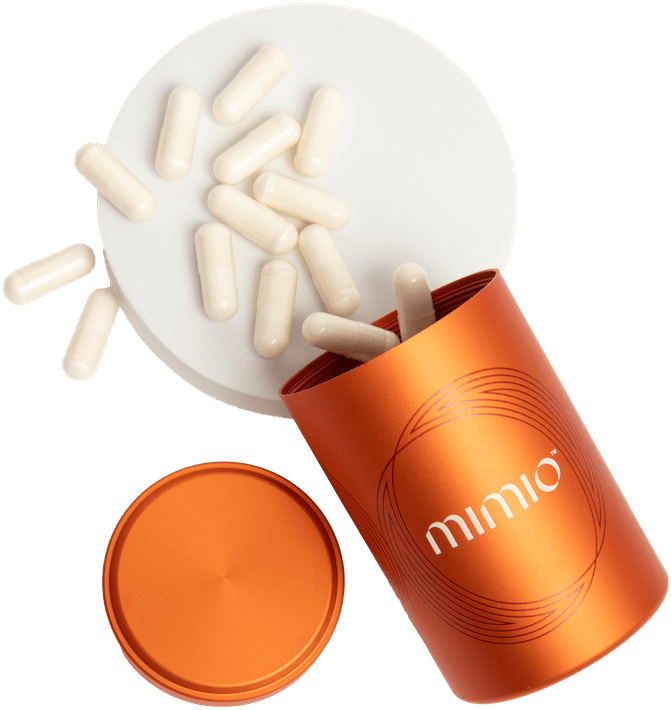
This is also why biomimetic approaches that replicate fasting signals, such as Mimio Biomimetic Cell Care, are gaining scientific traction. They activate key fasting pathways without requiring prolonged caloric restriction.
2. Exercise (Especially HIIT + Resistance Training)
Exercise is one of the strongest predictors of youthful epigenetic age.
It boosts:
-
Mitochondrial turnover
-
DNA repair
-
Antioxidant pathways
-
Muscle-based anti-inflammatory signals⁸
Regular exercisers typically show epigenetic ages several years younger than sedentary peers.
Exercise Types and Their Epigenetic Strength
|
Exercise Type |
Epigenetic Effect |
|
HIIT |
Major impact on metabolic genes |
|
Strength Training |
Youthful methylation of inflammatory genes |
|
Zone 2 Cardio |
Improved mitochondrial epigenetics |
|
Walking |
Small but consistent benefit |
The takeaway: move your body, vary the intensity, and your genes respond.
3. Polyphenol-Rich, Nutrient-Dense Diets
Foods high in antioxidants, vitamins, minerals, and phytonutrients support youthful methylation patterns.
Top epigenetic foods include:
-
Berries
-
Leafy greens
-
Turmeric
-
Green tea
-
Cruciferous vegetables
-
Omega-3 rich fish
-
Nuts and seeds
These foods reduce oxidative stress, and serve as a major driver of epigenetic aging.
4. Stress Modulation and Breathwork
Chronic stress turns genes associated with inflammation and immune dysregulation on. Stress reduction turns them back off.
Even a few minutes of breathwork or mindfulness per day significantly improves epigenetic markers⁹.
5. Sleep Optimization
You can’t have a youthful epigenome without solid sleep. DNA repair enzymes are active at night, and sleep imbalances disrupt their function.
Consistent, high-quality sleep is strongly linked to more youthful methylation patterns¹⁰.
6. Fasting-Mimetics and Metabolic Signaling Compounds
Certain compounds activate fasting pathways without requiring prolonged caloric restriction.
Mimio Biomimetic Cell Care was developed to replicate the cellular environment of a 36-hour fast including pathways involved in metabolic switching, autophagy, and longevity signaling, all of which also influence epigenetic expression.
This is “light integration,” but relevant: fasting biology and epigenetics are tightly interconnected.
Learn more here: https://mimiohealth.com/products/mimio-biomimetic-cell-care
How Your Epigenetic Clock Responds to Lifestyle Choices
Below is a simplified table summarizing how everyday habits impact your epigenetic age.
Lifestyle Factor Impact Table
|
Lifestyle Choice |
Effect on Epigenetic Clock |
Why It Matters |
|
Fasting |
Slows or reverses clock |
Activates repair pathways |
|
Exercise |
Slows aging |
Improves mitochondrial epigenetics |
|
Healthy diet |
Stabilizes clock |
Supports methylation enzymes |
|
Stress |
Speeds up aging |
Alters immune/inflammatory genes |
|
Sleep |
Slows aging |
Enhances DNA repair |
|
Pollutants |
Accelerate aging |
Trigger oxidative stress |
This is why epigenetics is so exciting: your daily choices literally rewrite your biological trajectory.
The Future of Longevity: Epigenetics as Your Navigation System
The epigenetic clock gives us a clearer picture of aging than anything that came before it. But more importantly, it gives us a map — a way to understand how to influence our healthspan through controllable lifestyle levers.
We now know:
-
Biological age is not fixed
-
Genes are responsive to environment
-
Fasting and metabolic switching are powerful epigenetic modifiers
-
Exercise and nutrition can reverse age-related gene expression
-
Stress and sleep directly alter gene activity
-
Biomimetic interventions can support these pathways
That means your “aging speed” is not predetermined. It is adjustable.
Your cells are listening to you, every day!
References
-
Horvath, S. DNA methylation age of human tissues and cell types. Genome Biology.
-
Levine, M. et al. An epigenetic biomarker of aging for lifespan and healthspan. Aging.
-
Zannas, A. S. et al. Lifetime stress accelerates epigenetic aging. PNAS.
-
Quach, A. et al. Epigenetic age acceleration and physical activity. Aging.
-
Martin, E. M. et al. Environmental exposures and DNA methylation. Epigenetics.
-
Maegawa, S. et al. Caloric restriction and DNA methylation. Nature Communications.
-
Kim, Y. et al. Metabolic switching and methylation changes. Cell Metabolism.
-
Denham, J. et al. Exercise alters DNA methylation in skeletal muscle. Epigenomics.
-
Bishop, K. S. et al. Mindfulness impacts DNA methylation. Translational Psychiatry.
-
Carroll, J. E. et al. Sleep quality and epigenetic aging. Sleep.