What Is a Fasting Mimetic? The Science of Fasting Without Fasting
Fasting has a certain mythology around it.
You picture someone calm and focused, sipping water, effortlessly gliding through hunger like a monk who also happens to know their macros.
Reality is often less poetic. Reality is you at 3:17 p.m. wondering why the office printer sounds like a tortilla chip.
So it makes sense that people keep asking a very modern question: can you get the benefits of fasting without actually fasting?
That is the promise behind a fasting mimetic, which is a compound or formula designed to activate the same cellular pathways that switch on during a fast, even when you are still eating. It is a real scientific concept with real research behind it, but it also gets thrown around online like it means “any supplement that sounds healthy.”
This guide breaks down what a fasting mimetic actually is in scientific terms, what fasting changes in the body so you know what we are trying to mimic, the most studied pathways and compounds in this category, how fasting mimetic supplements differ from fasting-mimicking diets, what is realistic versus hype, and how to approach this category safely and intelligently. You’ll also learn about Mimio’s cutting-edge research, and the development of its fasting mimetic.
If you are here because you want the cellular upside of fasting but also want to keep dinner with your family, you are in the right place.
What Is a Fasting Mimetic?
A fasting mimetic is a compound that aims to trigger some of the same biological pathways activated during fasting, even when you are not fully fasting. In academic literature, you will often see the related term caloric restriction mimetics, or CRMs. The idea is similar: substances that imitate parts of the cellular response to energy or nutrient scarcity.
The key word there is “parts.”
A fasting mimetic is not fasting in a capsule. It is more like tapping the shoulder of certain cellular pathways and saying, “act like food is scarce,” even when it is not. The goal is to access specific mechanisms associated with fasting including cellular cleanup, metabolic efficiency, stress resilience without requiring you to fully remove food.
This distinction matters because fasting itself is a coordinated, whole-body event. Hormones shift. Fuel sources change. Nervous system tone adjusts. Gut signaling quiets. A fasting mimetic does not reproduce all of that. It selectively engages the pathways researchers believe are most responsible for fasting’s cellular benefits.
That selectivity is not a weakness - it’sthe entire point. And it is what separates credible fasting mimetics from marketing noise.
Fasting Mimetic Supplements vs. Fasting-Mimicking Diets: They Are Not the Same Thing
If you search “fasting mimetic” right now, most results will talk about fasting-mimicking diets, specifically the 5-day protocol developed by Dr. Valter Longo at USC. That protocol involves eating a calorie-restricted, plant-based, high-fat diet for five consecutive days, typically consuming 40 to 50 percent of normal calories on day one and 10 to 20 percent on days two through five.
It is a legitimate approach with published clinical research behind it. But a fasting-mimicking diet and a fasting mimetic supplement are fundamentally different strategies aimed at related but distinct outcomes.
A fasting-mimicking diet works by actually restricting calories. You are eating, but barely. Your body enters a semi-fasted state because caloric intake is genuinely low. The “mimicking” part refers to the fact that you are technically consuming food, not that you are taking a compound that imitates fasting biology. It requires 5 dedicated days per month of restricted eating, specific macronutrient ratios, and meaningful disruption to your normal routine.
A fasting mimetic supplement takes a different approach. Rather than restricting food intake, it delivers specific compounds that directly engage fasting-related cellular pathways including AMPK activation, autophagy signaling, NAD+ metabolism, mTOR modulation, while you continue eating normally. The goal is to activate the cellular machinery of fasting through molecular signaling rather than through caloric deprivation.
Think of it this way: a fasting-mimicking diet creates fasting-like conditions by changing what you eat. A fasting mimetic supplement creates fasting-like signaling by delivering compounds that influence how your cells behave, regardless of what you eat.
Both approaches have value. But they serve different people in different situations, and confusing them leads to unrealistic expectations in both directions.
What Fasting Actually Does
Fasting is not just “no calories.” It is a coordinated shift in cellular signaling. When nutrient availability drops, your cells change priorities in predictable ways that researchers have documented extensively.
Nutrient sensing quiets down. Pathways that respond to abundance, especially mTOR (mechanistic target of rapamycin), tend to reduce activity when amino acids and nutrients become scarce. mTOR is linked to growth and building. When it is quieter, the cell leans more into maintenance, repair, and recycling. This shift is one of the most studied mechanisms in longevity research, and it is a central reason scientists became interested in fasting mimetics in the first place.
Energy sensing turns up. When cellular energy status drops, AMPK becomes more active. AMPK is often described as a metabolic “fuel gauge” that supports efficiency, promotes fat oxidation, and can influence autophagy-related pathways. It is one of the primary targets for caloric restriction mimetics.
Cellular cleanup becomes more active. Fasting is strongly associated with increased autophagy, which is the recycling process cells use to clear damaged proteins, dysfunctional mitochondria, and other cellular debris. Autophagy is not magical detox. It is fundamental cellular housekeeping that becomes increasingly important as we age. If you want a deeper look at autophagy and practical ways people aim to support it, this guide on how to induce autophagy covers the science and application in detail.
Fuel preference shifts. With less incoming glucose, many people see transitions toward fat oxidation and ketone production, depending on duration, activity level, and baseline metabolic health. This metabolic flexibility, which is the ability to efficiently switch between fuel sources, is itself considered a marker of metabolic health.
Inflammation and oxidative stress signals change. Many studies associate fasting with favorable shifts in inflammatory markers and oxidative stress pathways, which is part of why fasting research intersects so heavily with healthy aging discussions.
So when someone talks about “fasting benefits,” they are usually talking about some combination of metabolic changes, cellular signaling shifts, repair and maintenance activation, and inflammation modulation. A fasting mimetic attempts to access some of these levers without requiring total food removal.
The Biology Fasting Mimetics Target
Most serious fasting mimetic compounds and formulations are built around a handful of overlapping biological targets. These are the pathways that show up repeatedly in caloric restriction and traditional fasting mimetic research.
AMPK: the low-energy signal. AMPK activity rises when cellular energy status is lower. It promotes metabolic efficiency, supports fat oxidation, and can activate downstream processes including autophagy. Many of the most studied fasting mimetic compounds work at least partly through AMPK-related signaling.
mTOR: the nutrient-availability signal. mTOR responds to amino acids, growth factors, and nutrient status. When it is highly active, cells prioritize growth and building. When activity decreases, maintenance and recycling signals become more prominent.
Sirtuins and NAD+ metabolism. Fasting and caloric restriction have been linked in research to changes in NAD+ metabolism and sirtuin activity. NAD+ biology shows up consistently in longevity conversations because it sits at the intersection of energy metabolism, DNA repair, and cellular stress resistance.
Autophagy and lysosomal function. Autophagy is regulated by multiple inputs including nutrient sensing, energy status, and stress signals. Many fasting mimetic candidates are studied specifically because they influence autophagy-related processes.
Inflammation and oxidative stress pathways. Fasting is associated in numerous studies with shifts in inflammatory markers and oxidative stress-related signaling. Some mimetic compounds are selected specifically for their roles in these pathways.
For a detailed look at how these pathways connect in Mimio’s scientific framework, the science page walks through the research foundation behind the biomimetic approach.
Common Fasting Mimetic Compounds (and What the Research Actually Shows)
A quick note before listing anything: a compound can be “fasting mimetic adjacent” without being proven to replicate fasting in humans. The categories below are the ones most frequently discussed in credible reviews and academic research.
Spermidine. A naturally occurring polyamine found in foods like wheat germ, aged cheese, and fermented soy. Spermidine has been studied extensively in the context of autophagy-related pathways and healthy aging. Preclinical research has shown robust effects on cellular maintenance, and epidemiological data suggests associations between higher spermidine intake and favorable aging outcomes.
Nicotinamide and NAD+ precursors. Compounds connected to NAD+ metabolism appear frequently in aging and caloric restriction research. The connection to fasting mimetics comes from NAD+’s role in energy metabolism, sirtuin activation, and cellular stress response, all of which are engaged during fasting.
OEA (oleoylethanolamide) and satiety signaling compounds. Some fasting mimetic formulations include compounds associated with appetite regulation and metabolic signaling. OEA is produced naturally in the gut and has been studied for its role in PPAR-alpha activation, appetite modulation, and metabolic efficiency.
Polyphenols (resveratrol, fisetin, quercetin). Among the oldest and most studied categories of potential caloric restriction mimetics, particularly due to their interactions with stress-response pathways, sirtuin signaling, and inflammation modulation. Human evidence is mixed depending on compound, dose, form, and population.
Berberine. Frequently discussed for glucose metabolism support and AMPK activation. Berberine can interact with multiple medications, so it is not something to add casually without clinical guidance.
Fasting-mimicking diet protocols. While not a supplement, fasting-mimicking diets represent one of the most clinically established approaches to achieving fasting-like outcomes while still eating. They reduce calories and protein in a structured way to create fasting signals through restriction rather than through molecular signaling.
Where Mimio Fits: Biomimetic Cell Care and Fasting Biology
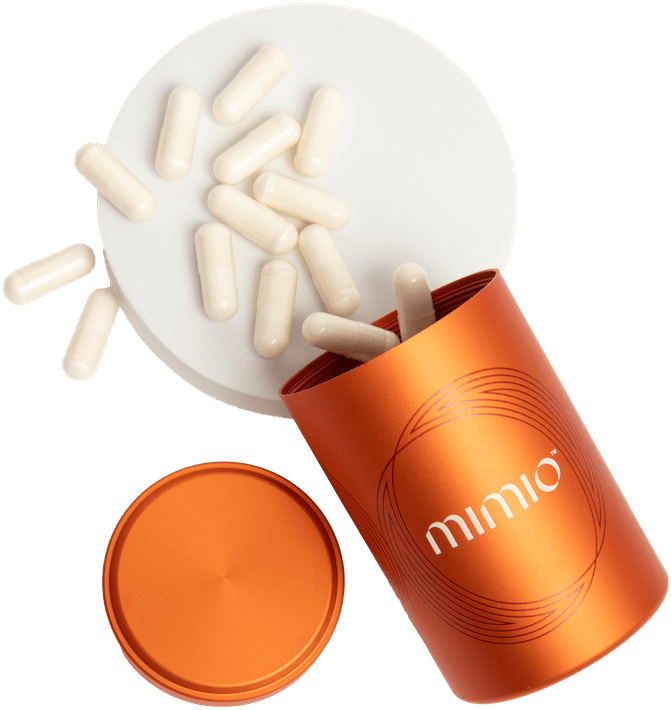
Mimio’s approach to fasting mimetics is built on a specific scientific foundation. Rather than selecting individual compounds known to influence one fasting pathway, Mimio’s research team mapped the actual metabolites that increase in the human body during a 36 hour fast and then built a formula designed to deliver those metabolites directly.
The result is Mimio Biomimetic Cell Care, a formulation that combines spermidine for autophagy activation, nicotinamide for NAD+ and energy metabolism support, OEA for PPAR-alpha activation and appetite signaling, and PEA for neuroprotection and AMPK-related pathways — delivered in ratios that reflect how these compounds naturally appear during extended fasting.
This is a fundamentally different approach from taking a single fasting-adjacent compound in isolation. The idea is to recreate the coordinated biological response rather than nudging one pathway at a time. It is the difference between playing one note and playing the chord.
In a 2025 clinical study published in Scientific Reports, Mimio's formulation was associated with improvements in cardiometabolic markers and oxidative stress compared to placebo, adding clinical data to a category that has historically relied more heavily on preclinical and observational evidence.
How People Actually Use It Alongside Fasting
Some people take Mimio during their eating window to keep fasting windows clean while still activating fasting pathways throughout the day. Some take it during a fast to amplify the cellular signaling benefits, particularly relevant during shorter fasts like a 16:8 intermittent fasting schedule where the fasting window may not be long enough to fully activate deeper pathways on its own. And some take it on non-fasting days as part of an overall longevity routine.
If you are experimenting, keep everything else stable for a 6-8weeks so you can actually tell what is doing what. Changing five variables at once is not optimization, it is chaos with a spreadsheet.
Three Questions to Ask Before Trusting Any Fasting Mimetic
If you remember nothing else from this guide, remember these three filters. They will save you money and disappointment.
What exactly is it trying to mimic? Is it targeting AMPK activation? Autophagy support? Insulin sensitivity? Inflammation signaling? If a product says “fasting benefits” but cannot tell you what specific pathways it is designed around, that is marketing, not mechanism.
Is there human evidence for the outcome you care about? Cell studies are a starting point, not a conclusion. Animal studies are useful context, not guarantees. Human data (ideally from controlled trials) matters most.
Does it fit your actual life? The best protocol is the one you can repeat consistently. If something makes you nauseous, jittery, or too wired to sleep, it does not matter how elegant the science looks.
Do Fasting Mimetics Actually Work?
Here is the honest answer: some fasting mimetics may support some fasting-related pathways. That does not mean they reproduce the full physiology of a fast.
Fasting changes hormones, fuel use, nervous system tone, gut signaling, and nutrient sensing all at once. Most individual mimetic compounds are targeted and selective. That is not a flaw — it is the design.
A realistic way to think about fasting mimetics is that they can help you access specific cellular signals associated with fasting, support consistency if full fasting is difficult, complement fasting rather than replace it, and extend fasting-like cellular activation into days when you are eating normally.
The right question is not “do fasting mimetics work?” The better question is: which fasting-related pathways are you trying to activate, and what evidence exists for the specific formula you are considering?
Safety, Common Sense, and Who Should Be Cautious
Fasting mimetics are not automatically safe for everyone just because they are categorized as supplements. Be thoughtful if you are pregnant or breastfeeding, managing diabetes or using glucose-lowering medications, on blood pressure medications, dealing with a chronic illness or eating disorder history, or combining multiple supplements that target metabolic pathways simultaneously.
If your fasting routine is already intense, adding more metabolic stress signals is not always better. There is a meaningful difference between hormesis, beneficial stress that makes you stronger, and overwhelm.
Frequently Asked Questions About Fasting Mimetics
What is the difference between a fasting mimetic and a fasting-mimicking diet?
A fasting-mimicking diet creates fasting-like conditions by restricting calories to 10 to 50 percent of normal intake over a 5-day period. A fasting mimetic supplement delivers specific compounds that directly activate fasting-related cellular pathways — autophagy, AMPK, NAD+ metabolism — while you continue eating normally. The diet mimics fasting through caloric restriction. The supplement mimics fasting through molecular signaling.
Can you take a fasting mimetic while actually fasting?
Yes, many people use fasting mimetic supplements during fasting windows to amplify and extend the cellular signals already being activated by the fast itself. This can be particularly useful during shorter intermittent fasts where the window may not be long enough to fully engage deeper pathways like autophagy on its own.
Are fasting mimetics safe?
Generally, well-formulated fasting mimetic supplements using established compounds at studied doses are considered safe for most healthy adults. However, anyone on medications for diabetes, blood pressure, or other metabolic conditions should consult a healthcare provider before adding compounds that influence the same pathways.
How long does it take to notice effects from a fasting mimetic?
Individual responses vary, but many people report noticing changes in energy, appetite, and mental clarity within the first one to two weeks. Deeper cellular benefits related to autophagy and metabolic resilience may take 30 to 60 days of consistent use.
Do fasting mimetics replace the need to fast?
Fasting mimetics are best understood as complements to a broader health strategy, not replacements for fasting. If you can fast and it works for your life, the combination of actual fasting plus mimetic support during eating periods is likely more powerful than either approach alone. If you are unable to fast and are still seeking fasting-like benefits, then Mimio could be a good solution for you.
What should I look for in a fasting mimetic supplement?
Look for mechanism clarity, ingredient rationale connected to published research, evidence of human-relevant outcomes, transparent dosing, and realistic claims. If a product promises “the benefits of a 7-day fast in 7 minutes,” close the tab.
The Bottom Line
A fasting mimetic is a strategy, not a magic spell.
It is an attempt to capture specific pieces of the fasting response, which includes; nutrient sensing, cellular maintenance, metabolic resilience, and stress adaptation, without requiring you to fully remove food. The concept has a solid scientific foundation, and the research continues to expand.
Used wisely, fasting mimetics can support fasting-related pathways on non-fasting days, make fasting windows more tolerable, and fit into a longevity-minded routine when full fasting is not always practical.
Used blindly, they become expensive optimism.
So aim for clarity. Know what you want to mimic. Choose tools that match that target with evidence you can evaluate. Keep expectations grounded. And build a routine you can live with, because the best health strategy is the one you can still follow on a random Thursday when life gets loud.
References
-
Hofer, S. J., et al. (2021). Caloric Restriction Mimetics in Nutrition and Clinical Trials. Frontiers in Nutrition.
-
Madeo, F., et al. (2019). Caloric restriction mimetics against age-associated disease. Cell Metabolism.
-
de Cabo, R., & Mattson, M. P. (2019). Effects of intermittent fasting on health, aging, and disease. New England Journal of Medicine.
-
Meijer, A. J., & Dubbelhuis, P. F. (2014). Regulation of autophagy by amino acids and mTOR signaling. Amino Acids / Review (PMC).
-
Son, S. M., et al. (2020). Leucine regulates autophagy via mTORC1-related mechanisms. Nature Communications.
-
Deleyto-Seldas, N., & Efeyan, A. (2021). The mTOR-autophagy axis and the control of metabolism. Frontiers in Cell and Developmental Biology.
-
Hofer, S. J., & Madeo, F. (2022). The ups and downs of caloric restriction and fasting. EMBO Molecular Medicine.
-
Murillo-Cancho, A. F., et al. (2025). Molecular insights, clinical evidence, and translational models. Review (PMC).
-
Wei, M., et al. (2017). Fasting-mimicking diet and markers/risk factors for aging, diabetes, cancer, and cardiovascular disease. Science Translational Medicine.
-
Zhang, Y., et al. (2019). Trehalose and fasting-like metabolic signaling. Review (PMC).
-
Longo, V. D., & Panda, S. (2016). Fasting, circadian rhythms, and time-restricted feeding in healthy lifespan. Cell Metabolism.