Best Longevity Supplements 2026: Science-Backed Guide
If you're searching for longevity supplements, you've probably noticed the category has exploded. NAD+ boosters, senolytics, mitochondrial support, autophagy activators, and every brand claims to hold the key to aging well.
But here's what most "best longevity supplements" lists won't tell you: there is no single molecule that slows aging in a meaningful, measurable way for everyone. The biology is too complex for that. What does work is supporting the systems most tied to how you age, which are your mitochondria, your muscles, your metabolic flexibility, your body's ability to clean up damaged cells, and the inflammatory load you carry day to day.
This guide breaks down the longevity supplements worth considering in 2026, ranked by the strength of their human evidence, safety profile, and practical relevance. We'll cover the foundational basics, the targeted options gaining traction in clinical research, and the emerging compounds that might matter, or might not. We'll also explain why fasting biology has become central to the longevity conversation and where fasting mimetics fit into a well-built supplement strategy.
No hype. No "this berry will change your life." Just the science, the tradeoffs, and a framework for making informed decisions.
What you'll find in this guide: a tiered ranking of 14 longevity supplements based on human evidence, an explanation of why fasting biology has become the most important frontier in longevity science, a step-by-step framework for building your own supplement stack, a complete safety checklist, and answers to the most common questions people ask about longevity supplements in 2026.
What Does "Works" Actually Mean for Longevity Supplements?
Before we rank anything, it helps to define what "working" looks like. No supplement has been proven to extend human lifespan in a randomized controlled trial. That study would take decades, and nobody has run it. What we can evaluate is whether a compound supports longevity-related outcomes — the measurable markers and functional improvements tied to healthspan.
A useful framework for evaluating any longevity supplement comes down to three questions. First, is there human evidence? Animal models can generate hypotheses, but mice are not humans, and rodent lifespan studies don't automatically translate to your biology. Second, is the outcome meaningful? We're talking about strength, cardiovascular markers, walking speed, sleep quality, cognitive performance, inflammation levels, metabolic health, and mitochondrial function — not vague claims about "cellular energy." Third, is it safe over months and years of use? Dose matters, interactions matter, and your individual health context matters.
The best longevity supplement is ultimately the one that addresses a real gap in your biology, that you take consistently, and that doesn't create tradeoffs canceling the benefit. Everything below is organized with that lens.
What's New in Longevity Supplements for 2026
The longevity supplement landscape has shifted meaningfully in the past year. Several developments are worth tracking.
Fasting mimetics have moved from theory to product. Two years ago, the idea of a supplement that replicates fasting biology was mostly discussed in research papers. In 2026, biomimetic formulations like Mimio have moved this from a concept to an available product category, backed by ingredient-level clinical data and formulation research derived from human fasting studies.
NAD+ precursor research is maturing past the hype phase. Early NAD+ enthusiasm was driven by animal studies and influencer endorsement. The 2024–2025 wave of human trials has produced more nuanced results: NAD+ levels increase reliably, but functional outcomes depend heavily on individual baseline status, age, and health context. This is healthy, meaning we're moving from hype to clinical precision.
Senolytic cycling protocols are being tested. Rather than daily supplementation, researchers are exploring periodic senolytic dosing — taking fisetin or quercetin-dasatinib for short bursts to clear senescent cells, then pausing. This "hit and run" approach may be more effective and safer than continuous use.
Ergothioneine is gaining mainstream attention. Once an obscure amino acid, ergothioneine has been picked up by major supplement brands and featured in longevity research for its unique cellular transport mechanism and antioxidant properties. Expect to see more products featuring it in 2026 and beyond.
Clinical trial infrastructure is expanding. Companies across the longevity space are investing in human trials rather than relying solely on animal models. This is raising the evidence bar for the entire category, which ultimately benefits consumers who want science-backed choices rather than marketing-backed promises.
The 2026 Longevity Supplements Tier List
Tier 1: Foundational: Proven, Practical, and Broadly Relevant
These supplements have the deepest evidence base, the best safety profiles, and the widest applicability. They're not glamorous. They work.
1. Creatine Monohydrate
Most people associate creatine with gym performance, but its relevance to longevity runs deeper than bicep curls. Muscle is a metabolic organ, and maintaining muscle mass is one of the single strongest predictors of aging well. Sarcopenia — age-related muscle loss — accelerates frailty, metabolic dysfunction, and mortality risk. Creatine directly supports the phosphocreatine energy system that fuels muscle contractions, and decades of research confirm it improves strength and power output, particularly when combined with resistance training.
The cognitive angle is gaining attention too. A 2025 systematic review published in Nutrients examined creatine's relationship with cognition in aging populations, finding signals of benefit in specific contexts like sleep deprivation and short-term memory tasks, though the data isn't yet definitive across all cognitive domains.
Typical use: 3–5 g per day of creatine monohydrate. Loading phases are unnecessary for most people. If you have kidney disease or significant renal concerns, discuss with your clinician first.
2. Omega-3 Fatty Acids (EPA/DHA)
Omega-3s are among the most studied supplements in cardiovascular health, and cardiovascular health is arguably the single biggest lever for both lifespan and healthspan. Updated meta-analyses of randomized controlled trials, including a large 2021 analysis published in eClinicalMedicine, demonstrate that omega-3 supplementation can reduce certain cardiovascular events, improve triglyceride levels, and may reduce cardiovascular mortality in specific populations.
This isn't a magic bullet; results vary by formulation, dose, and baseline risk profile, but for people who don't regularly eat fatty fish, supplementing with EPA and DHA addresses a genuine nutritional gap that has downstream effects on inflammation, vascular function, and potentially brain health.
Typical use: 1–2 g per day combined EPA/DHA, adjusted based on your goals and clinician guidance. Higher doses carry increased bleeding risk and may raise atrial fibrillation risk in certain populations. If you're on blood thinners, talk to your doctor.
3. Vitamin D
Vitamin D isn't a longevity hack. It's a deficiency-correction tool. If your levels are low, and a significant percentage of the population is deficient, particularly at higher latitudes, correcting that deficiency meaningfully supports bone density, immune function, and overall metabolic health. If your levels are already adequate, megadosing vitamin D offers no additional benefit and can cause harm.
Best practice: Test your 25(OH)D levels, then supplement based on your clinician's guidance. Most people who are deficient do well with 1,000–4,000 IU daily, but dose should be driven by bloodwork, not guesswork.
4. Magnesium
Magnesium is involved in over 300 enzymatic reactions in the body, including energy production, muscle function, nervous system regulation, and sleep architecture. It's also one of the most common nutrient insufficiencies in Western diets. Correcting a magnesium shortfall can improve sleep quality, reduce muscle cramping, and support cardiovascular health.
Typical use: 200–400 mg per day, depending on form. Magnesium glycinate and threonate tend to be better tolerated than oxide (which is more laxative). People with kidney disease should use caution and consult their clinician.
Tier 2: Targeted: Promising Science, Growing Human Evidence
These compounds move beyond basic nutritional support into the territory of what most people think of when they hear "longevity supplements" are molecules targeting mitochondrial function, cellular energy metabolism, and repair pathways.
5. NAD+ Precursors (Nicotinamide Riboside and NMN)
NAD+ is a coenzyme central to energy metabolism, DNA repair, and sirtuin activation — all processes that decline with age. The core idea behind NAD+ supplementation is straightforward: replenish a molecule that your cells need but produce less of over time.
Human trials have shown that nicotinamide riboside (NR) supplementation increases blood NAD+ levels in older adults. A 2024 randomized placebo-controlled trial in adults with mild cognitive impairment, published in PubMed, explored whether NR supplementation improved cognitive outcomes. NMN trials have also demonstrated NAD+ increases and reported functional signals including improved walking endurance and sleep quality in older adults, per 2024 studies in PubMed and Mechanisms of Ageing and Development.
The honest caveat: NAD+ levels go up consistently, but the downstream functional outcomes — the "do you feel different?" question — are more mixed. This is still a developing field, and individual response varies.
Practical note: If you experiment with an NAD+ precursor, track something measurable: sleep quality, training recovery, energy patterns, or lab work with clinician oversight. Note that nicotinamide, which is a form of vitamin B3 and NAD+ precursor, is also a component of Mimio's biomimetic formula, where it works alongside other fasting metabolites rather than in isolation.
Caution: If you have an active cancer diagnosis or high-risk cancer history, consult your clinician before using NAD+ boosters, as cancer cells also rely on NAD+ for energy metabolism.
6. Coenzyme Q10 (CoQ10/Ubiquinol)
CoQ10 is essential for mitochondrial electron transport — the process that generates the majority of your cellular energy (ATP). Like NAD+, CoQ10 levels decline with age, and this decline is associated with reduced mitochondrial efficiency. CoQ10 also functions as a fat-soluble antioxidant, protecting cell membranes from oxidative damage.
Human evidence supports CoQ10 supplementation for cardiovascular health, particularly in populations taking statins (which deplete CoQ10 as a side effect) and in older adults with heart failure. The Q-SYMBIO trial demonstrated that long-term CoQ10 supplementation reduced major adverse cardiovascular events in heart failure patients.
Typical use: 100–200 mg per day. Ubiquinol is the reduced, more bioavailable form recommended for older adults. Take with a fat-containing meal for better absorption.
7. Urolithin A
Urolithin A has generated significant interest as a mitochondria-targeted longevity compound. Its mechanism is specific: it promotes mitophagy, the selective clearance of damaged mitochondria, which allows your cells to maintain a healthier mitochondrial pool. Since mitochondrial dysfunction is a hallmark of aging, this is a compelling target.
Randomized, placebo-controlled human trials have explored urolithin A's effects on immune function, muscle endurance, and mitochondrial biomarkers in both healthy and aging populations. A 2025 trial published in PMC examined its effects in healthy middle-aged adults. The results are promising enough to distinguish urolithin A from many other "mitochondrial support" supplements that lack human data.
Typical use: 500–1,000 mg per day. This is still a newer category than creatine or omega-3s, so it's best approached as a focused experiment with measurable outcomes, not a blind staple.
8. GlyNAC (Glycine + N-Acetylcysteine)
Glutathione is one of the body's most important endogenous antioxidant systems, and glutathione levels decline with age. GlyNAC supplementation provides the two amino acid precursors the body needs to synthesize glutathione. Clinical research from Baylor College of Medicine, led by Dr. Rajagopal Sekhar, has studied GlyNAC supplementation in older adults and found improvements in glutathione levels alongside improvements in multiple age-associated abnormalities including oxidative stress, mitochondrial function, inflammation, and physical function measures.
Typical use: Clinical trial doses typically use glycine and NAC in gram-level quantities (often around 1.2 g each, twice daily). NAC can interact with certain medications and is not appropriate for everyone, so clinician oversight is recommended.
Tier 3: Emerging: Intriguing Science, Early or Mixed Human Evidence
These supplements dominate longevity conversation but carry a heavier asterisk. The biology is interesting; the human evidence is still being built.
9. Resveratrol
Resveratrol may be the most famous longevity molecule, largely thanks to early research linking it to sirtuin activation and the "French paradox." The reality is more nuanced than the headlines. While animal studies showed dramatic lifespan effects, human trials have produced inconsistent results depending on dose, formulation, and population studied.
What resveratrol does appear to do in humans is provide antioxidant and anti-inflammatory support, with some evidence for cardiovascular benefits and improved blood flow. It's not the magic bullet early research suggested, but it may contribute as part of a polyphenol-rich approach to aging — particularly for people who don't consume significant dietary sources.
Typical use: 150–500 mg per day. Bioavailability is limited; newer formulations claim improved absorption. Best taken with food.
10. Fisetin
Fisetin has emerged as a leading candidate in senolytic research — the targeted removal of senescent ("zombie") cells that accumulate with age and drive chronic inflammation. Animal studies have shown fisetin can reduce senescent cell burden, and early human trials are underway. The Mayo Clinic has been particularly active in this research area.
The appeal is real, but the human evidence is still limited. At this point, fisetin is a reasonable "watch and experiment" compound rather than a proven staple.
Typical use: 100–500 mg per day, sometimes cycled intermittently rather than taken daily (reflecting the senolytic approach of periodic clearance).
11. Spermidine
Spermidine is a polyamine linked to autophagy activation — the cellular self-cleaning process that removes damaged proteins and organelles. Observational studies have associated higher dietary spermidine intake with lower cardiovascular mortality, and some small clinical trials have explored its effects on cognitive outcomes and biomarkers in older adults.
The results are mixed. Some trials show promising biomarker changes, while others report minimal effects on functional outcomes. Spermidine is one of the ingredients in Mimio's biomimetic formula, where it's combined with other fasting metabolites to support autophagy as part of a multi-pathway approach rather than in isolation.
Practical take: If your foundational supplements are covered and your lifestyle habits are dialed in, spermidine is a reasonable "Tier 3" addition. It's not a must-have as a standalone.
12. Taurine
Taurine grabbed major headlines after a 2023 study in Science suggested it plays a role in aging biology across multiple species. However, subsequent analysis has been more cautious. NIH researchers published findings in June 2025 concluding that taurine is unlikely to be a reliable aging biomarker based on cross-species analyses. Clinical trials examining taurine's effects on aging-related outcomes are ongoing, but definitive human evidence is not yet available.
This is a textbook example of why it pays to wait for confirmation before crowning any single molecule the "key" to longevity.
13. Quercetin
Quercetin is a flavonoid with both antioxidant and potential senolytic properties. It's most studied in combination with dasatinib as a senolytic cocktail, but on its own it also shows cardiovascular and anti-inflammatory benefits. Like fisetin, the senolytic applications in humans are still early-stage, but quercetin has a longer safety track record as a dietary supplement.
Typical use: 500–1,000 mg per day. Often cycled for senolytic purposes.
14. Ergothioneine
Ergothioneine is an amino acid with potent antioxidant properties that your body actively transports to tissues under high oxidative stress — a signal that it likely plays a meaningful protective role. Studies have associated higher ergothioneine plasma levels with better cognitive and functional outcomes in aging populations. It's found in mushrooms (particularly shiitake and porcini), though dietary intake is often inconsistent.
This is one of the more promising "under the radar" longevity compounds, and companies like Life Extension have begun featuring it prominently in their longevity formulations.
The Fasting Connection: Why Cellular Cleanup Matters for Longevity
If there's one theme running through modern longevity research, it's that your body's ability to repair itself may matter more than any individual nutrient you add to it. Fasting activates many of the pathways that longevity supplements are trying to target: autophagy clears damaged cellular material, AMPK signaling improves metabolic efficiency, mitochondrial quality improves through mitophagy, inflammation decreases, and NAD+ levels rise.
This is why fasting shows up in virtually every serious longevity discussion — not as a weight loss tool, but as a biological switch that shifts cells from growth mode to repair mode. Research on extended fasting (24–36+ hours) has demonstrated measurable improvements in inflammatory markers, insulin sensitivity, cellular stress resistance, and mitochondrial biogenesis. These aren't minor effects. They represent the body's evolved response to temporary resource scarcity — a response that modern eating patterns rarely trigger.
The problem is practical. Consistent extended fasting is difficult for most people to sustain, particularly those with demanding training schedules, medical conditions, or career and family obligations that make skipping meals impractical or unsafe. Intermittent fasting protocols (16:8, etc.) capture some benefits but generally don't trigger the deeper cellular repair responses associated with longer fasts.
That's where the concept of a fasting mimetic becomes relevant — a supplement designed to activate fasting-related cellular pathways without requiring caloric restriction. This is not a theoretical category. The fasting metabolites produced during extended fasts have been identified, and the signaling pathways they activate are well-characterized in research.
Where Mimio Fits in a Longevity Supplement Strategy
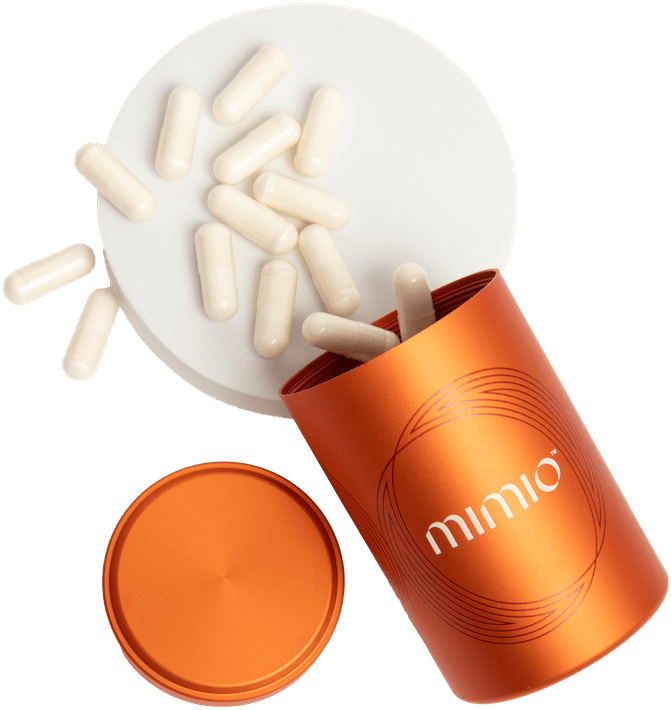
Mimio Biomimetic Cell Care was developed from human fasting research that identified the specific metabolites elevated during a 36-hour fast. Rather than targeting a single pathway like most longevity supplements, Mimio's formula combines spermidine (autophagy), nicotinamide (NAD+ support), OEA (metabolic signaling and appetite regulation), and PEA (neuroprotection and AMPK activation) — the same compounds your body naturally produces during an extended fast.
This multi-pathway approach is what makes biomimetic supplementation fundamentally different from single-ingredient longevity supplements. Most products in this space boost one biomarker in isolation — NAD+ goes up, or autophagy gets a nudge. But fasting doesn't work that way. The reason fasting produces such broad health benefits is that it triggers a coordinated cascade of cellular responses: repair, cleanup, energy reallocation, inflammatory reduction, and stress resistance all activate together. Mimio is designed to recreate that coordinated response.
The science behind the formulation is grounded in peer-reviewed research across its individual ingredients, with over 100 clinical studies supporting the compounds used. The Mimio formulation has been shown to extend lifespan in model organisms by 96%, and the company has clinical research underway exploring the formula's effects in human populations. Each ingredient is bioidentical to what your body produces naturally during fasting — not a synthetic analogue or botanical extract trying to mimic an effect from the outside.
For someone building a longevity supplement stack in 2026, Mimio fills a unique role: it's the fasting-biology layer. Whether you currently practice time-restricted eating and want to amplify those benefits, do periodic extended fasts and want to maintain fasting pathway activation on non-fasting days, or want fasting-like cellular activation without ever skipping a meal, this is the slot it occupies. It's particularly well-suited to stack alongside foundational supplements (creatine, omega-3s) because it addresses a completely different axis of longevity biology — cellular repair and metabolic reprogramming rather than nutritional support.
What to Skip: Overhyped Longevity Supplements That Don't Deliver
Not everything with a "longevity" label deserves your money. A few categories consistently overpromise and underdeliver.
Collagen peptides for longevity. Collagen may help skin hydration and joint comfort, but there's no meaningful evidence it affects aging biology, cellular repair, or lifespan-related outcomes. It's a beauty supplement being marketed as a longevity supplement. Know the difference.
Generic "antioxidant blends." High-dose antioxidant cocktails can actually interfere with exercise adaptations and the hormetic stress responses that drive cellular resilience. More antioxidants are not always better. Targeted antioxidant support (like GlyNAC for glutathione) is different from indiscriminate free radical scavenging.
Proprietary blend mystery formulas. If a product won't tell you exactly how much of each ingredient it contains, assume the effective ingredients are underdosed and the label is designed to impress, not inform.
Anything promising a specific lifespan extension number. No supplement can promise "10 more years" or any other specific number. Anyone making that claim is selling hope, not science.
How to Build a Simple, Science-Backed Longevity Stack
Here's a practical framework that works for most people exploring longevity supplements without turning your medicine cabinet into a chemistry lab.
Step 1: Cover the Foundations (Tier 1)
Pick two or three based on your diet, blood work, and lifestyle gaps. Creatine monohydrate is almost universally beneficial for anyone doing resistance training. Omega-3s fill a gap for anyone not eating fatty fish two to three times per week. Vitamin D corrects a deficiency that affects a huge portion of the population. Magnesium supports sleep and recovery, particularly if your diet is low in leafy greens and nuts.
Step 2: Choose One Targeted Addition (Tier 2)
Pick based on your primary goal. For cellular energy and NAD+ support, consider NR, NMN, or a biomimetic approach like Mimio. For mitochondrial quality and muscle resilience, urolithin A is the most targeted option. For oxidative stress support in older adults, GlyNAC has the most compelling human trial data. For cardiovascular protection, especially if you're on statins, CoQ10 fills a proven gap.
Step 3: Add Fasting Biology
This is where Mimio becomes especially relevant. Rather than stacking five separate compounds to approximate what fasting does, a well-designed fasting mimetic activates the coordinated biological response in a single daily dose. This is the efficiency play — fewer bottles, broader pathway activation, grounded in how your body already works.
Step 4: Anchor Everything in Lifestyle
This is the unsexy but essential truth: supplements amplify a baseline. They do not replace it. The three pillars that matter most for longevity outcomes are resistance training (muscle is your single best retirement investment), protein adequacy (especially as you age past 40), and sleep quality (your nightly cellular repair window). Without these, no supplement stack will move the needle meaningfully.
A Quick Safety Checklist Before You Buy Any Longevity Supplement
Before adding any new supplement to your regimen, run through this checklist.
Third-party testing. Look for NSF Certified for Sport, USP Verified, or equivalent independent testing. If a brand can't tell you who tests their products, that's a red flag.
Dose transparency. If a product hides ingredient doses behind a "proprietary blend," skip it. You should know exactly how much of each active compound you're getting.
Drug interactions. Blood thinners, blood pressure medications, diabetes medications, thyroid medications, and chemotherapy-related contexts all require extra caution with many supplements. Always disclose your full supplement list to your prescribing clinician.
Realistic timeline. Give a supplement 8–12 weeks before judging its effects, unless you notice adverse effects sooner. Cellular-level changes don't happen in a weekend.
Measure something. Strength numbers, resting heart rate, HRV, sleep scores, fasting glucose, triglycerides, VO2max estimates, walking pace. If a supplement doesn't move anything you can objectively measure after three months, it may not be doing what you think it's doing.
Frequently Asked Questions About Longevity Supplements
What is the best supplement for longevity?
There is no single "best" longevity supplement because aging involves multiple biological systems declining simultaneously. The most effective approach combines foundational supplements (creatine, omega-3s, vitamin D, magnesium) with targeted compounds that address your specific health gaps. For people interested in activating fasting-related repair pathways — autophagy, mitophagy, NAD+ production, and metabolic flexibility — a biomimetic fasting mimetic like Mimio provides multi-pathway support in a single formula.
What are the benefits of longevity supplements?
Longevity supplements aim to support the biological processes most associated with healthy aging: mitochondrial function, cellular energy production, inflammation regulation, oxidative stress management, autophagy (cellular cleanup), muscle maintenance, cardiovascular health, and cognitive function. The specific benefits depend on the individual compound — omega-3s primarily support cardiovascular health, while NAD+ precursors target cellular energy metabolism.
How do longevity supplements work?
Different longevity supplements work through different mechanisms. NAD+ precursors replenish a coenzyme that declines with age and is essential for cellular energy production. Senolytics like fisetin and quercetin help clear senescent cells. Autophagy activators like spermidine promote cellular self-cleaning. Fasting mimetics like Mimio work by providing the same metabolites your body produces during an extended fast, triggering coordinated cellular repair responses across multiple pathways simultaneously.
What are longevity supplements?
Longevity supplements are compounds designed to support the biological processes tied to healthy aging and extended healthspan. Unlike traditional vitamins that correct nutritional deficiencies, longevity supplements target age-related cellular decline — things like mitochondrial dysfunction, NAD+ depletion, accumulation of senescent cells, reduced autophagy, and chronic low-grade inflammation. The category ranges from well-studied foundational nutrients to cutting-edge biomimetic formulations.
How much do longevity supplements usually cost?
Costs vary widely depending on the compound and quality. Basic supplements like creatine and magnesium run $10–25 per month. Mid-range options like CoQ10 and omega-3s typically cost $20–50 per month. Premium longevity-specific supplements like NMN, urolithin A, and multi-pathway formulations like Mimio range from $50–100+ per month. When evaluating cost, consider that a well-designed multi-pathway supplement can replace several single-ingredient products, often providing better value than buying each component separately.
Do longevity supplements actually work?
Some do, with varying degrees of evidence. Creatine, omega-3s, and vitamin D have robust human trial data supporting specific health outcomes. NAD+ precursors and urolithin A have growing human evidence. Newer compounds like spermidine and fisetin have promising but limited human data. No supplement has been proven to extend human lifespan in a controlled trial — but several have been shown to improve the functional markers and biological processes most closely associated with aging well.
What are the 5 P's to avoid for longevity?
While "5 P's" formulations vary by source, the most commonly referenced risks to longevity include processed foods (driving inflammation and metabolic dysfunction), prolonged sedentary behavior (accelerating muscle loss and cardiovascular decline), poor sleep (impairing cellular repair), persistent stress (elevating cortisol and inflammatory markers), and pollution exposure (increasing oxidative damage). Addressing these lifestyle factors creates the foundation that makes longevity supplements meaningfully effective.
The Bottom Line on Longevity Supplements in 2026
If you want the most science-aligned supplement strategy in 2026, here's the playbook.
Start with foundations. Creatine, omega-3s, and correcting any vitamin D or magnesium deficiency gets you 80% of the way with minimal cost and virtually no risk.
Pick one targeted addition based on your biology. NAD+ precursors for cellular energy decline. Urolithin A for mitochondrial support. GlyNAC for oxidative stress in aging. CoQ10 if you're on statins or have cardiac concerns.
Add fasting biology. If the repair and cleanup side of longevity matters to you: autophagy, mitophagy, metabolic flexibility, but extended fasting isn't realistic for your life, a fasting mimetic like Mimio Biomimetic Cell Care gives you that layer without the deprivation.
Track real outcomes. Longevity is not a vibe. It's a practice. Measure strength, metabolic markers, sleep, and function. If something isn't moving the needle after 90 days, reassess.
And remember: the best longevity stack is the one that makes you stronger, more resilient, and more capable — while staying safe, sustainable, and grounded in what the science actually says.
References
-
Marshall, S., et al. (2025). Creatine and cognition in aging: A systematic review. Nutrients / PMC.
-
Li, N., et al. (2025). Creatine supplementation and exercise in aging. Frontiers in Nutrition.
-
Khan, S. U., et al. (2021). Omega-3 fatty acids and cardiovascular outcomes: Updated meta-analysis of RCTs. eClinicalMedicine / PMC.
-
Markozannes, G., et al. (2022). Dose-related meta-analysis of omega-3 RCTs. Clinical Nutrition.
-
Denk, D., et al. (2025). Urolithin A randomized placebo-controlled trial in healthy middle-aged adults. PMC.
-
Orr, M. E., et al. (2024). Randomized placebo-controlled trial of nicotinamide riboside in older adults with MCI. PubMed.
-
Morifuji, M., et al. (2024). NMN increased blood NAD+ and improved functional outcomes in older adults. PubMed.
-
Kuerec, A. H., et al. (2024). NMN dose response and blood NAD changes (post-hoc trial analysis). Mechanisms of Ageing and Development.
-
Kumar, P., et al. (2023). GlyNAC supplementation in older adults improves multiple age-associated abnormalities. Baylor College of Medicine.
-
Mortensen, S. A., et al. (2014). The effect of coenzyme Q10 on morbidity and mortality in chronic heart failure: Q-SYMBIO trial. JACC: Heart Failure.
-
ClinicalTrials.gov (2022–2026). Spermidine, fisetin, and urolithin A trial records.
-
NIH News Release (June 5, 2025). Taurine is unlikely to be a good aging biomarker.
-
Cheah, I. K., & Halliwell, B. (2021). Ergothioneine and healthy aging. Free Radical Biology and Medicine.
-
Mimio Health. Biomimetic Cell Care: formulation research and clinical study data. mimiohealth.com/pages/science.