What Is Healthspan? The Complete Guide to Living Better, Not Just Longer
We spend a lot of time thinking about how long we'll live. But here's a question that matters even more: how many of those years will you actually feel good?
That's where healthspan comes in. While lifespan measures the total number of years you're alive, healthspan measures something far more meaningful: the years you spend in good health, free from chronic disease and disability, fully able to do the things you love.
Think about it this way: you probably know someone who lived well into their 80s or 90s but spent the final decade struggling with illness, limited mobility, or cognitive decline. Now think of someone else who stayed vibrant, active, and sharp right up until the end. Both might have similar lifespans, but their healthspans were dramatically different.
The good news? Healthspan isn't entirely determined by your genes. Research increasingly shows that the choices you make every day: what you eat, how you move, how you manage stress, and how you support your cellular health, which can significantly extend the years you spend feeling your best.
Healthspan vs. Lifespan: Understanding the Critical Difference
Let's break down these two concepts clearly, because understanding the distinction is the first step toward optimizing both.
Lifespan is straightforward, it's the total number of years from birth to death. If you live to 82, your lifespan is 82 years. The current life expectancy in the United States is approximately 78.4 years according to the National Center for Health Statistics, with women typically living longer than men.
Healthspan is more nuanced. It measures the period of your life during which you're generally healthy, functional, and free from serious chronic illness or disability. The World Health Organization calls this "healthy life expectancy," and their data tells a sobering story: for Americans, healthy life expectancy dropped from 65.3 years in 2000 to 63.9 years in 2021.
Here's the math that should concern everyone: with an average lifespan of 78 years and a healthspan of only 64 years, Americans can expect to spend roughly 14 years, which is nearly two decades, living with significant health challenges.
The goal isn't just to add more years to your life. It's to add more life to your years.
The Healthspan Gap: Why It Matters More Than You Think
The gap between lifespan and healthspan represents years of potential suffering—for you and for your loved ones. But the implications go even deeper.
Data shows that 79% of adults aged 60 and older have two or more chronic conditions like diabetes, heart disease, and high blood pressure. More alarming still, over half of young adults now report at least one chronic condition. We're not just failing to extend healthspan, we may actually be compressing it.
The financial burden is equally significant. The last years of life, when health challenges accumulate, often carry the highest medical costs and caregiving demands. Extending your healthspan isn't just about quality of life, it's about financial security and reducing the burden on those who care about you.
Perhaps most importantly, the strategies that extend healthspan also tend to extend lifespan. When you focus on staying healthy longer, you're likely living longer too. The two goals aren't in competition, they're deeply aligned.
The Science of Healthspan: What Determines How Well You Age
Aging isn't random. Scientists have identified specific biological processes that drive age-related decline, and understanding them gives us a roadmap for intervention.
The Hallmarks of Aging
Researchers have identified twelve "hallmarks of aging"—cellular and molecular changes that accumulate over time and contribute to the decline in health and function we experience as we get older. These include:
- Genomic instability: Accumulated damage to your DNA over time
- Telomere shortening: The protective caps on chromosomes getting shorter with each cell division
- Epigenetic alterations: Changes in how genes are expressed without altering the DNA itself
- Loss of proteostasis: Declining ability to maintain proper protein folding and function
- Mitochondrial dysfunction: Reduced energy production at the cellular level
- Cellular senescence: Accumulation of "zombie cells" that stop dividing but don't die
- Stem cell exhaustion: Declining regenerative capacity
- Altered intercellular communication: Chronic inflammation and impaired signaling between cells
The exciting news is that many of these processes are modifiable. Lifestyle choices, dietary patterns, and targeted interventions can slow, and in some cases even partially reverse these hallmarks of aging.
Biological Age vs. Chronological Age
Your chronological age is simply the number of years since you were born. Your biological age, however, reflects the actual condition of your cells, tissues, and organs—and the two can be dramatically different.
A 55-year-old who exercises regularly, eats well, manages stress, and sleeps deeply might have the biological age of a 40-year-old. Meanwhile, someone the same chronological age who neglects these factors might have the biological age of a 70-year-old.
Scientists can now estimate biological age using various biomarkers, including DNA methylation patterns, blood markers, and physiological measures. The goal of healthspan optimization is essentially to keep your biological age as far below your chronological age as possible.
Evidence-Based Strategies to Extend Your Healthspan
The American Heart Association's "Life's Essential 8" framework provides a research-backed roadmap for cardiovascular health that also profoundly impacts overall healthspan. Let's explore each domain and the evidence behind it.
Nutrition and Diet
What you eat directly influences cellular health and aging processes. Research consistently supports dietary patterns rich in whole foods: particularly vegetables, fruits, whole grains, lean proteins, nuts, and seeds, while limiting processed foods, added sugars, and unhealthy fats.
Caloric restriction has emerged as one of the most reliable interventions for extending both lifespan and healthspan in animal studies, with research showing potential benefits of up to 30% increased longevity. The mechanism appears to involve activation of cellular repair pathways, reduced inflammation, and improved metabolic efficiency.
However, sustained caloric restriction is challenging for most people. This is where intermittent fasting and fasting-mimetic approaches become relevant—they may provide similar cellular benefits without requiring permanent dietary restriction.
Physical Activity
Movement is medicine for healthspan. Federal physical activity guidelines recommend at least 150 minutes of moderate-intensity aerobic activity per week, plus muscle-strengthening activities twice weekly.
But here's what's often overlooked: the best predictors of longevity as we age aren't cardiovascular fitness alone—they're muscle mass, grip strength, and balance. This means resistance training and mobility work deserve equal emphasis alongside cardio.
Recent research in Nature Medicine found that even short bursts of vigorous physical activity—just a few minutes per day—can significantly lower cancer and cardiovascular mortality risk. The message is clear: consistency matters more than intensity, and something is always better than nothing.
Sleep and Recovery
Sleep isn't just rest—it's when your body performs essential repair and maintenance. During deep sleep, cells clear metabolic waste, consolidate memories, regulate hormones, and activate autophagy, the cellular cleanup process that removes damaged components.
Adults need 7-9 hours of quality sleep for optimal health. Chronic sleep deprivation accelerates multiple hallmarks of aging and increases risk for virtually every chronic disease, from cardiovascular disease to dementia.
Prioritizing sleep hygiene—consistent timing, cool and dark environments, limiting blue light exposure before bed—is one of the highest-return investments you can make in your healthspan.
Stress Management and Mental Health
Chronic stress accelerates biological aging through multiple mechanisms: elevated cortisol, increased inflammation, impaired immune function, and shortened telomeres. The mind-body connection is real and measurable.
Practices like meditation, deep breathing, yoga, and mindfulness have demonstrated effects on stress biomarkers and even on gene expression patterns associated with aging. The evidence suggests these aren't just "soft" interventions—they create real physiological changes.
Mental health also directly impacts healthspan. Depression and anxiety are associated with accelerated biological aging and increased disease risk. Addressing mental health isn't separate from physical health—they're deeply interconnected.
Social Connection
Loneliness isn't just emotionally painful—it's a risk factor for dementia, heart disease, and premature death comparable to smoking or obesity. Humans are social creatures, and our biology reflects this.
Maintaining strong relationships with friends, family, and community isn't a luxury—it's a healthspan necessity. Studies of centenarians consistently find that social engagement is one of the common threads among those who live long and well.
The Role of Fasting in Healthspan Extension
Perhaps no intervention has generated more excitement in healthspan research than fasting. When the body goes without food for extended periods, it triggers a cascade of protective cellular responses.
During a prolonged fast (typically 24-36 hours or longer), several key processes activate:
- Autophagy: The body's cellular cleanup system kicks into high gear, identifying and recycling damaged components including dysfunctional proteins and organelles
- Metabolic switching: Cells shift from glucose to ketone bodies for fuel, which appears to have protective effects on brain function
- Reduced inflammation: Fasting decreases inflammatory markers throughout the body
- Senescent cell clearance: Evidence suggests fasting may help the body eliminate "zombie cells" that contribute to aging
- Longevity pathway activation: Fasting activates sirtuins, AMPK, and other cellular pathways associated with increased lifespan
Animal studies have shown dramatic results—with fasted animals living up to 30% longer and in significantly better health than their well-fed counterparts.
The challenge is that prolonged fasting isn't practical or even safe for everyone. It can be difficult to maintain, may interfere with daily life and work demands, and isn't appropriate for people with certain medical conditions. This has led researchers to explore whether the benefits of fasting can be achieved through other means.
How Mimio Supports Your Healthspan Journey
This is where biomimetics—the science of mimicking natural biological processes—offers a compelling solution.
Dr. Chris Rhodes and Dr. Angela Zivkovic, nutrition researchers at UC Davis, spent years studying exactly what happens in the human body during a 36-hour fast. They mapped the specific metabolites—the molecular byproducts—that increase during fasting and appear to be responsible for its beneficial effects.
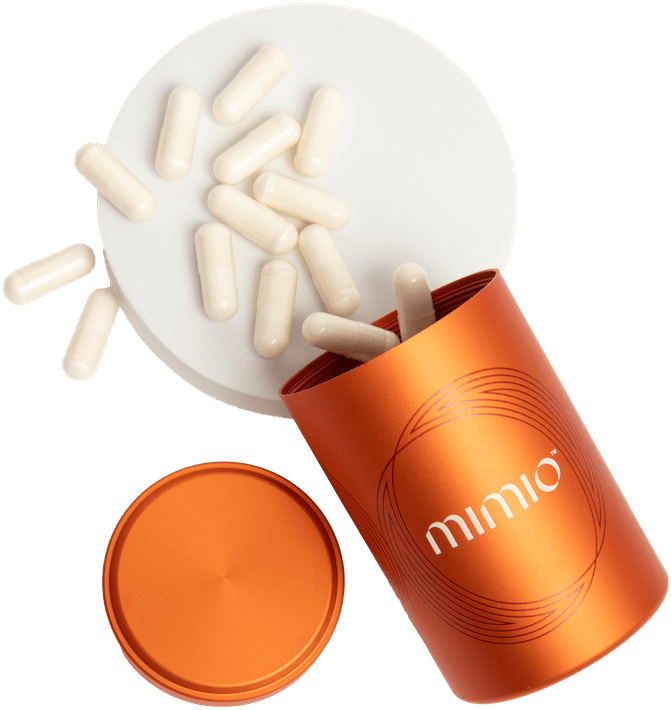
Their discovery led to Mimio Biomimetic Cell Care, a formulation that delivers these same fasting metabolites in a simple daily supplement—without requiring you to actually fast.
The formula includes four key ingredients naturally elevated during a prolonged fast:
- Spermidine: A powerful inducer of autophagy that supports cellular cleanup, mitochondrial health, and cognitive function
- Nicotinamide: A precursor to NAD+, the essential coenzyme involved in cellular energy production and DNA repair
- OEA (Oleoylethanolamide): A metabolic regulator that helps control hunger, supports healthy body composition, and activates PPAR pathways
- PEA (Palmitoylethanolamide): A natural endocannabinoid that supports mood, stress resilience, and healthy immune responses
In clinical studies, Mimio's formulation demonstrated improvements in hunger control, metabolic markers, and cellular health biomarkers. The compound even extended lifespan by 96% in animal models—supporting the idea that these fasting metabolites are key drivers of longevity benefits.
Mimio works whether you're fasting or not. Take it with food to help activate fasting pathways while you eat, or take it during a fast to amplify benefits and make fasting easier. It's designed to give your cells the signals they need to optimize health and resilience—on demand.
Frequently Asked Questions About Healthspan
Can you increase your healthspan?
Yes. While genetics play a role, research shows that lifestyle factors—diet, exercise, sleep, stress management, and social connection—significantly influence how long you stay healthy. Some estimates suggest lifestyle accounts for 70-80% of healthspan outcomes.
What's the difference between healthspan and longevity?
Longevity generally refers to living a long time and encompasses both lifespan (total years alive) and healthspan (years in good health). Healthspan specifically focuses on the quality of those years—the period free from serious chronic disease and disability.
At what age does healthspan typically decline?
There's no fixed age—it varies dramatically based on individual factors. However, many hallmarks of aging begin accelerating in our 40s and 50s. The key insight is that interventions started earlier tend to be more effective than those started later, though it's never too late to benefit.
How is healthspan measured?
At a population level, organizations like WHO calculate "healthy life expectancy" using mortality data and measures of disability and disease prevalence. For individuals, biological age assessments using blood biomarkers, DNA methylation testing, and functional assessments can provide insight into how your health compares to your chronological age.
What's the biggest factor in healthspan?
No single factor dominates—it's the combination of diet, physical activity, sleep, stress management, not smoking, and maintaining healthy metabolic markers like blood pressure, cholesterol, and blood sugar. If forced to choose one, many researchers point to regular physical activity as having the broadest positive effects.
The Bottom Line
Healthspan isn't just a scientific concept—it's a paradigm shift in how we think about aging. Instead of merely hoping to survive to old age, we can actively work to thrive through it.
The research is clear: the same strategies that keep you healthy longer also tend to help you live longer. When you prioritize cellular health, you're not making a tradeoff—you're optimizing for both quality and quantity of life.
Whether you're implementing lifestyle changes, exploring fasting, or supporting your cellular health with biomimetic approaches, every step toward better healthspan is a step toward a life that's not just longer, but genuinely worth living.
Here's to adding life to your years—starting today.
Ready to support your healthspan journey? Explore how Mimio's biomimetic cell care formula can help activate your body's natural longevity pathways.