Once you start looking for “GLP-1 support,” the shopping list gets long quickly. Protein, fiber, electrolytes, multivitamins, probiotics, creatine and appetite-control capsules can all appear in the same recommendation.
You probably do not need all of them.
The best supplement to take with a GLP-1 is one that addresses an identified need, fits your medical situation and adds something your food or existing treatment does not provide. There is no universal supplement stack for semaglutide or tirzepatide. Start with your intake, symptoms, medication list and, when appropriate, laboratory results.
Here is how to make that decision without turning your kitchen counter into a second pharmacy.
Begin with the problem you are trying to solve
Before choosing a product, finish this sentence: “I am considering this because…”
Useful answers are specific. You struggle to get enough protein at breakfast. Your clinician identified a deficiency. You cannot comfortably eat your usual variety of foods. A vague desire to “optimize” everything is harder to evaluate and easier to overspend on.
If you feel persistently unwell, ask your prescriber about the symptom first. A supplement should not delay assessment of repeated vomiting, severe abdominal pain or difficulty keeping fluids down. GLP-1 medicines can have significant gastrointestinal effects.¹˒²
For more background on the medication's role, start with our GLP-1 explainer.
Protein powder: useful when it solves an intake gap
A protein supplement can be a convenient food tool. It may help when time, appetite or access makes a protein-containing meal difficult. It is less compelling if your usual food already meets your needs.
NIH's review of exercise supplements describes protein as relevant to muscle maintenance and training adaptations, while noting that supplementation is not automatically necessary when intake is adequate.³
Choose based on the amount of protein, ingredients you tolerate and how it fits your day. A simple product you will use is generally easier to assess than a powder with a long list of additional “metabolic” ingredients.
Questions worth asking
- How much protein am I getting from food now?
- What daily amount is appropriate for my situation?
- Would a food change solve the same problem more comfortably?
- Is this shake supplementing a meal or repeatedly replacing one?
Someone who needs a quick breakfast has a different problem from someone who cannot tolerate enough food all day. The second situation deserves more than a powder recommendation.
Fiber: consider your symptoms and the type
Fiber supplements are not interchangeable, and a large increase can be uncomfortable. If you are constipated, review food intake, fluids, activity and medication-related symptoms with your care team. Ask whether a supplement is appropriate and how to introduce it.
For example, psyllium requires adequate liquid and has specific instructions about medication timing. MedlinePlus advises discussing medicines and health conditions with a clinician or pharmacist before using it.⁴
Do not assume that more fiber is the answer to significant abdominal pain, vomiting or persistent constipation. Those symptoms may need medical assessment rather than another serving of a product.
A helpful label check includes the fiber type, serving size and added ingredients. Sugar alcohols or multiple extra ingredients may make it harder to identify what is causing discomfort.
Vitamins and minerals: target the gap
Reduced food intake can make diet quality more important. It does not prove that every GLP-1 user is deficient in the same nutrients.
Bring your usual eating pattern and any existing supplements to a registered dietitian or clinician. They can assess whether you need a broader dietary change, a standard multivitamin or a specific nutrient based on intake and clinical findings.
Avoid stacking products that duplicate large amounts of the same vitamins or minerals. A “GLP-1 support” blend, a multivitamin and a separate nutrient product may overlap more than you expect. NIH notes that multivitamin formulations vary and that combining them with other supplements can raise intake above recommended limits for some nutrients.⁵
An iron supplement, for instance, should have a reason behind it. Fatigue alone does not tell you which nutrient, if any, is missing.
Electrolytes: match them to a need
A flavored electrolyte drink may be useful in some circumstances, but taking a GLP-1 does not by itself establish that you need a daily electrolyte powder.
Ask what the product is meant to solve. If you are struggling to drink, discuss the cause and a practical fluid plan. If you have substantial vomiting or diarrhea, contact your clinician rather than treating an electrolyte packet as a complete solution. Kidney disease, heart conditions and some medications also affect how fluid and mineral intake should be managed.
Read the sodium and potassium amounts, not just the front-of-package claims. The same drink may be sensible in one person's routine and unnecessary in another's.
Creatine and probiotics: avoid assuming a universal benefit
Creatine has evidence for certain exercise-performance outcomes. That does not establish that it prevents GLP-1-associated muscle loss.³ If you are interested, discuss it in the context of your training, nutrition and health rather than treating it as insurance against losing strength.
Probiotics are similarly specific. Benefits depend on the organism, strain, dose and condition being studied. A general “gut health” label does not tell you whether a product will help the symptom you are having.⁶
With either category, decide what improvement you would look for and when you would reassess. Adding products indefinitely without a clear purpose makes both costs and side effects harder to sort out.
What about products sold as natural GLP-1 boosters?
“Supports GLP-1” can refer to several very different things: a cell experiment, a change in a hormone measurement or a clinical outcome in humans. Those are not equivalent to the effects of an approved prescription medicine.
Ask whether the study tested the product itself, the ingredients individually or a formulation that is no longer being sold. Then ask whether participants were taking a GLP-1 medication. If they were not, the study cannot establish how the combination works.
This is especially relevant if your appetite is already low. More appetite suppression is not automatically a useful goal when you are struggling to eat enough.
How to evaluate Mimio in this context
Mimio has research on its finished formula, which is a different level of evidence from citing only studies of individual ingredients. An eight-week randomized, placebo-controlled trial evaluated the formula in 42 older adults with overweight and elevated HbA1c. It reported improvements in hunger-related measures. It was not a GLP-1 combination trial.⁷
That study does not establish that Mimio treats medication side effects, prevents muscle loss or is an appropriate addition for every person taking semaglutide or tirzepatide.
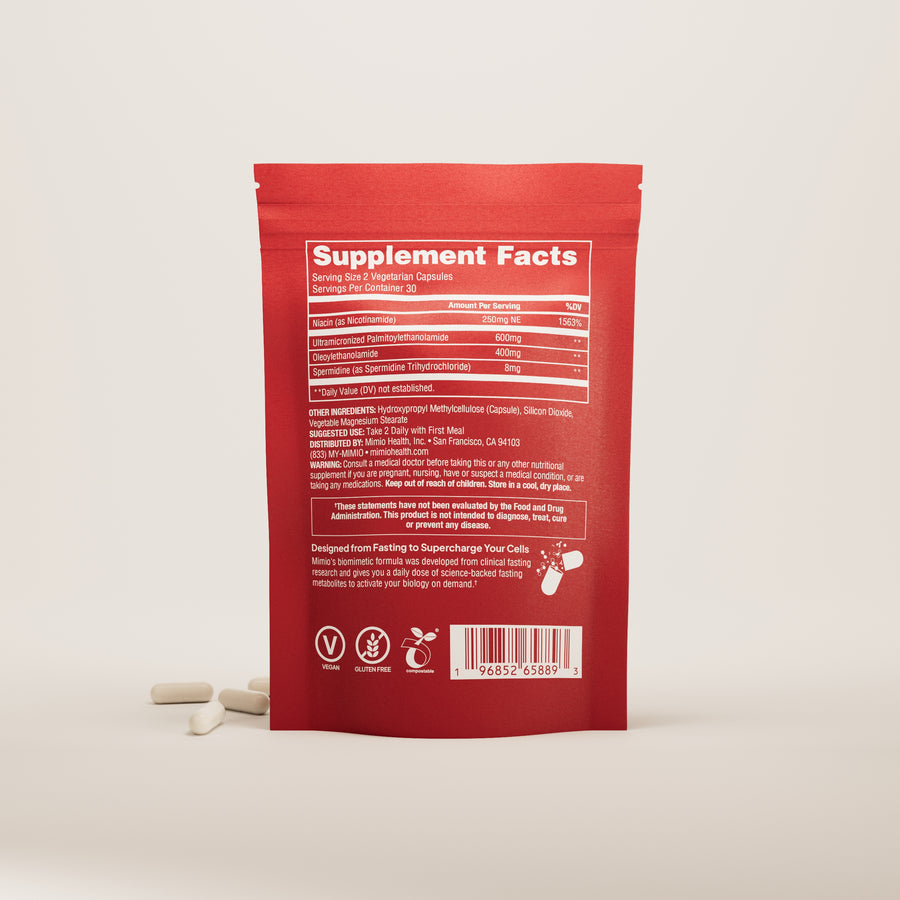
If the formula is relevant to a goal you have discussed with your clinician, review Mimio's ingredients and amounts per serving. You can also read about the finished-formula research and explore our OEA ingredient guide.
Take this checklist to your pharmacist
Bring the actual labels, including products you take only occasionally. Ask:
- Does this ingredient interact with my medicines or health conditions?
- Does the timing matter, particularly for an oral medication?
- Am I duplicating an ingredient across several products?
- Is there evidence for the outcome I want at this dose?
- What would tell me to stop or seek advice?
Independent quality testing can help assess what a product contains. It does not prove that the product delivers every advertised benefit.
Frequently asked questions
Should everyone on a GLP-1 take a multivitamin?
No universal rule fits everyone. Your food intake, nutrient needs and medical history should guide the decision. A multivitamin does not replace enough food or an assessment of ongoing symptoms.
Can I take all my supplements with my medication?
Do not assume so. Administration instructions differ between medicines, including oral and injectable products. Review timing with your pharmacist and follow the prescribing information for the exact product you use.¹˒²
What is the most important supplement for muscle?
There is no single required product. Adequate nutrition and an appropriate resistance-training plan come first. Protein powder may help meet a need; it does not replace training or a medical evaluation of weakness.
How many supplements should I add at once?
Keep the plan understandable. Your clinician may recommend more than one intervention, but changing several products without guidance can make it difficult to identify what helps or what causes a symptom.
Buy for a clear purpose, check the evidence and reassess. A shorter, well-chosen list is often easier to live with than an expensive collection of possibilities.
This article provides general information, not individualized supplement or medication advice. Ask your clinician or pharmacist about your specific combination of products.
Related reading
References
- Novo Nordisk. Wegovy (semaglutide) prescribing information. Full prescribing information.
- Eli Lilly and Company. Zepbound (tirzepatide) prescribing information. Full prescribing information.
- National Institutes of Health, Office of Dietary Supplements. Dietary supplements for exercise and athletic performance: Health professional fact sheet. Evidence review.
- National Library of Medicine. Psyllium. MedlinePlus Drug Information. Psyllium information.
- National Institutes of Health, Office of Dietary Supplements. Multivitamin/mineral supplements: Health professional fact sheet. Evidence review.
- National Institutes of Health, Office of Dietary Supplements. Probiotics: Health professional fact sheet. Evidence review.
- Grant AD, Erfe MCB, Kazaryan A, et al. A novel fasting mimetic (Mimio) creates fasting-like benefits to hunger control, oxidative stress, and cardiometabolic health in humans. Sci Rep. 2026;16:7812. doi:10.1038/s41598-026-38495-7.