More than half of US adults take a supplement, most often a multivitamin, vitamin D or omega-3.¹ If you also have a health savings account (HSA) or flexible spending account (FSA), you may wonder whether it can pay for them, especially as FSA deadlines close in. Usually it can't, with real exceptions, and what decides it is why you take a supplement, not what's in the bottle.
Quick answer: Are vitamins FSA eligible? Usually not. Under IRS rules, vitamins and supplements taken for general health aren't eligible for HSA or FSA funds. They qualify only when a medical practitioner recommends them to treat a specific condition diagnosed by a physician, usually documented in a letter of medical necessity. Over-the-counter medicines are a separate category and are eligible without a prescription.
What the IRS Says About Vitamins and Supplements
HSAs and FSAs pay for medical care as the tax code defines it: diagnosing, curing, mitigating, treating or preventing disease. Expenses merely beneficial to general health don't count, and IRS Publication 502 names vitamins as its first example.²
Supplements get one exception: they count when a medical practitioner recommends them as treatment for a specific medical condition diagnosed by a physician.² The IRS's nutrition and wellness FAQ, updated in September 2026, applies the same test.³ So ask two questions:
- Has a physician diagnosed a specific condition? More energy or healthy aging is a goal, not a diagnosis.
- Has a practitioner recommended this supplement to treat it? The recommendation has to tie the product to the diagnosis.
Two yeses can make a supplement a qualified expense. One no means it isn't, wherever you buy it. So the same bottle of vitamin D can be eligible for one person and not another.
Be wary of shortcuts. In 2024, the IRS warned that a doctor's note based merely on self-reported health information doesn't turn a personal expense into a medical one.⁴
Supplement or Medicine? Check the Label First
Most guides skip this: the label tells you which rule applies.
Since 2020, HSAs and FSAs can pay for over-the-counter (OTC) medicines and menstrual care products without a prescription.⁵˒⁶ Dietary supplements weren't included, so they still need the two-part test.³ Every OTC medicine carries a standard Drug Facts label, while a dietary supplement carries a Supplement Facts panel.⁷˒⁸ So turn the package over:
- Drug Facts: an OTC medicine, such as a pain reliever, allergy tablet, antacid or fiber laxative. These generally qualify with an itemized receipt.
- Supplement Facts: a dietary supplement, eligible only with a diagnosis and a practitioner's recommendation.
That's why two fiber products on one shelf can be treated differently: one is sold as an OTC laxative, the other as a supplement.
Which Supplements Can Qualify? A Quick Guide
Here's how common purchases usually play out. Your plan's list decides.
What you're buying |
Usually eligible? |
What you'll typically need |
|---|---|---|
Multivitamin or other supplement for general health |
No |
Nothing: general wellness doesn't qualify |
Vitamin or mineral to treat a diagnosed condition |
Yes, with documentation |
A diagnosis, a practitioner's recommendation and often a letter of medical necessity |
Glucosamine, chondroitin or probiotics |
Only with documentation |
The same test as any other supplement |
Prenatal vitamins |
Depends on your plan |
Check your plan's list; some ask for a letter |
OTC medicine with a Drug Facts label |
Yes |
An itemized receipt |
Lab tests that check nutrient levels |
Yes, as medical care |
An itemized bill |
Protein powder, shakes or diet foods |
Generally no |
Only the extra cost of special food that treats an illness, backed by a physician²˒³ |
Diagnosed deficiencies are the clearest case. Iron for iron-deficiency anemia, B12 for a confirmed B12 deficiency and vitamin D for a documented deficiency are standard treatments,⁹˒¹⁰˒¹¹ and lab fees to confirm the problem are eligible too.² As our review of healthy aging supplements explains, a measured problem is also the strongest reason to take one.
HSA vs. FSA vs. Letter of Medical Necessity
Both accounts apply the same IRS rule to supplements but differ in who owns the money, how long you have to spend it and who checks claims. A letter of medical necessity (LMN) isn't an account: it's the paperwork linking a purchase to a diagnosis.
Question |
HSA |
Health FSA |
Letter of medical necessity |
|---|---|---|---|
What is it? |
Your own account, paired with an HSA-eligible health plan |
An employer account you fund through payroll |
A practitioner's note tying an item to your diagnosis |
2026 limit |
$4,400 self-only or $8,750 family, plus $1,000 at 55 or older⁶˒¹⁴ |
$3,400 per employee¹³ |
None |
Leftover money |
Rolls over and stays yours, even if you change jobs |
Forfeited at year end unless your plan has a grace period or carryover |
Doesn't apply |
Who checks claims? |
You keep records and report withdrawals on your tax return |
Your plan administrator, before paying |
Your administrator decides if it's sufficient |
One more HSA rule: money spent on non-qualified expenses is taxed as income, plus a possible 20% additional tax unless you're 65 or older or disabled.⁶
How a Letter of Medical Necessity Works
An LMN shows your administrator that a supplement meets the IRS test. There's no IRS form and administrators' forms vary, but most look for your diagnosis, the product, how it treats the condition and for how long, and the practitioner's signature.
To get one:
- Start with a diagnosis. If you suspect a deficiency, ask your clinician about testing.
- Ask whether a supplement is part of your treatment. If it is, ask for a letter or bring your plan's form.
- Check your plan's rules, including how long a letter stays valid and whether it must be on file before you buy.
- Keep the letter with your itemized receipts. With an HSA, it's on you to show that each withdrawal paid for a qualified expense.⁶
How Platforms Like Truemed Handle the Letter
Some companies handle the letter online, including Truemed, which works with Mimio and other brands. According to Truemed:¹⁵
- You complete a short health survey, usually at a participating brand's checkout.
- An independent licensed clinician reviews your answers.
- If you qualify, you get an LMN and can pay with your HSA or FSA card or submit the purchase for reimbursement.
- Qualification isn't guaranteed for every customer or every purchase.
An online letter doesn't change the rule: the purchase still has to treat a condition you actually have. Answer honestly and keep the letter with your receipts.
Can You Use HSA or FSA Funds for Mimio?
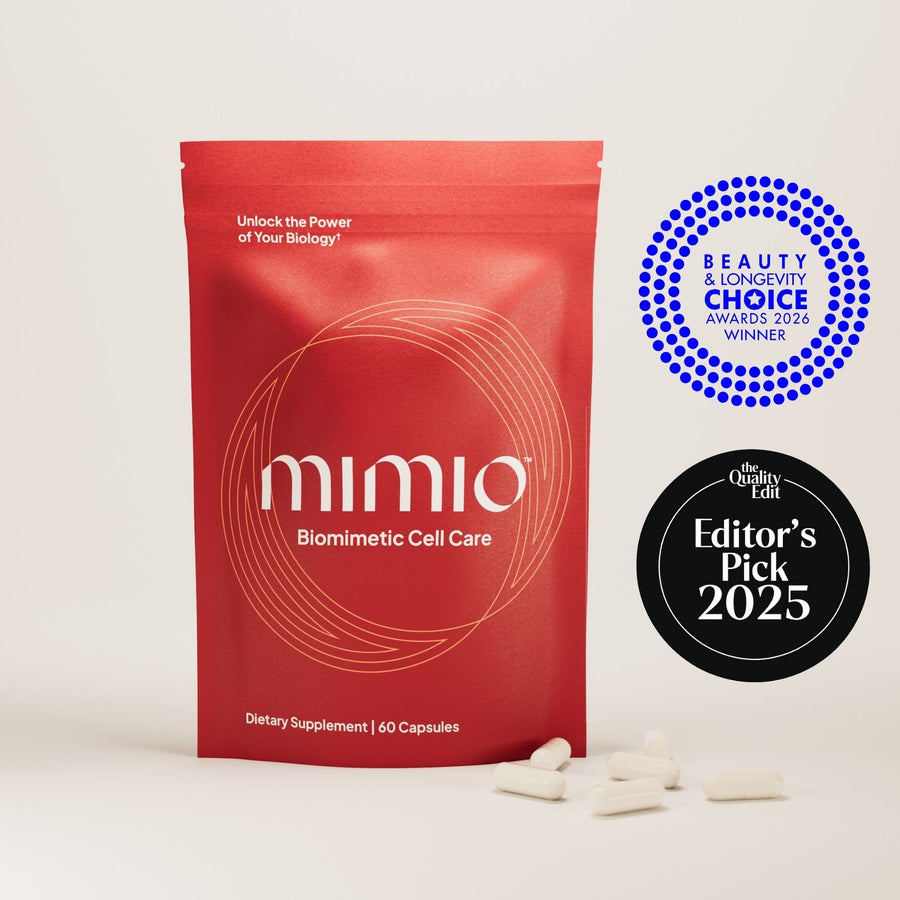
Mimio Biomimetic Cell Care is a daily supplement with four active ingredients: spermidine, nicotinamide (a form of vitamin B3; see how it compares with NR and NMN), palmitoylethanolamide (PEA) and oleoylethanolamide (OEA). Like any supplement, it isn't automatically eligible.
Mimio can be purchased with HSA or FSA funds through Truemed, subject to Truemed's eligibility review. An independent licensed clinician reviews your health survey, approval isn't guaranteed, and your plan administrator makes the final call on reimbursement. Our step-by-step guide to using Truemed to buy Mimio walks through the process, and you can read what customers say about Mimio or how biomimetic supplements work.
Your FSA Deadline: How to Use the Money Before It Expires
FSAs are generally use-it-or-lose-it. Money left at the end of the plan year is forfeited unless your plan offers one of two exceptions, and it can offer only one:⁶
- A grace period of up to two and a half months after the plan year ends, when new expenses can still be paid from last year's balance. For a calendar-year plan, that can run to mid-March.
- A carryover of unused money into the next plan year, up to $680 from a 2026 plan year.¹³
Some plans offer neither, and each sets a deadline (often called a run-out period) for submitting last year's claims. Check your plan documents for exact dates.
Forfeiting is common. In data on more than 3.3 million accounts, the Employee Benefit Research Institute found that about four in 10 FSA holders forfeited money in 2024, and those who did lost $404 on average.¹⁶
A Year-End FSA Checklist
- Check your balance and dates, including any grace period, carryover and claims deadline.
- Book care you've put off. Eye exams, glasses or contacts, dental cleanings and physicals are medical expenses.²˒³
- Restock essentials such as OTC medicines, bandages and menstrual care products.²˒⁵
- Include your family. Your spouse's and dependents' qualified expenses count.⁶
- Get the letter first if a practitioner recommends a supplement to treat a diagnosed condition.
- Buy before the deadline. FSA money reimburses expenses incurred during the coverage period.⁶ Keep itemized receipts, and buy only what you'll use.
Questions People Ask About HSA and FSA Eligibility
Why aren't multivitamins FSA eligible?
The IRS treats them as general health purchases: Publication 502 says supplements taken to maintain ordinary good health aren't medical care.² A multivitamin qualifies only if a practitioner recommends it to treat a condition a physician diagnosed.
Are prenatal vitamins FSA or HSA eligible?
Often, but it depends on your plan: some administrators accept them with a receipt, while others ask for a letter. The medical case is strong: the US Preventive Services Task Force recommends a daily supplement with 400 to 800 micrograms of folic acid for anyone planning or able to become pregnant.¹²
How do I know if my supplement is HSA approved?
There's no list of IRS-approved supplements. A store's "HSA/FSA eligible" tag is a starting point, not a ruling: for a supplement you still need a diagnosed condition, a practitioner's recommendation and records of both.³ When in doubt, ask your plan administrator.
Which vitamins and supplements are HSA eligible?
Any of them, when a practitioner recommends it to treat a condition a physician diagnosed, such as iron for iron-deficiency anemia or vitamin D for a documented deficiency.⁹˒¹¹ Taken for general health, none qualify.²
Are vitamins HSA eligible in 2026?
The rule hasn't changed: the IRS's September 2026 FAQ repeats the two-part test.³ The One Big Beautiful Bill Act widened HSA eligibility in 2026, for example to bronze and catastrophic marketplace plans, but none of those changes covers supplements.¹⁴
What is surprisingly HSA or FSA eligible?
IRS Publication 502 lists acupuncture, breast pumps, pregnancy test kits, diagnostic devices such as blood sugar test kits, hearing aid batteries and contact lens solution.² OTC medicines and menstrual care products qualify too.⁵ An FSA covers only what its plan specifies, so check your plan's list.⁶
Is an Apple Watch FSA eligible?
Usually not. The IRS says tracking health information isn't enough, and neither is a general desire to monitor or improve your health. A wearable can qualify if you buy and use it primarily to diagnose, treat or prevent a specific disease.³
Can I use my FSA or HSA for a GLP-1 medication?
Generally yes, for your out-of-pocket cost: prescribed medicines are medical expenses under IRS rules, though your plan may ask for documentation.² If you take one, see our guide to supplements to take with a GLP-1.
This article is general education, not tax, legal or medical advice. HSA and FSA rules vary by plan, so check with your plan administrator or a tax professional before you buy, and talk with your clinician before starting any supplement.
These statements have not been evaluated by the Food and Drug Administration. This product is not intended to diagnose, treat, cure, or prevent any disease.
References
- Mishra S, Stierman B, Gahche JJ, et al. Dietary supplement use among adults: United States, 2017-2018. NCHS Data Brief. 2021;(399):1-8. PMID 33663653. CDC.gov.
- Internal Revenue Service. Publication 502 (2025), Medical and Dental Expenses. IRS.gov.
- Internal Revenue Service. Frequently asked questions about medical expenses related to nutrition, wellness and general health. Updated September 23, 2026. IRS.gov.
- Internal Revenue Service. IRS alert: Beware of companies misrepresenting nutrition, wellness and general health expenses as medical care for FSAs, HSAs, HRAs and MSAs. IR-2024-65. March 6, 2024. IRS.gov.
- Internal Revenue Service. IRS outlines changes to health care spending available under CARES Act. IR-2020-122. June 17, 2020. IRS.gov.
- Internal Revenue Service. Publication 969 (2025), Health Savings Accounts and Other Tax-Favored Health Plans. IRS.gov.
- US Food and Drug Administration. OTC Drug Facts label. FDA.gov.
- US Food and Drug Administration. Dietary supplement labeling guide: Chapter IV. Nutrition labeling. FDA.gov.
- Camaschella C. Iron-deficiency anemia. N Engl J Med. 2015;372(19):1832-1843. doi:10.1056/NEJMra1401038.
- Stabler SP. Clinical practice. Vitamin B12 deficiency. N Engl J Med. 2013;368(2):149-160. doi:10.1056/NEJMcp1113996.
- Holick MF. Vitamin D deficiency. N Engl J Med. 2007;357(3):266-281. doi:10.1056/NEJMra070553.
- US Preventive Services Task Force, Barry MJ, Nicholson WK, et al. Folic acid supplementation to prevent neural tube defects: US Preventive Services Task Force reaffirmation recommendation statement. JAMA. 2023;330(5):454-459. doi:10.1001/jama.2023.12876.
- Internal Revenue Service. Revenue Procedure 2025-32, section 4.15 (cafeteria plans). IRS.gov.
- Internal Revenue Service. Notice 2026-5: Expanded availability of health savings accounts under the One, Big, Beautiful Bill Act (OBBBA). IRS.gov.
- Truemed. How it works. Truemed.com.
- Employee Benefit Research Institute. About four in 10 FSA accountholders forfeited unused funds to employers, EBRI finds. Press release. October 21, 2026. EBRI.org.