“Natural GLP-1” sounds like a simple category. In practice, it can describe a fiber powder, a botanical blend, an ingredient studied in cells or a product claiming to replace a prescription. Those are very different propositions.
No dietary supplement should be assumed to work like semaglutide or tirzepatide because its marketing mentions GLP-1. Food and some compounds can interact with appetite-related biology. Demonstrating comparable weight-loss effects, safety or long-term outcomes requires clinical evidence for the actual product and use being claimed.
If you want an alternative because medication is expensive, hard to tolerate or unsuitable for you, that is a reasonable conversation to have. The answer deserves better than a borrowed drug name on a supplement bottle.
First, separate the hormone from the medicine
Your body produces glucagon-like peptide-1 as part of normal physiology. Prescription GLP-1 receptor agonists are medicines developed and tested to act on that receptor. Tirzepatide acts on both GIP and GLP-1 receptors.¹˒²
An ingredient that changes hormone release in a laboratory experiment is not automatically equivalent to a medication. The route of administration, exposure, dose and effects throughout the body all matter.
For the basics, our GLP-1 hormone guide explains the connection with appetite and blood sugar. When you evaluate a product, move beyond the pathway name and ask what was actually measured in people.
Four questions that clarify almost any claim
1. Was the finished product studied?
A formula may contain several ingredients, each with a research citation. That does not tell you whether the combined product was tested at the amounts on its label.
Finished-formula research can provide more directly relevant evidence. It still needs to be assessed for study design, duration, participants and outcomes. A trial does not become definitive simply because the product name appears in it.
2. Who participated?
Results in cells or mice can help explain a mechanism. Results in people provide a different kind of evidence. Even within human studies, findings in one group may not transfer to another.
For example, a study in adults who are not using weight-management medication cannot establish how a supplement performs during treatment or after the medicine is stopped.
3. What changed?
Did researchers measure a hormone concentration, reported hunger, food intake, body weight, physical function or a clinical event? Those outcomes answer different questions.
A temporary change in a hormone does not prove sustained weight loss. A participant reporting less hunger does not necessarily mean they lost a clinically meaningful amount of weight.
4. What was the comparison?
Look for the comparison group and the difference between groups. People can improve over time for several reasons, including changes unrelated to the product being tested.
Be particularly cautious with “works like” language when the product has never been directly compared with the medicine named in the claim.
What about fiber and ordinary food?
Foods containing protein and fiber can be part of a satisfying eating pattern. They also provide nutrients and fit into meals in ways a capsule cannot.
That is a useful reason to eat them. You do not need to recast lunch as a dose of “natural Ozempic” to make it worthwhile.
If you are changing your diet to address hunger, start with a specific problem: a breakfast that never keeps you satisfied, a long gap before dinner or too little variety in your meals. A dietitian can help you test changes that fit your preferences and health needs.
Claims about food stimulating a hormone can make an ordinary meal sound pharmacological. Keep the expected benefit proportional to the evidence. A satisfying breakfast and a prescription treatment are not interchangeable interventions.
Berberine and other weight-loss supplements
Berberine has become associated with drug-comparison language online. NCCIH notes that evidence for weight-loss effects remains limited and that safety concerns and interactions need consideration.³
That is different from concluding that every supplement is useless. It means the reason to choose one must come from its own evidence, not the reputation of a prescription it is compared with.
NIH's review of weight-loss supplements also highlights limited evidence for many products and the importance of possible adverse effects and interactions.⁴ “Natural” describes a source or a marketing position. It does not tell you that an ingredient is safe for your circumstances.
If you already take a medication, bring the supplement label to your pharmacist. Avoid making several changes at once because a bundle is marketed as a comprehensive solution.
OEA: a relevant appetite signal with important limits
Oleoylethanolamide, usually shortened to OEA, is a naturally occurring lipid studied in satiety biology. Laboratory and animal research has linked its effects with PPAR-alpha signaling.⁵
A small randomized trial also investigated OEA supplementation in adults with obesity and reported changes in appetite-related measures.⁶ That makes OEA a legitimate research topic. It does not establish that it matches a GLP-1 medication or prevents weight regain after treatment.
Our OEA supplement guide is a useful next read if you want to understand the ingredient. Keep ingredient evidence separate from evidence for any particular commercial formula.
Where Mimio's finished-formula research belongs
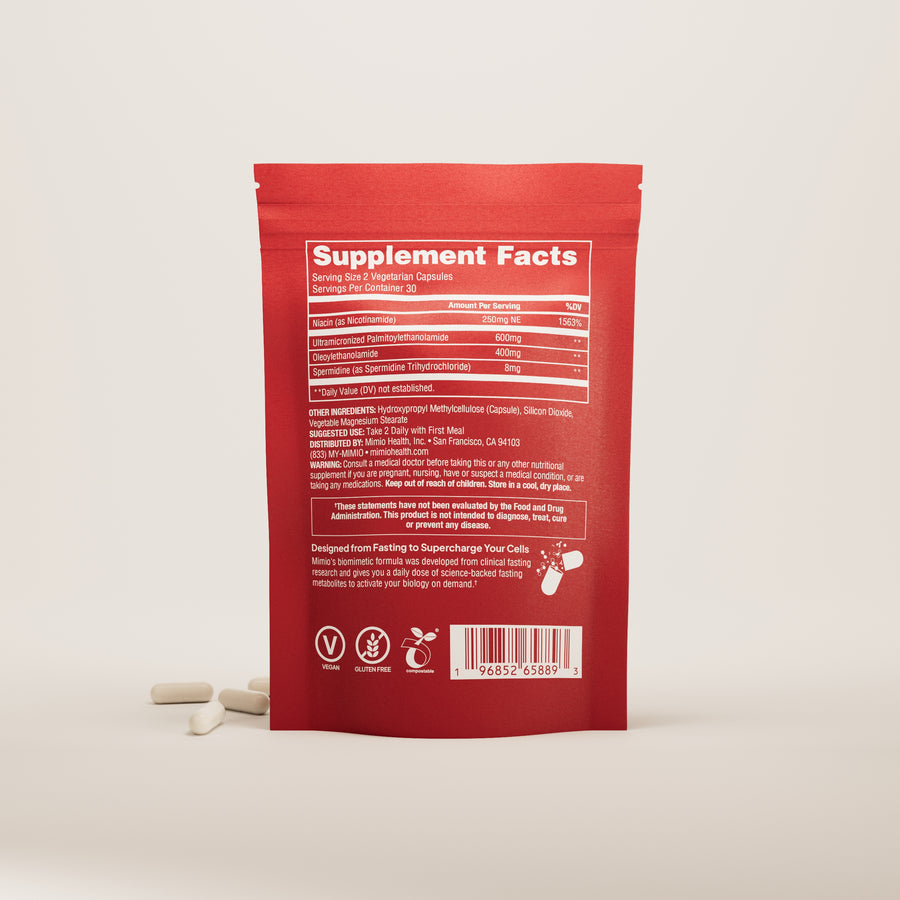
Mimio has been studied as a complete formula, which allows a more direct discussion of the product than ingredient citations alone. Its published eight-week placebo-controlled trial evaluated 42 older adults with overweight and elevated HbA1c.⁷
The study was not a head-to-head comparison with semaglutide or tirzepatide. It also did not test whether Mimio could replace those medicines after discontinuation. Those boundaries matter as much as the fact that a trial exists.
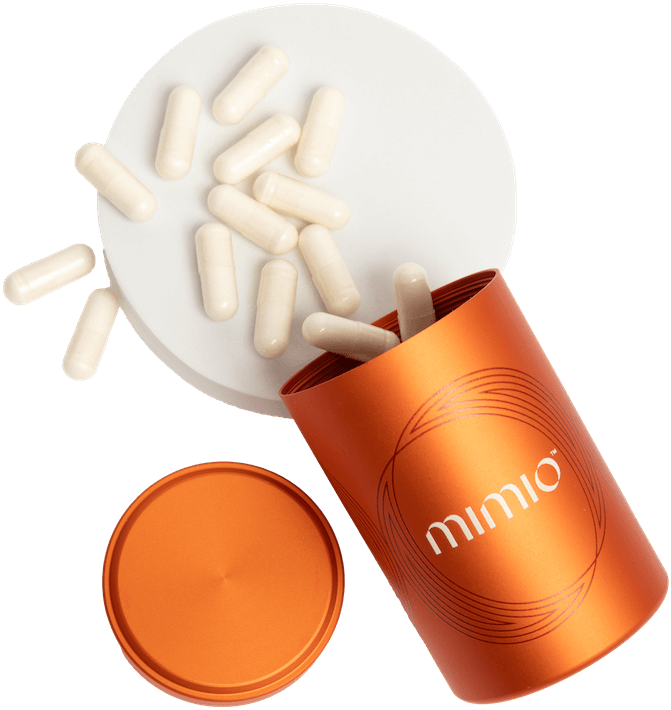
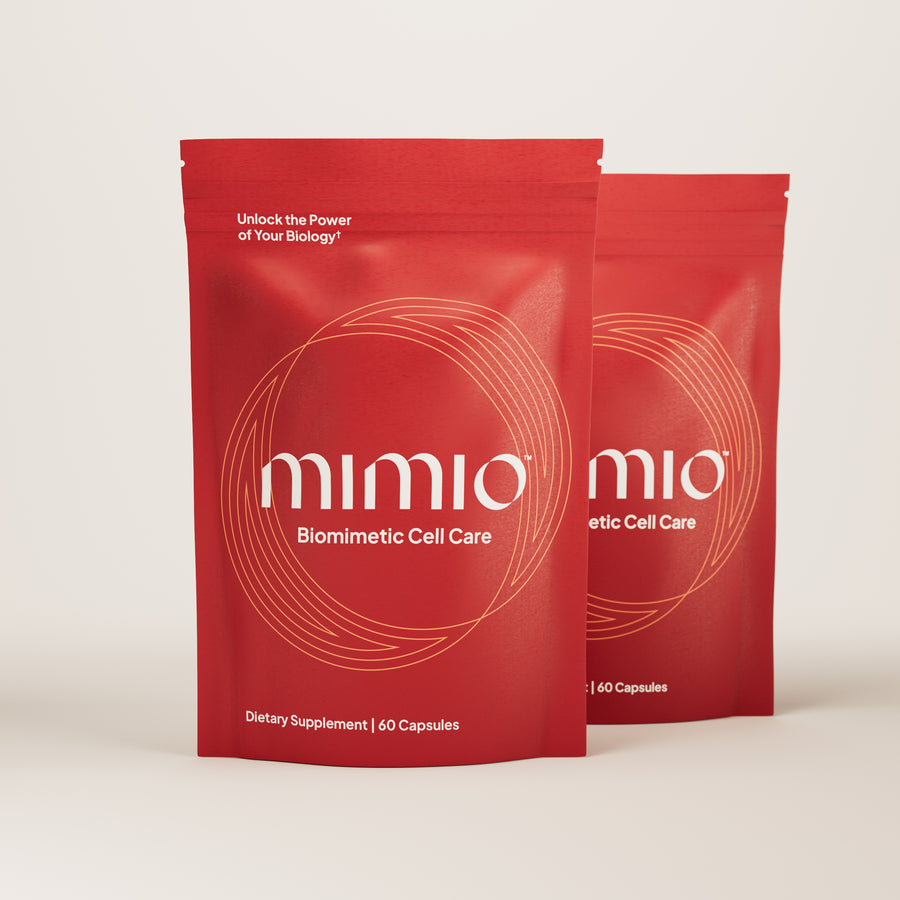
If you are interested in a supplement built around fasting biology, explore Mimio Biomimetic Cell Care and review the research behind the formula. Evaluate it for its own purpose with your clinician, rather than treating it as a substitute for medical care.
What to do if you need an alternative to your prescription
Start with why the current treatment is not working for your life.
If cost is the issue, tell the prescribing team. Ask about available treatment options and support instead of quietly replacing the medication with a supplement.
If symptoms are the issue, describe their frequency, severity and effect on eating or drinking. Your clinician can decide whether the treatment plan needs changing or another problem needs assessment.
If you prefer to avoid medication, ask what outcomes you can reasonably expect from the alternatives available to you and how progress will be monitored.
If you have reached a goal, discuss maintenance before assuming treatment is complete. Your original medical indication still matters.
The right conversation is about your care, not which product can use the most convincing comparison.
A label-reading checklist
Before buying a product advertised as a GLP-1 alternative, check:
- The full ingredient list and amounts per serving.
- Whether cited studies used that exact formula and dose.
- Whether the relevant findings came from humans, animals or cells.
- Whether the advertised outcome was actually measured.
- Whether the product claims to replace or outperform a medicine without a suitable comparison trial.
- Whether your clinician or pharmacist has reviewed potential interactions.
If the company cannot explain the difference between a mechanism and a demonstrated outcome, keep asking questions.
Frequently asked questions
Is there a natural version of Ozempic?
There is no dietary-supplement equivalent you can assume has the same effects as semaglutide. Products using that phrase need to be evaluated on their own evidence.
Can a supplement increase the body's GLP-1?
Some ingredients have been investigated for effects on GLP-1-related biology. The study setting matters. A laboratory finding does not by itself establish a useful effect from an oral supplement in everyday use.
Is natural always safer?
No. Safety depends on the ingredient, amount, product quality, your health and what else you take. Some natural substances interact with medicines or are inappropriate in particular medical situations.
Can I replace my prescription with Mimio?
Do not replace prescribed treatment with Mimio on the basis of supplement marketing. Discuss medication decisions with your prescriber and evaluate Mimio separately as a dietary supplement.
Good research helps you understand what a product can reasonably offer. It should also make the limits easy to see.
This article is educational and is not a recommendation to start, stop or replace prescribed treatment.
Related reading
References
- Novo Nordisk. Wegovy (semaglutide) prescribing information. Full prescribing information.
- Eli Lilly and Company. Zepbound (tirzepatide) prescribing information. Full prescribing information.
- National Center for Complementary and Integrative Health. Berberine and weight loss: What you need to know. Evidence and safety overview.
- National Institutes of Health, Office of Dietary Supplements. Dietary supplements for weight loss: Health professional fact sheet. Evidence review.
- Fu J, Gaetani S, Oveisi F, et al. Oleylethanolamide regulates feeding and body weight through activation of the nuclear receptor PPAR-alpha. Nature. 2003;425:90-93. doi:10.1038/nature01921.
- Laleh P, Yaser K, Abolfazl B, et al. Oleoylethanolamide increases the expression of PPAR-Α and reduces appetite and body weight in obese people: A clinical trial. Appetite. 2018;128:44-49. doi:10.1016/j.appet.2018.05.129.
- Grant AD, Erfe MCB, Kazaryan A, et al. A novel fasting mimetic (Mimio) creates fasting-like benefits to hunger control, oxidative stress, and cardiometabolic health in humans. Sci Rep. 2026;16:7812. doi:10.1038/s41598-026-38495-7.