If fasting was part of your routine before starting a GLP-1, it is natural to wonder whether the two fit together. You may already feel less hungry. Extending the time between meals can seem like the obvious next step.
It is not automatically the right step.
Whether you can fast while taking a GLP-1 depends on the medication, other medicines you use, your health and whether you can meet your nutrition and fluid needs. A clinician should review the plan, especially if you use insulin or a sulfonylurea, have significant digestive symptoms or are considering a prolonged or dry fast.¹˒²
The first question is what you mean by fasting
An overnight break between dinner and breakfast is different from eating within a short daily window. A 24- or 36-hour fast is different again. Religious fasting may also involve avoiding fluids during part of the day.
Explain the actual schedule to your care team. “I fast” is less informative than “I want to skip food and water from dawn to sunset” or “I usually eat lunch at noon and finish dinner by seven.”
Include why you want to do it. Convenience, religious practice, appetite control and a desire for faster weight loss raise different questions. The recommendation should fit the purpose and the risk, rather than treating every fasting pattern as the same intervention.
Lower appetite does not mean lower nutritional needs
If medication has made food less appealing, a shorter eating window may leave fewer comfortable opportunities to eat. That can be a problem even when the schedule feels easy to follow.
The GLP-1 nutrition advisory emphasizes adequate nourishment, assessment of symptoms and support for muscle and bone health.³ Adding a fasting rule should not make those goals harder to meet.
Consider a practical example. You feel full after a small lunch and cannot comfortably finish dinner. Removing lunch does not solve the problem. It reduces the number of opportunities to get nourishment.
Before tightening a schedule, review what you are already eating and drinking. If you are struggling to meet your needs, the next conversation should be about improving intake and treatment tolerability.
Medication combinations change the risk
GLP-1 medicines are not all identical, and the rest of your medication list matters. The prescribing information for semaglutide and tirzepatide warns that hypoglycemia risk can increase when they are used with insulin or medicines that stimulate insulin release.¹˒²
That is a strong reason to avoid improvising a fasting schedule. Ask your prescriber how to monitor glucose and what to do if symptoms or readings fall outside the plan they have given you. Do not independently change medication doses to make a fast possible.
If you have diabetes, ask whether you need a specific fasting-management plan. A general wellness article cannot supply the adjustments required for your medication combination.
Symptoms and hydration deserve priority
Nausea, vomiting, diarrhea and constipation can occur during GLP-1 treatment. If these are affecting your eating or drinking, address them before adding a more restrictive schedule.¹˒²
Dry fasting adds a separate issue because it restricts fluids. Tell your clinician explicitly if your plan involves going without water. Religious or cultural importance should be respected while the medical plan is made specific to your circumstances.
Do not try to finish a fast through severe abdominal pain, repeated vomiting, fainting, confusion or symptoms of low blood glucose. Seek medical help and follow the instructions your care team has provided. A fasting target should never take precedence over a concerning symptom.
Injection timing and meal timing are different questions
Instructions for an injectable medicine may allow administration with or without meals. That does not establish that prolonged fasting is safe for the person taking it.
Oral formulations can have specific requirements around food, water and other oral medicines. Follow the directions for your exact product and review supplement timing with your pharmacist.¹
Avoid transferring advice from someone else's medication to your own. Even if two people say they are “on a GLP-1,” they may be taking different products, doses and other medicines.
What about autophagy or faster results?
Fasting is often discussed in terms of cellular maintenance and autophagy. That biology is interesting, but it does not provide a validated number of fasting hours that every person should pursue while taking a GLP-1.
Similarly, the fact that fasting and medication can both influence eating does not prove that combining them produces a better overall outcome. Benefits, tolerability and nutritional adequacy all need consideration.
Mimio's autophagy and fasting overview is background reading about fasting biology, not a medication-specific safety schedule. Do not use an hour-by-hour chart to decide how long you should go without food during treatment.
Five details to bring to your appointment
Before asking whether you can fast, write down:
- The exact fasting schedule you are considering, including fluid restrictions.
- Your GLP-1 product, dose and other medications or supplements.
- A typical day's food and drink intake.
- Any nausea, vomiting, constipation, dizziness or difficulty eating.
- The reason you want to fast and what you hope it will change.
Ask what would make the plan inappropriate, what needs monitoring and when you should stop. You should leave with an answer that applies to your situation, not a general endorsement of fasting.
If fasting is not a good fit, you still have options
You can work on nutrition, movement, sleep and medical follow-up without an extended fast. A routine that allows you to eat comfortably and keep up with ordinary life is a legitimate treatment priority.
For example, you might focus on a consistent breakfast that you tolerate, a planned lunch on workdays and an activity routine matched to your ability. Those choices may be more relevant than moving the first meal later.
If fasting has become a way to compensate for eating, or you feel distressed when you cannot complete a window, discuss that too. The goal is a sustainable relationship with food as well as physical health.
Does a fasting mimetic change the answer?
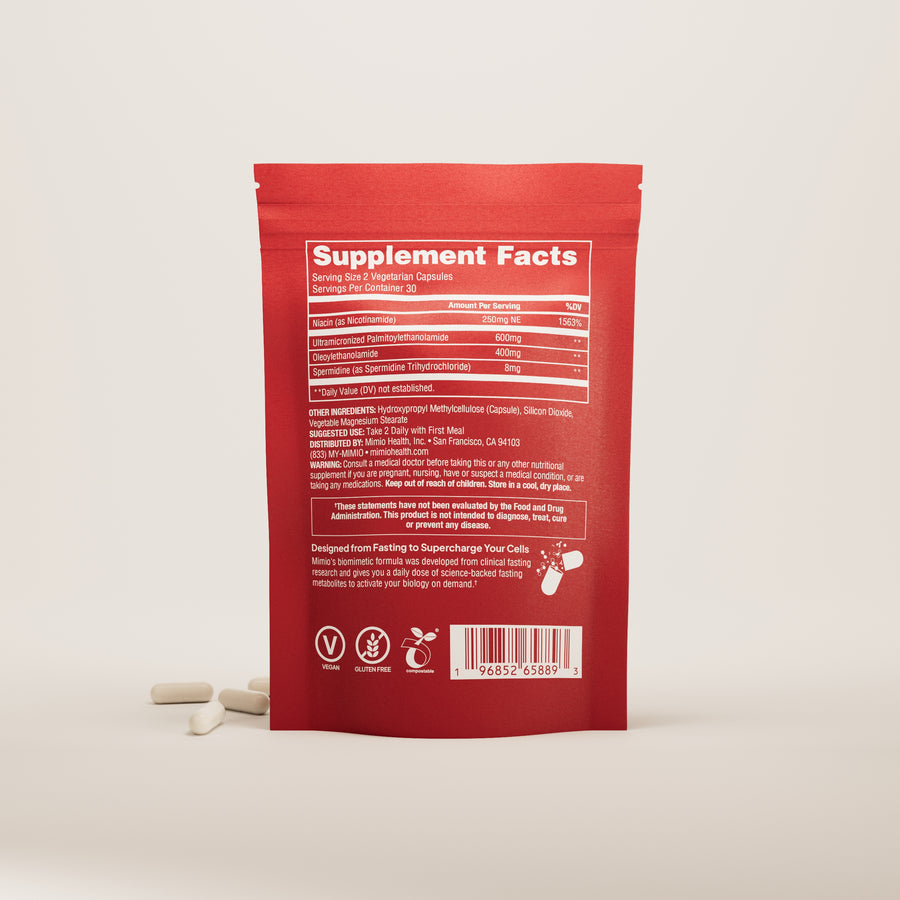
“Fasting mimetic” describes an approach to studying selected aspects of fasting biology. It does not mean that a supplement makes any fasting schedule safe, or that it replaces food, prescribed care or every effect of fasting.
Mimio can be evaluated on its own formula and research. If that is relevant to your goals, read the Mimio product details and review the science with your clinician. The available finished-formula study does not establish the safety or benefits of combining Mimio, prolonged fasting and GLP-1 treatment.
That is a reason to ask a precise question about fit, not to assume three separate strategies will work better when combined.
Frequently asked questions
Can I do 16:8 while taking semaglutide?
There is no blanket answer. Review the schedule with your clinician, including whether your eating window allows adequate food and fluids and whether other medications affect the risk.
Is a 36-hour fast safe on a GLP-1?
A prolonged fast needs particular caution and individualized medical advice. Do not use low appetite as proof that the fast is safe, especially if you have diabetes, take glucose-lowering medicines or are experiencing side effects.
Can I fast for religious reasons?
Discuss the specific food and fluid restrictions with your care team ahead of time. Planning should account for your beliefs, health needs and medication regimen. Do not make medication changes on your own.
Do I need to fast for a GLP-1 to work?
Prolonged fasting is not a requirement in the prescribing instructions for injectable semaglutide or tirzepatide.¹˒² Follow the treatment and nutrition plan agreed with your clinician rather than adding restrictions to make the medication “work harder.”
The most useful schedule is one that supports your care. If a fasting window interferes with nourishment, hydration or symptom management, it deserves reconsideration.
This article does not establish that fasting is safe for any individual taking a GLP-1. Seek personalized guidance before changing eating patterns or medication use.
Related reading
References
- Novo Nordisk. Wegovy (semaglutide) prescribing information. Full prescribing information.
- Eli Lilly and Company. Zepbound (tirzepatide) prescribing information. Full prescribing information.
- Mozaffarian D, Agarwal M, Aggarwal M, et al. Nutritional priorities to support GLP-1 therapy for obesity: a joint advisory from the American College of Lifestyle Medicine, the American Society for Nutrition, the Obesity Medicine Association, and The Obesity Society. Am J Clin Nutr. 2025;122(1):344-367. doi:10.1016/j.ajcnut.2025.04.023.