Your routines may be familiar, but your body no longer feels familiar. Clothes fit differently. Sleep is interrupted. Exercise takes more planning. When a conversation about midlife weight turns to GLP-1 medication, it can be hard to separate a useful treatment option from another promise to fix everything.
GLP-1-based medications may be appropriate for some people in perimenopause or menopause who meet the relevant clinical criteria. Menopause alone is not an indication, and the medicines do not replace care for menopausal symptoms. The best discussion includes metabolic health, nutrition, strength, bone health and the symptoms affecting daily life.¹
What changes during the menopause transition?
Midlife changes involve aging, hormones, activity, sleep and other circumstances. Reducing the explanation to a single “broken metabolism” misses much of the picture.
Research from the Study of Women's Health Across the Nation followed body composition around the menopause transition. It found that fat gain accelerated and lean mass declined during the transition, illustrating why body composition can change in ways the scale does not fully describe.²
That does not mean the same change happens to everyone or that weight gain has only one cause. It does mean that a useful assessment should ask about more than calories and body weight.
Tell your clinician what you have noticed: changes in waist size, strength, sleep, symptoms, eating or daily activity. Those details help shape the next step.
When might a GLP-1 be considered?
The decision depends on the medicine's approved indications, your health history and an individualized assessment of potential benefits and risks. A clinician should consider weight-related conditions and the broader treatment goal, not just whether your clothes fit differently.¹
If you are interested because other approaches have been difficult to maintain, say what you have tried and what got in the way. Was it persistent hunger? Joint pain? Poor sleep? Side effects from a previous treatment? Cost? Those are meaningful details.
Our GLP-1 overview explains the connection with appetite and glucose regulation. The decision to prescribe one remains a separate clinical question.
GLP-1 treatment and hormone therapy do different jobs
Menopausal hormone therapy is considered for particular symptoms and medical circumstances. GLP-1-based treatment has its own indications. One should not be presented as a general substitute for the other.
There is early research on their use together. A retrospective study of 106 postmenopausal women treated with semaglutide found greater weight loss among the 16 using hormone therapy than among the 90 who were not. The study was observational, with a small hormone-therapy group. It cannot establish that hormone therapy caused the difference.³
Do not start hormone therapy solely to try to improve a weight-loss medication's effect on the basis of that finding. Your symptoms, medical history and treatment preferences belong in the hormone-therapy decision.
If you already use hormone therapy, make sure your prescribing clinicians know about all of your medications. A coordinated plan is more useful than separate treatments managed without the full picture.
Give strength a place beside weight
If treatment changes your appetite and weight, pay attention to physical capability too. Are stairs becoming easier? Are you maintaining your usual strength? Do you have enough energy to participate in activities you enjoy?
A tirzepatide body-composition substudy measured losses in both fat and lean mass. Lean mass is not identical to muscle, and a scan alone cannot describe function, but the finding reinforces the value of considering more than total weight.⁴
Discuss an appropriate resistance-training program and adequate nutrition early. You do not need to wait until you feel weaker to ask for guidance.
Make the activity plan realistic
If poor sleep, a painful knee or caregiving responsibilities make exercise difficult, the plan should account for those barriers. A physical therapist, qualified trainer or group class may help you find movements and a schedule that fit.
Choose a starting point you can repeat. A manageable program you gradually build is more useful than a demanding routine that assumes you have unlimited time and energy.
Eat for nourishment within a smaller appetite
You may need to be more deliberate about meals when hunger is reduced. Include protein-containing foods, a variety of plant foods and fluids in forms and portions you can tolerate. The GLP-1 nutrition advisory emphasizes support for nutrient intake, muscle and bone during treatment.⁵
If you are repeatedly too full to eat, or symptoms are limiting your intake, tell your prescriber. “I barely eat now” should prompt a discussion about adequacy and tolerability rather than automatic reassurance.
Ask a dietitian to review your needs if you are unsure. Bone-health questions, including calcium, vitamin D and whether assessment is indicated, should be considered in the context of your age and risk factors.
Do not overlook sleep and menopause symptoms
Weight treatment may be only one part of what needs attention. If night sweats interrupt sleep or symptoms make it harder to work, exercise or prepare meals, describe that clearly at your appointment.
You should not have to wait for a change in weight before addressing symptoms that affect daily life. Ask which concerns belong with your primary-care clinician, menopause specialist or prescribing team and how those providers can coordinate.
A brief symptom record can help. Note what is happening, how often it occurs and what it prevents you from doing. “I wake three times and cancel my morning walk” is more useful than “I feel off.”
Be cautious about adding more restriction
Some people respond to midlife weight changes by trying to eat within progressively shorter windows. If a GLP-1 has already reduced your appetite, further restriction may make it harder to obtain enough nourishment.
If fasting is part of your routine, review it with your clinician rather than assuming it should become more intensive. Our guide to intermittent fasting and menopause is background reading, not a medication-specific recommendation.
A routine that supports sleep, food intake and consistent movement may be a better fit than a schedule that is difficult to maintain or leaves you feeling depleted.
Where do supplements fit?
Start with a need you can explain. A nutrient deficiency, an intake gap and an interest in a cellular-health supplement are different reasons to consider a product. They should not be blended into a single promise to “balance hormones.”
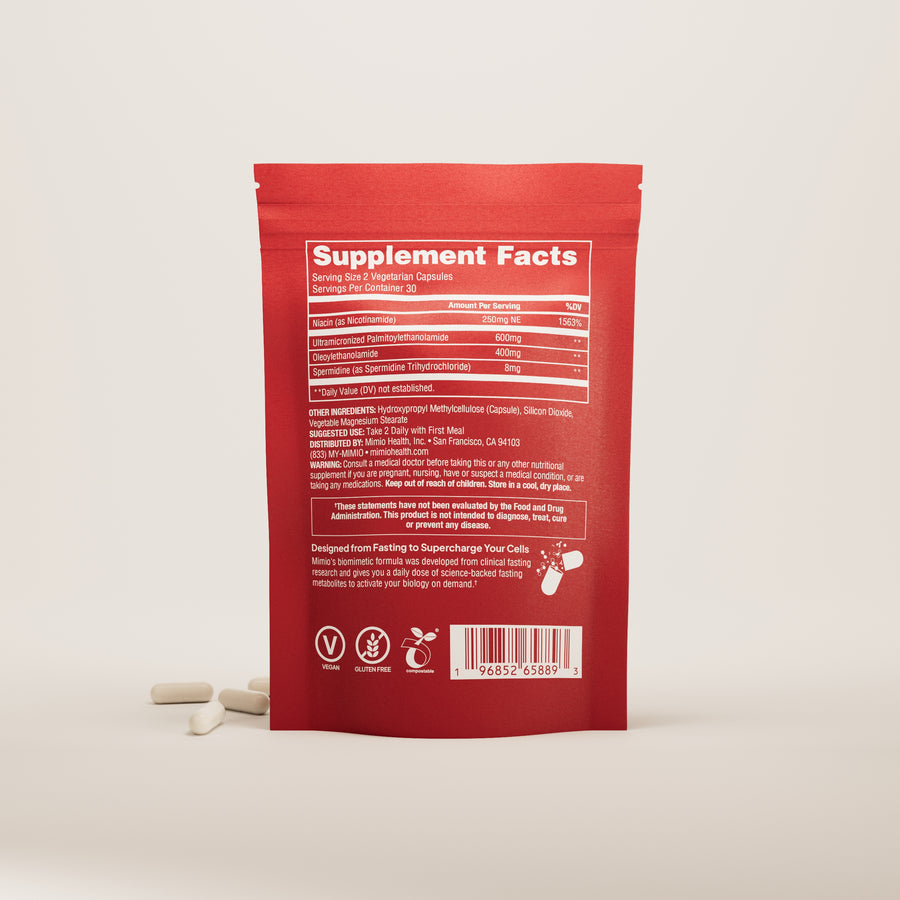
Mimio is not a menopause treatment or a proven way to preserve muscle during GLP-1 use. If you are interested in its formula for a separate wellness goal, review Mimio's ingredients and clinical research with your clinician. Evidence from a study that included women does not automatically establish a menopause-specific benefit.
That distinction helps you make a decision based on your actual needs rather than a product category aimed broadly at women in midlife.
Questions to bring to your appointment
- Do I meet the clinical criteria for this medication, and what is the treatment goal?
- Which symptoms need their own menopause assessment?
- How will we monitor nutrition, strength and relevant health markers?
- Does my current medication or supplement list change the plan?
- What should I do if eating, drinking or exercise becomes difficult?
- What would ongoing treatment and follow-up look like for me?
Write down the concern that matters most before the visit. It is easier to leave with a useful plan when the appointment begins with your priorities.
Frequently asked questions
Does semaglutide treat menopause belly fat specifically?
It should not be described as a targeted treatment for one body area or a menopause symptom. A clinician may consider it for appropriate medical indications, with outcomes evaluated in the context of overall health.
Can I use a GLP-1 and hormone therapy together?
That requires review of your individual treatment plan. Early observational research does not establish that everyone benefits from the combination or that hormone therapy should be added for weight loss.
Is menopause weight gain always caused by slower metabolism?
No single explanation fits everyone. Changes in body composition, sleep, activity, symptoms, health conditions and aging can all be relevant. A useful assessment looks at the pattern in your own life.
What should I prioritize if I start treatment?
Clarify the medical goal, maintain follow-up and establish a nutrition and activity plan you can sustain. Bring up changes in symptoms or physical function even when weight loss is going as expected.
Your care should make room for both metabolic health and the lived experience of menopause. Ask for a plan that addresses the whole set of concerns you bring to the appointment.
This article is educational and does not determine eligibility for medication or hormone therapy. Treatment decisions require individualized clinical assessment.
Related reading
References
- Novo Nordisk. Wegovy (semaglutide) prescribing information. Full prescribing information.
- Greendale GA, Sternfeld B, Huang M, et al. Changes in body composition and weight during the menopause transition. JCI Insight. 2019;4(5):e124865. doi:10.1172/jci.insight.124865.
- Hurtado MD, Tama E, Fansa S, et al. Weight loss response to semaglutide in postmenopausal women with and without hormone therapy use. Menopause. 2024;31(4):266-274. doi:10.1097/GME.0000000000002310.
- Look M, Dunn JP, Kushner RF, et al. Body composition changes during weight reduction with tirzepatide in the SURMOUNT-1 study of adults with obesity or overweight. Diabetes Obes Metab. 2025;27(5):2720-2729. doi:10.1111/dom.16275.
- Mozaffarian D, Agarwal M, Aggarwal M, et al. Nutritional priorities to support GLP-1 therapy for obesity: a joint advisory from the American College of Lifestyle Medicine, the American Society for Nutrition, the Obesity Medicine Association, and The Obesity Society. Am J Clin Nutr. 2025;122(1):344-367. doi:10.1016/j.ajcnut.2025.04.023.