The appointment is ending, your prescription is changing, and the question you most want answered is practical: what happens next?
After stopping a GLP-1 medication, appetite can increase, weight regain is common, and some improvements in blood sugar and other health markers may fade. The size and timing of those changes vary. Planning the transition with your prescriber gives you a chance to respond early rather than waiting until eating feels harder or your numbers have changed.¹
That is the useful starting point. You do not need a prediction that you will regain every pound. You need to understand what the medication was doing, what may change when it is withdrawn, and what your care should look like afterward.
Why stopping can change hunger and fullness
GLP-1 stands for glucagon-like peptide-1, a hormone involved in appetite and glucose regulation. Semaglutide acts on its receptor. Tirzepatide, often discussed alongside GLP-1 medicines, acts on both GIP and GLP-1 receptors. These medications are different from an ordinary dietary supplement.²˒³
While treatment is active, feeling satisfied with smaller portions may become easier. When treatment ends, that support is reduced. A lunch that used to hold you until dinner may no longer feel sufficient. You may start thinking about snacks again. Those experiences are worth discussing without treating them as a failure of discipline.
For a foundation in the biology, read our guide to GLP-1, blood sugar and appetite. The question here is more specific: how do you care for yourself when a treatment that influenced those signals changes?
What the withdrawal studies actually found
Two studies are especially helpful, provided their results are kept in context.
Semaglutide: the STEP 1 extension
In a follow-up involving 327 participants from STEP 1, people previously assigned semaglutide had lost an average of 17.3% of their starting weight by week 68. One year after treatment and the trial's lifestyle intervention stopped, they had regained 11.6 percentage points. That amounted to roughly two-thirds of the weight they had lost, on average.¹
This was a selected follow-up group, not a forecast for every person who stops semaglutide. Both medication and structured lifestyle support ended, which also matters when interpreting the result.
Tirzepatide: the SURMOUNT-4 withdrawal trial
SURMOUNT-4 asked a different question. After an initial 36 weeks on tirzepatide, participants were randomly assigned to continue it or switch to placebo, with lifestyle counseling continuing. During the following 52 weeks, the placebo group gained an average of 14.0% relative to its weight at randomization. The group continuing tirzepatide lost another 5.5%.⁴
Those percentages use the weight at the start of the withdrawal phase. They do not mean that everyone regained 14% of their original starting weight, or that stopping one medication produces the same result as stopping another.
Together, these trials support planning ongoing care. They do not support a promise that a particular meal plan, supplement or exercise routine will fully replace medication.
What might change besides the scale?
Eating may require more deliberate structure
Perhaps you got used to forgetting lunch because hunger was quiet. If your appetite returns, the long gap between breakfast and dinner may become much harder to navigate. A predictable lunch and an available afternoon snack can be more workable than hoping you will feel exactly as you did during treatment.
Notice the circumstances around the change. Are you hungry after several hours without food? Are you eating less during the day because you are worried about regain? Does the urge to snack appear after a poor night's sleep or a demanding evening? A short record of meals, hunger and symptoms can give your clinician useful context.
You do not have to turn every meal into a measurement exercise. The aim is to spot a pattern you can act on.
Blood sugar may need closer follow-up
If medication was prescribed for diabetes or another medical indication, a change in treatment has implications beyond weight. Ask your prescriber what should be monitored, when to repeat bloodwork, and how to handle readings outside the range they have set for you. Do not use an online weight-maintenance plan to manage diabetes medication.²˒³
Digestive symptoms may change
Nausea, constipation and other gastrointestinal symptoms can occur during treatment. Whether those improve after stopping depends on their cause and your medical situation. Persistent symptoms deserve assessment; assuming everything is medication-related can delay care.²
A useful conversation before the final dose
Bring the reason you are stopping into the discussion. Cost, side effects, a planned pregnancy, a change in health status and reaching a weight goal are different situations. They may lead to different next steps.
These questions keep the appointment focused:
- What was this medicine treating in my case, and what needs ongoing monitoring?
- Is stopping the best option, or should we discuss another treatment?
- What changes in hunger, weight or glucose should prompt me to contact you?
- When should my next appointment and blood tests happen?
- Who can help me with nutrition if eating becomes difficult again?
Ask about the transition itself rather than deciding on a taper or a longer interval between injections from social media. Your dose, product, treatment history and health needs belong in that decision.
If the prescription has already ended unexpectedly, contact the prescribing office now. You do not need to wait for a noticeable problem before asking for a follow-up plan.
Watch trends without making every day a verdict
Your monitoring plan should be useful enough to guide care and light enough to live with. If weighing yourself is appropriate for you, agree on a frequency and a reason to check in. A single reading is less informative than a pattern over time.
Include things the scale cannot tell you: whether meals feel satisfying, whether you have energy for ordinary activities, whether you are maintaining your usual strength, and whether your relationship with food is becoming more stressful. If tracking worsens anxiety or you have a history of disordered eating, ask for another approach.
One practical format is a brief weekly note with three lines: what changed, what made the week harder, and what you want to ask at your next visit. That can be more useful than a long food diary you never review.
Can supplements prevent weight regain after GLP-1 treatment?
A supplement should not be presented as a proven replacement for the treatment you are leaving. Research on an ingredient, or even on a finished supplement formula in another population, does not establish that it prevents weight regain after GLP-1 discontinuation.
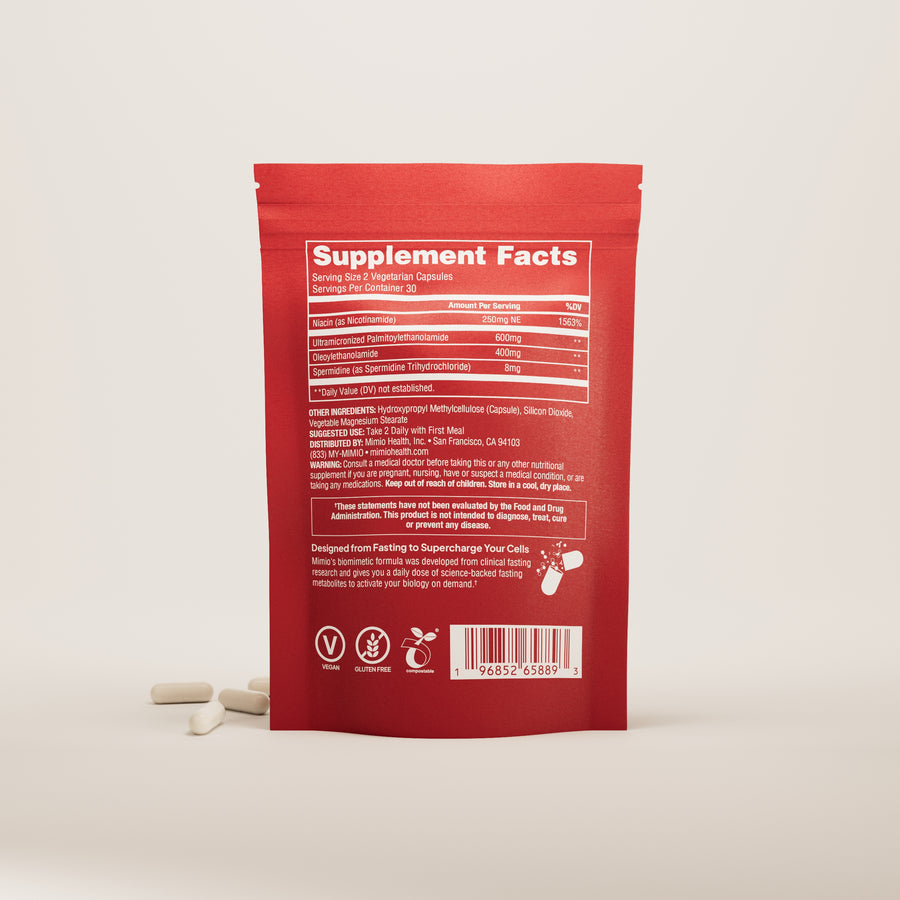
That distinction applies to Mimio too. Our interest in fasting biology and appetite regulation does not make Mimio a substitute for semaglutide, tirzepatide or an individualized maintenance plan.
If you are considering a supplement for your broader daily routine, review Mimio's ingredients and serving information with your clinician or pharmacist. Start with what the product contains and what you want it to do. The Mimio science page gives you a place to examine the research rather than relying on a claim on the front of a package.
Questions people ask about stopping GLP-1 medication
Will I definitely regain all the weight?
No study can tell you that. Average regain was substantial in withdrawal trials, but individual results varied. Ongoing medical care is more useful than assuming either that regain is inevitable or that willpower will prevent it.
How quickly will my appetite return?
There is no reliable countdown that applies to everyone. The medication, dose, time since the last dose and individual response all matter. Record meaningful changes and discuss them with your prescriber rather than using someone else's timeline as your benchmark.
Should I fast to compensate for increased hunger?
Do not respond to returning appetite by automatically extending fasting windows. First check whether your meals are adequate and whether your treatment plan needs attention. A restrictive schedule that leaves you struggling to eat enough during the day may make the transition harder to manage.
What if I need medication again?
That is a clinical decision, not evidence that you failed. Ask your prescriber to reassess the original treatment goals, your current health and the options available. Do not restart an old dose on your own.
Make the next appointment part of the plan
Before you leave treatment, know who you will contact, what you will monitor and when the next conversation will happen. A specific follow-up date is more useful than a vague instruction to see how things go.
Your health after a GLP-1 deserves the same attention it received while you were taking it.
This article is for general education and does not replace individualized medical advice. Medication changes should be managed by your prescribing clinician.
Related reading
References
- Wilding JPH, Batterham RL, Davies M, et al. Weight regain and cardiometabolic effects after withdrawal of semaglutide: The STEP 1 trial extension. Diabetes Obes Metab. 2022;24(8):1553-1564. doi:10.1111/dom.14725.
- Novo Nordisk. Wegovy (semaglutide) prescribing information. Full prescribing information.
- Eli Lilly and Company. Zepbound (tirzepatide) prescribing information. Full prescribing information.
- Aronne LJ, Sattar N, Horn DB, et al. Continued treatment with tirzepatide for maintenance of weight reduction in adults with obesity: The SURMOUNT-4 randomized clinical trial. JAMA. 2024;331(1):38-48. doi:10.1001/jama.2023.24945.