Intermittent fasting has accumulated a genuine and growing research base over the past decade. But a meaningful portion of that research has been conducted in men or in general populations without accounting for the specific physiological context of menopause. The result is a lot of conflicting information about whether fasting is helpful, harmful, or somewhere in between for women going through this transition.
The honest answer is that intermittent fasting can be genuinely useful for women during menopause, and it can also make things worse if approached without understanding the specific ways that menopausal biology changes how the body responds to caloric restriction and fasting stress. Both of those things are true at the same time, and the research supports both.
This guide covers what the evidence actually shows about intermittent fasting and menopause, the mechanisms behind the benefits, the risks that are specific to this life stage, and how to approach fasting in a way that works with your biology rather than against it.
Why Menopause Changes How Your Body Responds to Fasting
To understand why intermittent fasting behaves differently during menopause, it helps to understand what menopause does to the underlying biology that fasting affects.
Estrogen is involved in far more physiological processes than most people realize. Beyond its role in reproductive function, estrogen supports insulin sensitivity, regulates cortisol, modulates how the body stores and distributes fat, supports mitochondrial function, and has anti-inflammatory effects at the cellular level. As estrogen levels decline during menopause, each of these systems shifts.
Insulin sensitivity decreases as estrogen drops, which means the body produces more insulin to maintain blood sugar regulation. Chronically elevated insulin promotes fat storage, particularly in the abdomen. The body's cortisol response becomes less regulated, meaning that physiological stressors, including caloric restriction and fasting, can produce a more pronounced cortisol spike than they did during earlier life stages. Mitochondrial efficiency declines, contributing to the fatigue that many women experience. And cellular repair processes, including autophagy, slow down.
Intermittent fasting addresses several of these changes directly. But the same hormonal environment that makes fasting beneficial also makes certain fasting approaches more problematic. Getting this right requires understanding both sides.
What the Research Shows: Where Intermittent Fasting Actually Helps
The research on intermittent fasting in menopausal women has grown substantially in recent years, with several key areas where the evidence is consistent and meaningful.
Weight Management and Visceral Fat Reduction
Weight gain during menopause, particularly in the abdominal area, is one of the most common and frustrating experiences women report. The redistribution of fat toward the visceral area, the fat stored around the internal organs rather than subcutaneously, is driven by the metabolic changes that accompany estrogen decline. Visceral fat is metabolically active and hormonally disruptive in ways that subcutaneous fat is not.
Research on time-restricted eating in peri and postmenopausal women has consistently shown reductions in visceral fat, improvements in body composition, and modest but meaningful weight changes. A 2025 study published in PubMed Central documented improvements in weight management and metabolic markers in postmenopausal women following intermittent fasting protocols. The mechanism is primarily through the insulin-lowering effect of fasting windows, which reduces the hormonal environment that drives visceral fat accumulation.
For a detailed look at what drives menopause weight gain and which supplements have research supporting its management, the Mimio guide on the best supplements for perimenopause weight gain covers the full picture.
Insulin Sensitivity and Blood Sugar Regulation
Given that declining estrogen directly reduces insulin sensitivity, interventions that support insulin function are among the most mechanistically relevant for menopausal women. This is where the research on intermittent fasting is particularly strong.
Extending the fasting window, even to 12 or 14 hours, reduces the total time the body spends in an elevated insulin state. This allows insulin levels to fall and cells to gradually restore their responsiveness. Multiple studies in menopausal and postmenopausal women have documented improvements in fasting insulin, fasting glucose, and in some cases hemoglobin A1c following consistent time-restricted eating protocols. For women whose A1c is elevated or trending upward, this is one of the most evidence-backed dietary interventions available.
Cellular Repair and the Autophagy Connection
Autophagy, the process by which cells identify and clear out dysfunctional components, declines during menopause. Estrogen plays a protective role in cellular maintenance, so as levels drop, the cellular cleanup that was happening quietly in the background becomes less consistent. The accumulation of damaged cellular components is one of the upstream drivers of the metabolic dysfunction, inflammation, and accelerated biological aging that characterize this transition.
Fasting is one of the most reliably studied activators of autophagy. As glucose and insulin fall during a fast, the body shifts cellular resources toward repair rather than growth. Research indicates that meaningful autophagy upregulation begins at fasting windows of 16 hours or more. Our guide on how fasting activates cellular autophagy covers the research in detail, including what changes at each stage of a fast.
For menopausal women, supporting autophagy through fasting addresses the cellular repair deficit that estrogen decline creates. This is not a cosmetic benefit. Autophagy is directly linked to immune function, neurological health, and the regulation of inflammatory signals, all of which become more relevant as menopause progresses.
Cardiovascular and Metabolic Markers
Cardiovascular risk increases meaningfully after menopause. Estrogen has protective effects on the cardiovascular system through its influence on cholesterol metabolism, blood vessel function, and inflammatory signaling. As estrogen declines, LDL cholesterol tends to rise, HDL may fall, and triglycerides often increase. Blood pressure tends to rise as well.
Research on intermittent fasting in menopausal women has documented improvements across several of these markers, including reductions in total cholesterol, improvements in the LDL to HDL ratio, lower fasting triglycerides, and in some studies modest blood pressure improvements. These outcomes are not guaranteed and depend significantly on what is eaten during the eating window, but the metabolic baseline improvements associated with consistent fasting practice are genuinely relevant to postmenopausal cardiovascular health. A 2026 randomized trial in Scientific Reports on a fasting-mimetic supplement in postmenopausal adults with cardiometabolic risk documented similar improvements including: reductions in total cholesterol, LDL particle number, oxidized LDL, and fasting glucose over 8 weeks, without requiring extended fasting windows. For a deeper look at how cholesterol shifts during and after menopause and what the evidence supports, see our guide on menopause and cholesterol.
The Cortisol Problem: When Intermittent Fasting Backfires
The most important thing to understand about intermittent fasting and menopause is the cortisol dynamic. This is where the research is clear and where the most common mistakes happen.
Fasting raises cortisol. This is not a flaw in the approach but a feature of how fasting works, at least in short bursts. Cortisol mobilizes stored energy, maintains blood sugar during the fasting window, and supports the fat oxidation that makes fasting useful for weight management. In a well-regulated system, this cortisol response is proportionate and temporary.
The problem is that menopause disrupts cortisol regulation. The hormonal fluctuations of perimenopause and the estrogen decline of menopause compromise the body's ability to manage the cortisol stress response. Many menopausal women are already operating with chronically elevated or dysregulated cortisol, driven by poor sleep, elevated life stress, and the hormonal changes themselves. When you add the cortisol load of extended fasting to a system that is already struggling with cortisol regulation, the result can be worse hot flashes, increased insomnia, heightened anxiety, worsened belly fat, and in some women thyroid suppression.
This is why the approach matters as much as the decision to fast at all. Women who jump directly into 18 or 20-hour fasting windows, or who attempt extended 24 to 36-hour fasts without preparation, are most likely to experience these negative effects. Women who build gradually and pay attention to their body's stress signals generally report much better outcomes.
The Muscle and Bone Loss Risk
Menopause accelerates the loss of lean muscle mass through a decline in estrogen's anabolic signaling. This is called sarcopenia, and it is one of the less visible but more metabolically consequential changes of this life stage. Less lean muscle means a lower resting metabolic rate, reduced insulin sensitivity, and reduced bone-protecting mechanical stress.
Fasting without adequate protein intake can accelerate muscle loss. When the body is in a fasted state for extended periods and protein intake is insufficient during the eating window, muscle protein is catabolized for energy. For menopausal women whose muscle mass is already under pressure, this compounds the problem rather than addressing it.
The solution is not to avoid fasting but to prioritize protein intake during the eating window. Most research on fasting in menopausal women suggests protein targets of 1.2 to 1.6 grams per kilogram of body weight, distributed across meals in the eating window. Combining a moderate fasting practice with consistent resistance training addresses both the muscle loss risk and the insulin sensitivity benefits simultaneously.
How to Fast During Menopause: A Protocol Built for This Life Stage
Based on the research and the specific hormonal context of menopause, here is a practical approach that delivers the documented benefits without the cortisol risks that come from aggressive protocols.
Start at 12 Hours and Build Gradually
A 12-hour overnight fast, finishing dinner by 8 pm and not eating until 8 am, is the least stressful starting point for menopausal women and still delivers meaningful metabolic benefits. Many women are already close to this without realizing it. The goal of the first two weeks is consistency, not extension.
If 12 hours feels comfortable and sleep quality is not disrupted, extend to 13 and then 14 hours over the following weeks. For most menopausal women, 14 to 16 hours represents the balance point between meaningful metabolic and cellular benefits and manageable cortisol load.
Align the Eating Window with Daylight Hours
One of the most consistent findings in fasting research specific to women is the advantage of early time-restricted eating, meaning an eating window that aligns with the day rather than extending into evening. Eating from 8 am to 4 pm or from 10 am to 6 pm produces better metabolic outcomes than the same caloric intake shifted to a 12 pm to 8 pm window, largely because it aligns with the body's natural insulin sensitivity peak (which occurs earlier in the day) and with the cortisol rhythm.
For menopausal women specifically, early eating windows also tend to improve sleep quality by reducing the digestive burden during sleep hours. Poor sleep during menopause worsens cortisol, worsens insulin resistance, increases hunger hormones, and compounds nearly every other challenge of this transition. Even a modest improvement in sleep quality from adjusting the eating window produces compound downstream benefits.
Prioritize Protein and Whole Foods in the Eating Window
Protein targets of 1.2 to 1.6 grams per kilogram of body weight during the eating window are supported by the research for preserving muscle mass during fasting. This is not optional for menopausal women — it is what prevents fasting from accelerating the muscle loss that would otherwise occur. Distributing protein across at least two substantial meals rather than concentrating it in one sitting improves absorption and utilization. The fasting benefits for women over 40 guide covers in detail what changes at different fasting durations and how to structure nutrition for this life stage.
The Cellular Benefits of Fasting and a More Sustainable Path to Them
The cellular repair benefits of intermittent fasting, particularly autophagy upregulation and mitochondrial efficiency improvements, are among the most compelling outcomes in the research. They are also the benefits that require longer fasting windows to fully activate, which creates a genuine tension for menopausal women whose cortisol regulation may not support aggressive daily fasting.
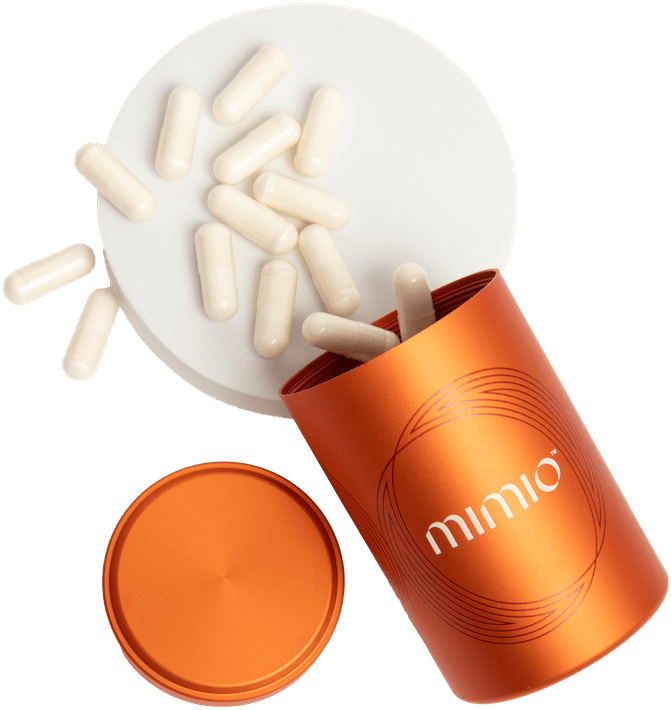
This tension is part of what the Mimio formulation was built around. The research that informed Mimio's development focused on the specific bioactive metabolites the body produces during fasting, the molecules that signal cellular repair, upregulate autophagy, support mitochondrial function, and modulate inflammatory signaling. The biomimetic principle is delivering those signals in supplement form, supporting the same cellular pathways that fasting activates without requiring the extended caloric restriction that menopausal women may not tolerate as well.
For menopausal women who are practicing intermittent fasting, Mimio Daily Cell Care supports the cellular processes that fasting addresses at the foundational level: cellular energy metabolism, autophagy, and healthy inflammatory signaling. It works most effectively as a complement to a moderate fasting practice, extending the cellular benefits into the periods between fasting windows.
For women who cannot or should not do extended fasting due to thyroid conditions, high cortisol, a history of disordered eating, or other considerations, Mimio provides a path to the same cellular benefits through a different mechanism. It does not replace the metabolic improvements that come from the insulin-lowering effect of fasting windows, but it addresses the cellular repair and mitochondrial support components that are the most relevant to what menopause does to the body at the cellular level.
You can explore the full formulation and the research behind the biomimetic approach at Mimio Daily Cell Care.
When Intermittent Fasting Is Not the Right Tool
The honest version of this conversation includes the situations where fasting is not appropriate or needs significant modification. These are not edge cases. They apply to a meaningful percentage of menopausal women.
Active thyroid conditions. The relationship between fasting and thyroid function is genuinely complex. The cortisol elevation from extended fasting can suppress T4 to T3 conversion, worsening hypothyroid symptoms in women who are already managing low thyroid function. Women with Hashimoto's thyroiditis or hypothyroidism should discuss any fasting protocol with their healthcare provider before starting and should monitor symptoms carefully if they proceed.
Chronic high stress and adrenal strain. Women managing significant ongoing stress, whether from work, family demands, or the sleep disruption that menopause itself creates, are already running elevated cortisol. Adding the cortisol load of fasting to this baseline is counterproductive. If you are in a high-stress period, prioritizing sleep and stress management before adding fasting is the sequence the research supports.
History of disordered eating. Time-restricted eating creates a structured relationship with not eating that can reinforce restriction-oriented thinking in women with a history of disordered eating patterns. Working with a therapist or registered dietitian who understands both eating disorders and menopause nutrition is important if this applies to you.
Significant hot flash frequency. Some women find that extended fasting windows worsen hot flash frequency and severity. This appears related to the cortisol and blood sugar fluctuations that longer fasting windows create. If hot flashes worsen noticeably with fasting, shortening the fasting window and prioritizing stable blood sugar through the eating window is the appropriate response, not pushing through.
Any use of glucose-lowering medications. Women taking metformin, GLP-1 receptor agonists, or insulin should discuss fasting protocols with their prescribing physician before starting. The combination of medication-induced glucose management and fasting requires medical supervision to avoid hypoglycemia.
Frequently Asked Questions
What is the best fasting protocol for menopause?
For most menopausal women, 16:8 time-restricted eating (a 16-hour fast with an 8-hour eating window) is the starting target, but it should be reached gradually rather than attempted immediately. Begin with a 12-hour overnight fast and extend by one to two hours every two weeks as long as sleep quality is not disrupted and you are not experiencing increased hot flashes or fatigue. The eating window should ideally be aligned with daylight hours, for example 10 am to 6 pm, rather than pushed into the evening. This circadian alignment improves insulin sensitivity timing and tends to produce better sleep quality. Protein intake during the eating window, targeting 1.2 to 1.6 grams per kilogram of body weight, is essential for preserving muscle mass during the fasting period.
How to lose weight during menopause through fasting?
Fasting supports menopausal weight loss primarily through its effect on insulin sensitivity and visceral fat reduction, not through calorie restriction alone. The most effective approach combines a consistent 14 to 16-hour fasting window with reduced refined carbohydrate intake, adequate protein to preserve lean muscle, and resistance training at least two to three times per week. The resistance training component is not optional — it preserves the lean muscle mass that maintains resting metabolic rate as estrogen declines. Fasting without adequate protein and without resistance exercise can accelerate muscle loss, which makes the metabolic situation worse over time rather than better. Supplements that support insulin sensitivity, including magnesium glycinate and in some cases berberine, can complement the fasting approach. The Mimio guide on the best supplements for perimenopause weight gain covers these in detail.
How many hours should a woman over 50 intermittent fast?
Fourteen to 16 hours is the range supported by research for women over 50, reached gradually rather than started at the upper end. Starting at 12 hours and adding one to two hours over several weeks allows the body to adapt without the cortisol spikes that can accompany more aggressive fasting windows. Women with thyroid conditions, a history of disordered eating, or significant ongoing stress should work at the lower end of this range and consult a healthcare provider before extending further. Extended fasting of 24 hours or more carries a higher cortisol risk for postmenopausal women and should be approached with more preparation and, in many cases, guidance from a clinician who is familiar with women's health and intermittent fasting.
How to get rid of menopause belly fat with fasting?
Menopause belly fat is primarily visceral fat, driven by declining estrogen and the insulin resistance that accompanies it. Fasting addresses this through two mechanisms: reducing total time spent in an elevated insulin state (which directly reduces the hormonal driver of visceral fat storage) and through activating cellular repair processes including autophagy, which reduces the inflammatory activity of visceral fat cells. The most effective fasting approach for belly fat specifically is 16:8 time-restricted eating with the eating window aligned earlier in the day, combined with a diet lower in refined carbohydrates and higher in protein and fiber. Resistance training is essential because lean muscle is metabolically active and directly counteracts the metabolic changes that drive abdominal fat accumulation. Fasting alone without dietary quality and resistance exercise will produce limited results on visceral fat.
Does intermittent fasting affect menopause symptoms like hot flashes?
The evidence here is mixed and varies meaningfully between individuals. Some women report that fasting reduces the frequency and severity of hot flashes, possibly through its effects on insulin regulation and inflammatory signaling. Others find that extended fasting, particularly windows longer than 16 hours, worsens hot flashes and night sweats. The mechanism for the worsening effect appears to be the cortisol and blood sugar fluctuations that longer fasting windows create in women who are already cortisol-stressed. The practical approach is to monitor hot flash frequency when starting a fasting practice. If symptoms worsen with longer windows, shortening the fast to 12 to 14 hours and stabilizing blood sugar through consistent protein and fat intake during the eating window typically reduces the impact.
Is water fasting safe during menopause?
Extended water fasting, typically defined as fasting for 24 hours or more with only water, poses specific risks for menopausal women that make it unsuitable as a routine practice without medical supervision. Prolonged fasting significantly elevates cortisol, which can worsen hot flashes, disrupt sleep, suppress thyroid function, and accelerate muscle loss in women who are already losing lean mass due to estrogen decline. The cellular benefits that motivate interest in extended fasting, particularly autophagy upregulation, begin to appear at 16-hour windows and continue building from there. Getting those benefits through a consistent 16-hour practice is safer and more sustainable than periodic extended fasts for most menopausal women. If you are interested in extended fasting for specific health reasons, discussing it with a healthcare provider who is familiar with women's menopausal physiology is strongly recommended.
The Bottom Line
Intermittent fasting can be a genuinely useful tool during menopause when approached thoughtfully and with an understanding of the specific ways that menopausal biology changes how the body responds to fasting stress. The benefits for insulin sensitivity, visceral fat reduction, cardiovascular markers, and cellular repair are documented and meaningful. The risks from cortisol, muscle loss, and sleep disruption are also real and also documented.
The women who get the most out of intermittent fasting during menopause are the ones who build gradually, align their eating windows with daylight hours, protect their protein intake, combine fasting with resistance training, and pay attention to what their body is actually telling them rather than pushing through warning signals.
The cellular repair benefits of fasting, particularly autophagy upregulation and mitochondrial support, are among the most compelling and the hardest to access through shorter fasting windows alone. For women who want to support those pathways consistently alongside a moderate fasting practice, Mimio Daily Cell Care was built around the specific cellular mechanisms that menopause disrupts and fasting addresses.
You can learn more about the formulation and the research behind it at Mimio Daily Cell Care. And for the full picture of how fasting works at each stage of a woman's life, the guide on benefits of a 36-hour fast covers the cellular and metabolic research in detail.