Cholesterol tends to rise around the menopausal transition. This is one of the most consistently documented metabolic changes in women's health research, and it happens to women whose diet, weight, and exercise habits have not changed. In many cases, the rise begins during perimenopause and accelerates across the menopausal transition, continuing into the postmenopausal years.
The conventional framing is that menopause causes cholesterol to go up. That is true, but it is incomplete. The more accurate framing is that menopause removes a layer of cardiovascular protection that estrogen had been providing, and the underlying metabolic trajectory becomes visible in ways it could not before.
This guide covers what is actually happening, why the postmenopausal years are a critical window for cardiovascular risk management, what the research on cellular metabolism is showing, and the evidence-backed approaches worth considering.
What Happens to Cholesterol During and After Menopause
Research on women transitioning through menopause has documented a consistent pattern: total cholesterol and LDL cholesterol rise, often by 10 to 20 points or more, across the transition itself. HDL tends to fall. Triglycerides often rise. And the composition of LDL particles shifts toward smaller, denser particles that are more atherogenic than the larger, more buoyant particles that predominated earlier in life.
Several mechanisms are operating at the same time.
Estrogen regulates LDL clearance. Estrogen upregulates LDL receptor activity in the liver, which is how the body removes LDL cholesterol from the bloodstream. When estrogen declines, LDL receptor activity decreases, and LDL that would have been cleared stays in circulation longer. This is the most direct mechanism, and it is the one most women are told about, even if briefly.
Insulin sensitivity declines. Estrogen supports insulin sensitivity, and its absence contributes to the increased insulin resistance that is common in postmenopausal women. Chronically elevated insulin drives several changes at once: higher triglycerides, lower HDL, increased VLDL production, and the shift toward small, dense LDL particles.
Visceral fat accumulates. Fat distribution shifts from the hips and thighs toward the abdomen during and after menopause. Visceral fat, which is the fat stored around internal organs, is metabolically active in ways that subcutaneous fat is not. It produces inflammatory signals, worsens insulin resistance, and contributes directly to unfavorable lipid changes.
Inflammation rises. Estrogen has anti-inflammatory effects across multiple systems, and its absence contributes to low-grade systemic inflammation that compounds endothelial dysfunction, LDL oxidation, and the slow progression of atherosclerotic disease.
For a deeper look at how these changes begin earlier in perimenopause, the Mimio guide on perimenopause and cholesterol covers the mechanism in more detail, including the specific biology of LDL particle shifts and the relevance of Non-HDL cholesterol as a more complete risk marker.
Why the Postmenopausal Years Are a Critical Window
Cardiovascular disease is the leading cause of death in women, and the risk curve steepens meaningfully in the years after menopause. The accumulated effect of elevated LDL, rising LDL particle number, insulin resistance, visceral fat, and low-grade inflammation over the postmenopausal decades is what translates into clinical events. The women with the best cardiovascular outcomes in their sixties, seventies, and beyond are the women who established the healthiest metabolic profile in the first decade after menopause.
This is not about reacting to a single lab result. It is about treating the first ten years after menopause as the window in which long-term risk is set.
What the Research on Cellular Metabolism Is Showing
The standard approach to rising cholesterol after menopause has been monitoring, dietary counseling, and statin therapy for women whose LDL crosses clinical thresholds or whose overall cardiovascular risk warrants pharmacologic intervention. That approach has substantial evidence behind it and will continue to be appropriate for many women.
A parallel line of research has examined whether addressing the upstream cellular and metabolic biology (mitochondrial function, autophagy, inflammatory signaling, and glucose handling) produces measurable changes in the markers that drive cardiovascular risk, including lipid markers.
A Recent Human Trial
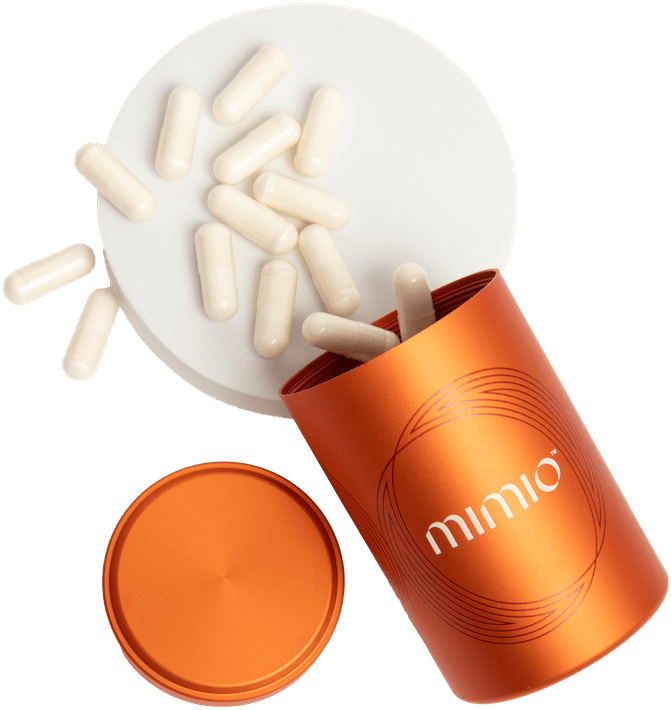
A randomized, double-blind, placebo-controlled trial published in Scientific Reports (Nature portfolio) in February 2026 evaluated Mimio, a biomimetic supplement designed to replicate the bioactive metabolites produced by the body during fasting (Grant et al., Scientific Reports, 2026; full paper). Over eight weeks, 42 participants — older adults (mean age 62 ± 4) with overweight BMI and elevated HbA1c, with female participants required to be postmenopausal — were randomized to either Mimio or placebo.
The study population overlaps directly with the cardiometabolic profile many postmenopausal women encounter: mid-60s, mildly overweight, rising glucose markers, and without protective estrogen. In the Mimio group compared to placebo, the trial documented statistically significant reductions in:
- Total cholesterol
- LDL cholesterol
- LDL particle number — a 5.4% reduction vs. a 4.8% rise in placebo
- Non-HDL cholesterol
- Oxidized LDL — an 8.6% reduction vs. a 4.3% rise in placebo
- Fasting glucose
The effect sizes were modest, which the authors note directly — consistent with an 8-week intervention in an already-healthy population. What is meaningful is that several interconnected markers moved together, which is consistent with an intervention acting upstream on the cellular and metabolic environment rather than on each marker independently.
For women navigating the postmenopausal metabolic landscape — where rising LDL is typically accompanied by rising fasting glucose, declining insulin sensitivity, and rising oxidized LDL — interventions that move the shared upstream biology have broader relevance than interventions that target any single marker in isolation.
The Mechanism
Mimio Daily Cell Care was developed from research into the metabolic signals the body produces during extended fasting, including oleoylethanolamide (OEA) and palmitoylethanolamide (PEA). OEA acts through PPAR-alpha, a pathway involved in fat oxidation and hepatic lipid handling. PEA supports a healthy inflammatory response. The biomimetic approach delivers these signals without requiring the extended fasting that produces them naturally — a practical consideration for many postmenopausal women, particularly those for whom prolonged fasting is not appropriate.
To explore the formulation and research, see the Mimio Daily Cell Care product page.
Evidence-Backed Approaches to Cholesterol Management in Menopause
No single intervention defines the right approach, and for many postmenopausal women the most effective strategy combines clinical care, lifestyle, and targeted supplementation.
Pharmacologic Options
Statin therapy remains the most evidence-backed pharmacologic intervention for elevated LDL and elevated cardiovascular risk in postmenopausal women. The decision to initiate statin therapy is appropriately a clinical conversation based on a woman's full risk profile, including LDL level, Non-HDL, Lp(a), family history, blood pressure, diabetes status, and age. For women in whom statins are appropriate, the evidence base for cardiovascular event reduction is strong.
Hormone replacement therapy has documented effects on lipid profiles, including modest reductions in LDL and increases in HDL, with effects varying by formulation and delivery route. HRT is not a cholesterol medication, but its lipid effects are one of many factors in the clinical conversation about whether HRT is appropriate for a given woman. For a more detailed view on the full HRT discussion in menopause, consult a healthcare provider who specializes in this life stage.
Lifestyle Interventions
Dietary pattern. The Mediterranean dietary pattern has the strongest outcome evidence for cardiovascular health in postmenopausal women. Emphasizing vegetables, legumes, whole grains, fish, nuts, and olive oil, with minimal ultra-processed food, added sugar, and refined carbohydrate, produces consistent improvements in lipid markers and cardiovascular event rates.
Resistance training. Preserving and rebuilding lean muscle mass is one of the most impactful interventions available in the postmenopausal years, with effects on insulin sensitivity, resting metabolic rate, and bone density alongside the cardiovascular benefits. Two to three sessions per week is the research-supported floor.
Aerobic exercise. Sustained moderate-intensity aerobic exercise has direct effects on HDL, triglycerides, and LDL particle size. The 150 minutes per week that forms the conventional recommendation is a floor, not a ceiling, and women who can build toward more see additional benefit.
Sleep quality. Postmenopausal sleep disruption is common and has direct effects on insulin sensitivity, cortisol regulation, and inflammatory signaling — all upstream of lipid markers. Addressing sleep quality directly compounds the effect of every other intervention.
Alcohol. Alcohol's effects on triglycerides, sleep quality, and liver function become more pronounced during and after menopause. Reducing intake is one of the more immediate levers for lipid improvement.
Supplement Categories with Evidence
Omega-3 fatty acids (EPA and DHA) have the strongest evidence base among supplements for cardiovascular support in postmenopausal women, with documented effects on triglycerides, anti-inflammatory signaling, and LDL particle characteristics. Target 2-3g combined EPA/DHA daily.
Soluble fiber and plant sterols interrupt cholesterol recycling and reduce absorption, lowering LDL through well-documented mechanisms. Neither is pharmaceutical-strength, but consistent daily intake has real compounding effects.
Berberine has evidence for both glucose regulation and lipid improvements, making it particularly relevant for postmenopausal women with metabolic syndrome features. Women on glucose-lowering or lipid-lowering medications should discuss berberine with a healthcare provider before starting, given mechanism overlap.
Cellular health support through biomimetic compounds that address mitochondrial function, autophagy, and inflammatory signaling represents a newer area of research with direct relevance to the broader postmenopausal metabolic environment. The 2026 Scientific Reports trial on Mimio is one example of this research direction.
Foundational micronutrients including: magnesium glycinate, vitamin D3 with K2, and ensuring adequate protein intake to support lean muscle, which create the metabolic context in which other interventions work better.
For a broader framework on supplement support through the menopausal transition, the Mimio guide on perimenopause supplements covers the full evidence base for this life stage.
What Cholesterol Supplements Cannot Do
Honesty here is more useful than optimism.
No supplement replaces the cardiovascular benefit of consistent physical activity or the effect of a dietary pattern that is genuinely Mediterranean in structure. The magnitude of those effects exceeds what any supplement produces.
No supplement substitutes for medical care in women whose overall cardiovascular risk warrants statin therapy. The decision to initiate a statin is appropriately a clinical conversation, and there are women for whom the evidence clearly supports pharmacologic intervention.
No supplement compensates for unmanaged elevated blood pressure, unaddressed diabetes, or chronic poor sleep. Supplements work best as part of a broader strategy, not in place of the fundamentals.
Frequently Asked Questions
Does menopause cause high cholesterol?
Yes. Declining estrogen during and after the menopausal transition reduces the liver's ability to clear LDL cholesterol from the bloodstream and contributes to insulin resistance, visceral fat accumulation, and increased inflammatory signaling. Together, these changes typically result in rising total cholesterol, rising LDL, rising Non-HDL cholesterol, and a shift toward smaller, denser LDL particles. The change often becomes apparent across the menopausal transition itself and continues into the postmenopausal years.
Why does my cholesterol keep rising even though I have not changed my diet?
The cholesterol changes of menopause are driven primarily by the hormonal shift itself rather than by diet or activity changes. Even women whose diet and exercise have remained consistent typically see rising LDL during and after menopause because estrogen's effect on hepatic LDL clearance fades regardless of lifestyle factors. This does not mean diet and exercise do not matter. It means they do not fully offset the hormonal effect on lipid markers, and most postmenopausal women benefit from evaluating additional supports alongside the lifestyle fundamentals they have already established.
Can HRT cause high cholesterol?
Hormone replacement therapy generally has favorable effects on cholesterol profiles, including modest reductions in LDL and modest increases in HDL. Effects vary by formulation, delivery route, and individual response. Oral estrogen has somewhat different lipid effects than transdermal estrogen, and some progestogens can modify the overall lipid response. The full cardiovascular risk-benefit conversation about HRT extends beyond lipid markers alone and should involve a clinician who specializes in menopause care.
What is a normal cholesterol level for a woman in her 50s or 60s?
General clinical reference ranges apply: total cholesterol under 200 mg/dL, LDL under 100 mg/dL (with stricter targets for women with additional cardiovascular risk factors), HDL above 50 mg/dL, and triglycerides under 150 mg/dL. For a more complete picture, Non-HDL cholesterol (total cholesterol minus HDL), LDL particle number, apolipoprotein B, Lp(a), and hs-CRP add meaningful information that standard lipid panels miss. A postmenopausal woman with "normal" LDL may still have elevated cardiovascular risk that only shows up on the more granular markers.
What is the best supplement to lower cholesterol after menopause?
No single supplement is definitively the best, because cholesterol patterns in postmenopausal women vary significantly in their underlying drivers. Omega-3 fatty acids have the strongest evidence base for most women and address triglycerides and LDL particle characteristics. For women with accompanying insulin resistance or metabolic syndrome features, berberine has relevance. Soluble fiber and plant sterols work through a different mechanism and can be stacked with other approaches. For women looking to address the broader cellular and metabolic environment that influences multiple lipid markers simultaneously, Mimio Daily Cell Care was developed around the biomimetic cellular mechanisms documented in a 2026 Scientific Reports trial conducted in postmenopausal and older adults with elevated cardiometabolic risk.
Does Mimio lower cholesterol?
In a randomized, double-blind, placebo-controlled trial published in Scientific Reports (Nature portfolio) in 2026, Mimio produced statistically significant reductions in total cholesterol, LDL cholesterol, LDL particle number, Non-HDL cholesterol, oxidized LDL, and fasting glucose compared to placebo over 8 weeks. The 42 participants were older adults (mean age 62) with elevated HbA1c and overweight BMI; female participants were postmenopausal. Effect sizes were modest in absolute terms (LDL particle number down 5.4% vs. a 4.8% rise in placebo; oxidized LDL down 8.6% vs. a 4.3% rise) and were consistent with an 8-week intervention. Mimio is a cellular health supplement, not a cholesterol medication, and it does not claim to treat or prevent cardiovascular disease. The relevance of the trial findings is that biomimetic cellular support produced favorable changes across several interconnected markers directly relevant to postmenopausal cardiovascular risk. For the full formulation and research, visit the Mimio product page.
What to Take Away
Rising cholesterol after menopause is a documented consequence of the hormonal transition, driven primarily by reduced hepatic LDL clearance, declining insulin sensitivity, rising visceral fat, and increased inflammatory signaling. The postmenopausal years are a critical window for cardiovascular risk management, and the women with the best long-term outcomes are the women who address the full metabolic context — lifestyle fundamentals, clinical care where appropriate, and targeted supplementation — rather than treating cholesterol as an isolated lab value.
For women looking to support the cellular and metabolic foundation that underlies multiple lipid markers, Mimio Daily Cell Care was developed around the biomimetic mechanisms documented in recent research. For adjacent reading, the Mimio guides on perimenopause and cholesterol, perimenopause supplements, and best supplements for perimenopause weight gain cover related territory for women in different stages of the transition.
These statements have not been evaluated by the Food and Drug Administration. This product is not intended to diagnose, treat, cure, or prevent any disease.