You get your annual bloodwork back and something has shifted. Your LDL is higher than it has ever been. Your total cholesterol has climbed into a range your doctor wants to discuss. Nothing in your diet has changed. You have not stopped exercising. Your weight is close to where it has been for years. And yet the numbers are moving in a direction that does not match the way you are living.
This is one of the more disorienting experiences of perimenopause, and it happens to a lot of women. The timing is not coincidence. It is a specific, well-documented consequence of the hormonal shift that defines this life stage, and it is driven by biology that few women are ever given real context for.
This guide covers what is actually happening to your cholesterol during perimenopause, why it matters for long-term cardiovascular health, what the newest research on cellular metabolism is showing, and the evidence-backed strategies that address this shift at the mechanism level.
What Actually Happens to Your Cholesterol During Perimenopause
Most of what is written about perimenopause and cholesterol stops at "estrogen goes down, LDL goes up." That framing is not wrong, but it skips most of the mechanism, and the mechanism is where the meaningful intervention points live.
The Estrogen-Liver-LDL Connection
Estrogen plays a direct role in how the liver processes cholesterol. Specifically, estrogen upregulates LDL receptor activity in liver cells, which is the primary way the body clears LDL cholesterol from the bloodstream. When estrogen levels fluctuate and decline during perimenopause, LDL receptor activity decreases, and LDL that would normally have been pulled out of circulation stays in the blood longer.
The result is rising LDL that is not caused by anything you are doing differently. The liver is simply less efficient at clearing it.
It Is Not Just the Amount. It Is the Particle.
One of the more important nuances that rarely makes it into mainstream coverage is that perimenopause does not only raise LDL cholesterol. It changes the quality of the LDL particles themselves.
During perimenopause, women tend to develop a shift toward smaller, denser LDL particles. These particles are more atherogenic than larger, more buoyant LDL particles of the same cholesterol content. They penetrate arterial walls more readily and are more susceptible to oxidation. This is why advanced lipid panels often report LDL particle number (LDL-P) and particle size alongside standard LDL-C measurements, and why two women with identical LDL cholesterol numbers can have meaningfully different cardiovascular risk profiles.
The shift toward more numerous, smaller, more oxidation-prone LDL particles is driven by the same insulin resistance and inflammatory changes that characterize other aspects of the perimenopausal metabolic shift.
Insulin Sensitivity, Non-HDL, and the Metabolic Context
As estrogen declines, insulin sensitivity often declines with it. Cells become less responsive to insulin, the body compensates by producing more of it, and chronically elevated insulin drives several changes that worsen cholesterol profiles simultaneously: increased triglyceride production, reduced HDL cholesterol, increased VLDL production, and the shift toward smaller, denser LDL particles described above.
This is why Non-HDL cholesterol (total cholesterol minus HDL) becomes an increasingly useful marker during perimenopause. It captures the full universe of atherogenic lipoproteins (LDL, VLDL, IDL, and remnants) rather than just LDL in isolation. For women in perimenopause, Non-HDL often tells a more complete story of cardiovascular risk than LDL alone.
Inflammation's Compounding Role
Estrogen has documented anti-inflammatory effects across multiple systems. As estrogen fluctuates and declines, low-grade systemic inflammation tends to rise, and this inflammation contributes to endothelial dysfunction, LDL oxidation, and the plaque-formation cascade that turns elevated cholesterol into cardiovascular risk.
The key point is that perimenopausal cholesterol changes are not a single problem. They are the visible surface of a broader metabolic and inflammatory shift, and interventions that address the upstream biology tend to have broader effects than those that only target one lab value.
Why This Matters: The Cardiovascular Context
Cardiovascular disease is the leading cause of death in women, and the risk curve rises sharply around the menopausal transition. Before perimenopause, women have meaningful cardiovascular protection from endogenous estrogen. After menopause, that protection is gone, and the accumulated effect of years of elevated LDL, elevated LDL particle number, insulin resistance, and inflammation begins to show up as clinical cardiovascular events at rates that eventually match and exceed those in men of the same age.
Perimenopause is the window in which the trajectory is set. The women who enter menopause with the healthiest lipid profile, the best insulin sensitivity, and the most favorable inflammatory markers are the women whose cardiovascular risk stays lowest in the decades that follow. This is not about reacting to a single lab result. It is about recognizing perimenopause as a window where intervention has outsized long-term leverage.
What the Research on Cellular Metabolism Is Showing
The conventional approach to rising LDL in perimenopause has been straightforward: monitor it, address diet, consider a statin if it crosses a clinical threshold. That approach has value. It also misses most of the upstream biology, because it treats cholesterol as an isolated variable rather than as a downstream readout of cellular and metabolic function.
A more recent line of research has focused on whether addressing the cellular mechanisms that underlie the broader perimenopausal metabolic shift — mitochondrial function, cellular repair, inflammatory signaling, and glucose handling — produces measurable changes in the markers that drive cardiovascular risk.
A Recent Human Trial on Biomimetic Cellular Support
A randomized, double-blind, placebo-controlled trial published in Scientific Reports (Nature portfolio) in February 2026 evaluated Mimio, a biomimetic supplement developed to replicate the bioactive metabolites the body produces during fasting. Over eight weeks, 42 participants — older adults (mean age 62 ± 4) with overweight BMI and elevated HbA1c — were randomized to either Mimio or placebo (Grant et al., Scientific Reports, 2026; full paper).
Compared to placebo, the Mimio group showed statistically significant reductions in:
- Total cholesterol
- LDL cholesterol
- LDL particle number: a 5.4% reduction vs. a 4.8% rise in placebo
- Non-HDL cholesterol (the composite marker of all atherogenic lipoproteins)
- Oxidized LDL: an 8.6% reduction vs. a 4.3% rise in placebo
- Fasting glucose
- A note on population relevance.
The trial's female participants were required to be postmenopausal — the study did not directly evaluate Mimio in perimenopausal women. What it demonstrates is that the biomimetic cellular mechanisms the supplement acts on can produce measurable improvements in lipid markers, oxidized LDL, and fasting glucose in a cardiometabolically-at-risk adult population. Those mechanisms — improving how cells handle lipids and glucose, and reducing the oxidative damage that pushes LDL toward its more atherogenic forms — are the same mechanisms underlying the cholesterol changes that begin earlier, during perimenopause.
Direct clinical efficacy specifically in perimenopausal women has not yet been studied. The mechanistic case is consistent; the perimenopause-specific clinical evidence remains an open research question.
What is meaningful about this set of markers moving together is that they are not independent. LDL cholesterol, LDL particle number, Non-HDL cholesterol, oxidized LDL, and fasting glucose are all downstream readouts of a shared cellular and metabolic environment. When an intervention moves several of them at once, that pattern is consistent with action on the upstream biology rather than on each marker in isolation.
For women in perimenopause, where rising LDL typically coincides with rising Non-HDL, rising fasting glucose, and rising inflammation, interventions that address the cellular foundation are mechanistically relevant — though, as noted, the clinical magnitude specifically in perimenopausal women has not yet been established.
The Biomimetic Mechanism
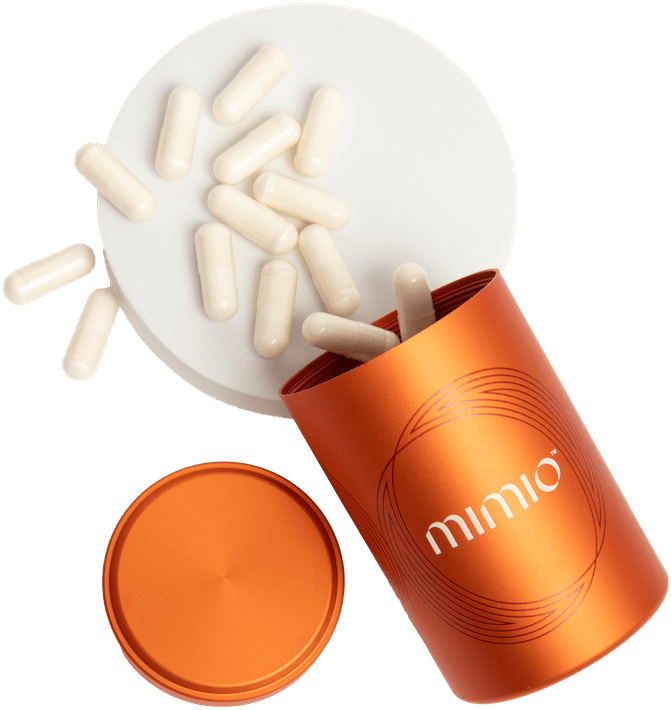
Mimio Daily Cell Care was developed from research into the specific metabolic signals the body produces during prolonged fasting — a state in which cellular repair, autophagy, mitochondrial efficiency, and metabolic flexibility all increase measurably. Rather than requiring extended fasting, Mimio delivers those same bioactive metabolites, including oleoylethanolamide (OEA) and palmitoylethanolamide (PEA), in supplement form.
OEA acts through PPAR-alpha activation, a nuclear receptor pathway directly involved in fat oxidation, lipid metabolism, and hepatic LDL handling. PEA supports a healthy inflammatory response through its effects on immune cell signaling. Together with the broader biomimetic formulation, these compounds target the cellular environment in which cholesterol regulation, glucose handling, and inflammation all operate.
To explore the full formulation and the research base behind it, visit the Mimio Daily Cell Care product page or the Mimio science hub.
Evidence-Backed Categories for Cholesterol Support in Perimenopause
Beyond the cellular foundation, several supplement categories have meaningful evidence for the specific lipid and metabolic shifts that characterize perimenopause. These work best as part of a broader strategy that includes the dietary and lifestyle interventions covered below.
Omega-3 Fatty Acids (EPA and DHA)
Omega-3 fatty acids have the strongest and most consistent evidence base among supplements for cardiovascular support during the menopausal transition. Their effects on triglyceride reduction are well-documented, and they contribute to a more favorable overall lipid environment through anti-inflammatory action and effects on VLDL production. The cardiovascular benefit is most pronounced in women with elevated triglycerides, which is a very common perimenopausal pattern.
Target intake is generally 2-3g of combined EPA and DHA daily, either from high-quality fish oil, algae-based omega-3 for women who avoid fish-derived supplements, or consistent dietary intake of fatty fish (salmon, sardines, mackerel) 2-3 times per week.
Soluble Fiber and Plant Sterols
Soluble fiber, particularly from oats, psyllium, legumes, and certain fruits, binds bile acids in the gut and interrupts the cholesterol recycling that the liver depends on. This forces the liver to pull more cholesterol out of the blood to manufacture new bile acids, lowering circulating LDL. Plant sterols and stanols work through a related mechanism, competing with cholesterol for absorption in the intestine.
Neither is a pharmaceutical-strength intervention, but both have enough evidence to be worth integrating as daily dietary practice. The effects compound over months.
Berberine
Berberine has accumulated a substantial research base for both glucose regulation and lipid profile improvements. Its effects on fasting glucose, fasting insulin, and HbA1c are meaningful, and it has also shown reductions in total cholesterol and LDL in multiple studies. For women whose perimenopausal cholesterol rise is accompanied by rising fasting glucose or insulin resistance, berberine is one of the more mechanistically relevant options available.
It is important to characterize this carefully: berberine is not a statin or metformin equivalent, and anyone taking glucose-lowering medications or statins should discuss berberine with their healthcare provider before starting, as mechanisms can overlap.
Cellular Health and Fasting Mimetics
As discussed in the research section above, compounds that support cellular energy metabolism, autophagy, and healthy inflammatory signaling address the upstream biology that connects rising LDL to rising fasting glucose, rising oxidative stress, and the broader metabolic shift of perimenopause. Mimio Daily Cell Care was developed specifically around this category of mechanism.
For a deeper look at the broader supplement landscape for this life stage, the Mimio guide on perimenopause supplements covers the full evidence base for sleep, mood, metabolic, and cellular health support.
Foundational Micronutrients
Magnesium glycinate (300-400mg before bed) supports insulin sensitivity and sleep quality, both of which have downstream effects on lipid metabolism. Vitamin D3 with K2 supports hormonal signaling and calcium partitioning (directing calcium into bone rather than arterial wall). These are not direct cholesterol interventions, but correcting common deficiencies improves the metabolic context in which every other intervention operates.
Lifestyle Inputs That Outperform Any Supplement
No honest discussion of perimenopausal cholesterol is complete without acknowledging that the single most effective interventions are not in a bottle.
Resistance training is the most evidence-backed lifestyle intervention for perimenopausal women across nearly every outcome that matters, and its effects on insulin sensitivity and lean muscle mass cascade into better lipid profiles over months. Two to three sessions per week of progressive resistance training is the research-supported floor.
Aerobic exercise, particularly at moderate intensity sustained over 150 minutes per week or more, has direct effects on HDL, triglycerides, and LDL particle size that no supplement replicates at the same scale. Zone 2 cardio — the intensity at which conversation is sustainable but effortful — has become particularly well-studied for metabolic and mitochondrial adaptation during midlife.
Dietary pattern matters more than any individual food. The Mediterranean dietary pattern has the strongest outcome data for cardiovascular support in perimenopausal and menopausal women: high in vegetables, legumes, whole grains, fish, nuts, and olive oil, with minimal ultra-processed food and added sugar. This is not a prescriptive meal plan. It is a direction of travel that consistently outperforms stricter, more restrictive approaches.
Sleep quality directly affects insulin sensitivity, cortisol regulation, and inflammatory markers — all upstream drivers of the cholesterol shift. Addressing sleep disruption during perimenopause has compound benefits on metabolic health that are difficult to achieve through supplementation alone.
Alcohol deserves direct mention because its effects on women's metabolism become more pronounced during perimenopause, and alcohol directly raises triglycerides and contributes to insulin resistance. Reducing alcohol intake is one of the more immediate levers available, and the effects on sleep quality, liver function, and lipid markers can show up within weeks.
For a broader framework on metabolic health in perimenopause, the Mimio guide on how to reset your female metabolism covers the biological mechanisms and practical interventions in more depth. And for women exploring fasting as a metabolic tool, the guide on fasting benefits for women over 40 covers what the research supports at this life stage.
What Supplements Cannot Do for Perimenopausal Cholesterol
This section matters because the supplement market for women's cardiovascular health contains a lot of overclaim.
Supplements cannot replace the cardiovascular benefit of consistent physical activity. The magnitude of lipid and metabolic change from an established exercise habit is larger than what any supplement delivers, and this remains true at every dose and combination.
Supplements cannot neutralize a dietary pattern that chronically elevates insulin and inflammation. Ultra-processed food, refined carbohydrates, high intake of industrial seed oils, and frequent alcohol create a metabolic environment in which supplement effects are dampened or negated entirely.
Supplements cannot substitute for medical evaluation. Rising LDL in perimenopause can also reflect thyroid dysfunction, familial hypercholesterolemia that was previously masked, or medication effects that deserve clinical attention. A thyroid panel, a complete lipid panel including Non-HDL and, where possible, LDL particle number, and a conversation with a provider who specializes in midlife women's health are foundational steps before deciding on a supplement protocol.
Supplements do not replace hormone replacement therapy for women for whom HRT is clinically appropriate. HRT has documented effects on lipid profiles, cardiovascular risk, and broader menopausal symptoms, and the decision about whether HRT is appropriate is a clinical conversation, not a supplement-guide decision.
When to Involve Your Doctor
A few signals warrant a direct conversation with your healthcare provider rather than a supplement approach alone:
- LDL above 160 mg/dL, particularly with additional cardiovascular risk factors (family history, hypertension, elevated Lp(a), current smoker)
- Non-HDL above 190 mg/dL
- Elevated triglycerides above 200 mg/dL
- Any chest symptoms, shortness of breath, or reduced exercise tolerance
- Family history of early cardiovascular events in first-degree relatives (men under 55, women under 65)
- Rapid, unexplained changes in lipid markers that do not correspond to life changes
For women evaluating the full cardiovascular risk picture, the conversation worth having with your provider includes Non-HDL cholesterol, LDL particle number if available, apolipoprotein B, Lp(a), hs-CRP, fasting insulin, HbA1c, and a thyroid panel. Standard lipid panels alone miss some of the most informative markers in perimenopause.
Frequently Asked Questions
Can perimenopause cause high cholesterol?
Yes. Declining and fluctuating estrogen during perimenopause reduces the liver's ability to clear LDL cholesterol from the bloodstream, shifts LDL particle distribution toward smaller and denser particles, and contributes to insulin resistance and inflammation that together raise both LDL and Non-HDL cholesterol. These changes often occur independently of diet or activity changes, which is why many women see cholesterol numbers rise during perimenopause despite unchanged lifestyle patterns. The shift is a documented consequence of the hormonal transition, not a reflection of new behaviors.
Why is my cholesterol so high but I am fit and healthy?
Elevated cholesterol in fit, active women during perimenopause is usually explained by the hormonal mechanism above rather than by lifestyle factors. Declining estrogen reduces LDL clearance in the liver regardless of fitness level, and the shift in LDL particle size is also hormonally driven. Additional contributors can include genetic factors (familial hypercholesterolemia, elevated Lp(a)), thyroid dysfunction, certain medications, and insulin resistance that can develop even in otherwise fit women during perimenopause. Fitness meaningfully reduces cardiovascular risk but does not always fully offset the hormonal effect on lipid markers, which is why a complete evaluation is worthwhile even for women who are otherwise doing everything right.
How can I lower my cholesterol naturally during perimenopause?
Evidence-backed natural approaches include: a Mediterranean dietary pattern with emphasis on soluble fiber, vegetables, legumes, and fatty fish; resistance training two to three times per week combined with moderate-intensity aerobic exercise; sleep quality improvements targeting seven-plus hours; alcohol reduction; and targeted supplementation with omega-3 fatty acids, and where appropriate, berberine for women with accompanying insulin resistance. Cellular health support through compounds that address mitochondrial function, autophagy, and inflammatory signaling represents an emerging area of research with relevance to the full cluster of perimenopausal metabolic changes. Results from lifestyle and supplement interventions typically become measurable in bloodwork within 12 weeks of consistent implementation.
Can HRT help with cholesterol in perimenopause?
Hormone replacement therapy has documented effects on lipid profiles, generally including modest reductions in LDL and modest increases in HDL, with effects varying by formulation, delivery route, and individual response. The decision about whether HRT is appropriate involves a broader clinical evaluation of personal and family history, symptom severity, and cardiovascular risk profile. For women who are candidates for HRT, its cardiovascular and metabolic effects are among the factors in that decision. This is a conversation for a healthcare provider who specializes in perimenopause and menopause, not a question that supplement protocols can answer.
What is a normal cholesterol level for a woman in her 40s?
General clinical reference ranges place total cholesterol under 200 mg/dL, LDL under 100 mg/dL (with stricter targets for women with additional cardiovascular risk factors), HDL above 50 mg/dL, and triglycerides under 150 mg/dL. These are population-level targets and do not capture the more granular picture provided by Non-HDL cholesterol, LDL particle number, apolipoprotein B, and Lp(a). A woman in perimenopause with rising LDL that remains within "normal" range may still be on a trajectory that warrants attention, particularly if other markers are also shifting. Context matters more than any single number.
Does Mimio lower cholesterol?
In an 8-week randomized, placebo-controlled trial published in Scientific Reports (Nature portfolio, 2026), Mimio produced statistically significant reductions in total cholesterol, LDL cholesterol, LDL particle number, oxidized LDL, Non-HDL cholesterol, and fasting glucose compared to placebo. The 42 participants were older adults (mean age 62) with overweight BMI and elevated HbA1c; female participants were postmenopausal. The trial did not specifically evaluate Mimio in perimenopausal women, so direct clinical efficacy in perimenopause remains an open research question. What the trial does demonstrate is that the biomimetic cellular mechanisms Mimio acts on can produce measurable improvements across interconnected cardiometabolic markers. Mimio is not a cholesterol medication and does not claim to treat or prevent cardiovascular disease. For the full formulation and research, visit the Mimio product page.
What supplements lower LDL particle number specifically?
LDL particle number (LDL-P) is influenced by the underlying metabolic environment more than by most single-nutrient interventions. Evidence-backed approaches that have shown LDL-P improvements include omega-3 fatty acids (particularly through effects on small, dense LDL), berberine, plant sterols combined with soluble fiber, and interventions that improve insulin sensitivity such as carbohydrate quality improvements and resistance training. The 2026 Scientific Reports trial on Mimio documented a 5.4% reduction in LDL particle number (vs. a 4.8% rise in placebo) in postmenopausal women and men with elevated cardiometabolic risk, suggesting that biomimetic cellular support can influence this more granular marker alongside the broader metabolic profile.
The Bottom Line
Rising cholesterol in perimenopause is a specific, well-documented consequence of the hormonal and metabolic shift that defines this life stage. It is not caused by anything you are doing wrong, and it does not respond predictably to the interventions that may have worked in your thirties. It responds to interventions that address the underlying biology: the declining liver clearance of LDL, the shift in LDL particle quality, the rise in insulin resistance, and the inflammatory and cellular changes that sit underneath the whole cluster.
Evidence-backed support combines dietary and lifestyle changes that have the largest effect on lipid and metabolic markers, targeted supplementation for the mechanisms with the strongest research, and, for appropriate candidates, clinical conversations about HRT and other interventions. For women looking to support the cellular foundation that connects many of these markers to one another, Mimio Daily Cell Care was developed from research into the biomimetic cellular mechanisms, and a 2026 trial in Scientific Reports documented favorable effects on lipid and metabolic markers in a postmenopausal and cardiometabolically-at-risk population. Direct efficacy specifically in perimenopausal women has not yet been studied, though the underlying mechanisms are consistent.
For related reading on the full metabolic and hormonal picture of this life stage, the Mimio guides on perimenopause supplements and best supplements for perimenopause weight gain cover adjacent territory in depth.
These statements have not been evaluated by the Food and Drug Administration. This product is not intended to diagnose, treat, cure, or prevent any disease.