A 12 hour fast is the gentlest version of intermittent fasting: finish dinner at 7 p.m., eat breakfast at 7 a.m., and sleep through most of the gap. It counts, but it doesn't do everything the internet promises. Here's what happens in those hours, what the trials found (null results included), and when to step up to 14:10, 16:8 or 18:6.
Quick answer: A 12 hour fast (12:12) means no calories for 12 hours, such as 7 p.m. to 7 a.m. It's enough to end late-night eating and build a habit, but it isn't a proven threshold for fat loss or autophagy. Some trials of 14- to 16-hour fasts found modestly bigger gains in weight, blood pressure or blood sugar; others found none.
What Is a 12 Hour Fast?
A 12 hour fast, or 12:12, means 12 hours without calories, mostly covered by sleep, and a 12 hour eating window. Water, black coffee and plain tea are fine; milk, sugar, juice and bedtime snacks count as eating. Our guide to what to drink while fasting covers the gray areas. For milk or a bedtime snack, see how many calories break a fast.
Many people aren't as close as they think: in a Salk Institute app study, half of adults ate across more than 14.75 hours a day.¹
Your day |
Eating window |
12 hour fast |
|---|---|---|
Early riser |
6 a.m. to 6 p.m. |
6 p.m. to 6 a.m. |
Standard workday |
7:30 a.m. to 7:30 p.m. |
7:30 p.m. to 7:30 a.m. |
Late dinners |
9 a.m. to 9 p.m. |
9 p.m. to 9 a.m. |
All three count, but earlier windows have better support.
What Happens in Your Body During a 12 Hour Fast
Nothing switches on at hour 12. Your body shifts gradually from your last meal to its stores:
- Hours 0 to 4: insulin rises to help you use and store your meal.
- Hours 4 to 12: as insulin falls, your liver releases glucose from glycogen, its carbohydrate store, and makes new glucose. In one classic study, newly made glucose supplied 64% of glucose output over the first 22 hours of a fast.²
- Around hour 12: fat covers a growing share of your energy. The full metabolic switch to fat and ketones usually comes 12 to 36 hours after your last meal, depending on your glycogen stores and activity.³
A 12 hour fast gets you to the doorway of the fasting state; 14 or 16 hours spends a little longer inside. Our 24 hour fast timeline picks up where this one ends.
Autophagy, your cells' recycling system, runs all the time, and no human study shows that 12 or 16 hours is when it ramps up. A small 18 hour fasting trial found higher activity in one autophagy gene, a hint rather than proof.⁴
Is a 12 Hour Fast Enough? What the Trials Show
In several tightly controlled time-restricted eating trials, a 12 hour eating window is the comparison group, the everyday baseline a shorter window has to beat.⁴˒⁵˒⁶˒⁷ The trials closest to the question:
Who was studied |
Tested |
Compared with |
What happened |
|---|---|---|---|
54 adults who usually ate across 14+ hours, 6 months⁸ |
12:12 |
Standard diet advice |
1.6% weight loss, not significantly different |
60 adults with obesity on a commercial meal plan, 8 weeks⁹ |
14:10 |
12:12 |
Weight down 8.5% vs 7.1%; fasting glucose improved only with 14:10 |
39 adults with overweight or obesity, 7.5 weeks¹⁰ |
Nearly 15 hour overnight fast, last meal 3+ hours before bed |
Usual fast of about 12 hours |
Better nighttime blood pressure dip, heart rate and glucose tolerance; insulin sensitivity unchanged |
90 adults with obesity cutting calories, 14 weeks⁷ |
8 hour window, 7 a.m. to 3 p.m. |
12+ hour window |
2.3 kg more weight loss, lower diastolic blood pressure; body fat not significantly different |
Headlines crediting a 12 hour overnight fast with better blood pressure describe the third row: the fasting group averaged nearly 15 hours, against a usual 12.¹⁰
What the pattern says:
- 12:12 helps most when it replaces all-day eating, and even then the effect was small.
- Longer fasts add a little, not a lot. The 14:10 trial was small, ran alongside a commercial weight-loss program and allowed a snack at hour 12.⁹ A 12-week 16:8 trial found no weight difference versus three meals a day.¹¹
- Calories still count. With the same calorie target, an 8 hour window did no better than no time limit over a year.¹² A 2025 analysis of 99 trials found time-restricted eating about as effective as ordinary calorie restriction.¹³
So is 12 hours enough? To build the habit and end late-night eating, yes. For measurable changes in weight, blood pressure or blood sugar, it's the starting line: the evidence is mixed but leans toward 14 hours or more, eaten earlier in the day.
12 Hour Fast Benefits: What It Can and Can't Do
What it can do:
- Close the kitchen at night. In the Salk study, more than 35% of calories came after 6 p.m.¹
- Pull eating earlier, if you pick an early window. Eating the same meals later raised hunger and lowered calories burned while awake in a tightly controlled trial.¹⁴
- Tip your overnight fuel mix toward fat without skipping a meal.³
What it can't do: guarantee weight loss, trigger autophagy on a timer or speed up your metabolism. Even an 18 hour daily fast didn't change 24-hour calorie burn in a controlled trial.⁶
12:12 vs 14:10 vs 16:8 vs 18:6: How the Schedules Compare
Schedule |
Example eating window |
Who it suits |
What the evidence shows |
|---|---|---|---|
12:12 |
7 a.m. to 7 p.m. |
Beginners, late-night snackers |
Small changes alone; often the trials' comparison group⁵˒⁸ |
14:10 |
8 a.m. to 6 p.m. |
Anyone who finds 12 hours easy |
Slightly more weight loss than 12:12 in one trial; better nighttime blood pressure at nearly 15 hours in another⁹˒¹⁰ |
16:8 |
10 a.m. to 6 p.m. |
People not hungry in the morning |
Mixed: no better than three meals in one trial, more weight loss than a 10+ hour window over a year in another¹¹˒¹⁵ |
18:6 |
8 a.m. to 2 p.m. |
Experienced fasters |
Small, tightly controlled studies: better insulin sensitivity, blood pressure and 24-hour glucose⁴˒⁵ |
Our intermittent fasting schedule guide covers 16:8, 5:2 and longer formats.
How to Start a 12 Hour Fast, and Mistakes to Avoid
- Pick an end time you can keep all week, such as 7:30 p.m. Shifting meals on weekends creates what researchers call metabolic jet lag.¹
- Count from your last calories, not bedtime. A latte at 6 a.m. or a bite at 10 p.m. shortens your fast. Sweeteners, gum and supplements are less clear-cut: what breaks a fast depends on your fasting goal.
- Make dinner satisfying, with protein and fiber, so the evening isn't a battle. Our guide to why you're always hungry lists foods that keep you full.
- Don't overdo the first meal. Our guide to what to eat after a fast helps you build a balanced one.
- If 12 hours feels long, start at 11 and add 15 to 30 minutes every few days.
When to Step Up, and How
You're probably ready for 14:10 if 12 hours has felt easy for two weeks, you sleep and train normally, and your goal hasn't budged. Stay put, or step back, if longer fasts bring headaches, dizziness, poor sleep, overeating when the window opens or constant thoughts about food. A 12 hour fast you keep beats a 16 hour fast you abandon.
A two-week step-up:
- Days 1 to 4: hold 12 hours daily, weekends included.
- Days 5 to 9: add an hour, ideally from the evening, since earlier eating has better support.⁷˒¹⁴
- Days 10 to 14: add another hour, for 14.
- After that: stay at 14:10, or add an hour every week or two toward 16:8.
"If you're trying to do 16-8 or OMAD, you really don't have to take any special precautions," says Dr. Chris Rhodes, PhD, Mimio's CEO and scientific founder. (OMAD is one meal a day.) He saves pre-fast steps such as carbohydrate loading for multi-day fasts; medical precautions are covered below.
Give each new length a few weeks; our guide to seeing results from intermittent fasting sets realistic expectations.
Who a 12 Hour Fast Suits, and Who Should Skip Fasting
A 12 hour fast suits most healthy adults new to fasting, late-night snackers, and anyone whose sleep or fasted workouts suffer on longer fasts. Worried about hormones? Our look at fasting and female hormones reviews what trials measured.
- Avoid fasting if you're under 18, pregnant or breastfeeding, or have a history of disordered eating.¹⁶
- Talk to your clinician first if you have diabetes, especially if you take insulin or other medicines that can cause low blood sugar, the main risk.¹⁶˒¹⁷
- Also check first if you're over 65, have heart, kidney or liver disease or low blood pressure, or take blood thinners, diuretics or blood pressure medicines.¹⁶
Where Mimio Fits in a 12 Hour Routine
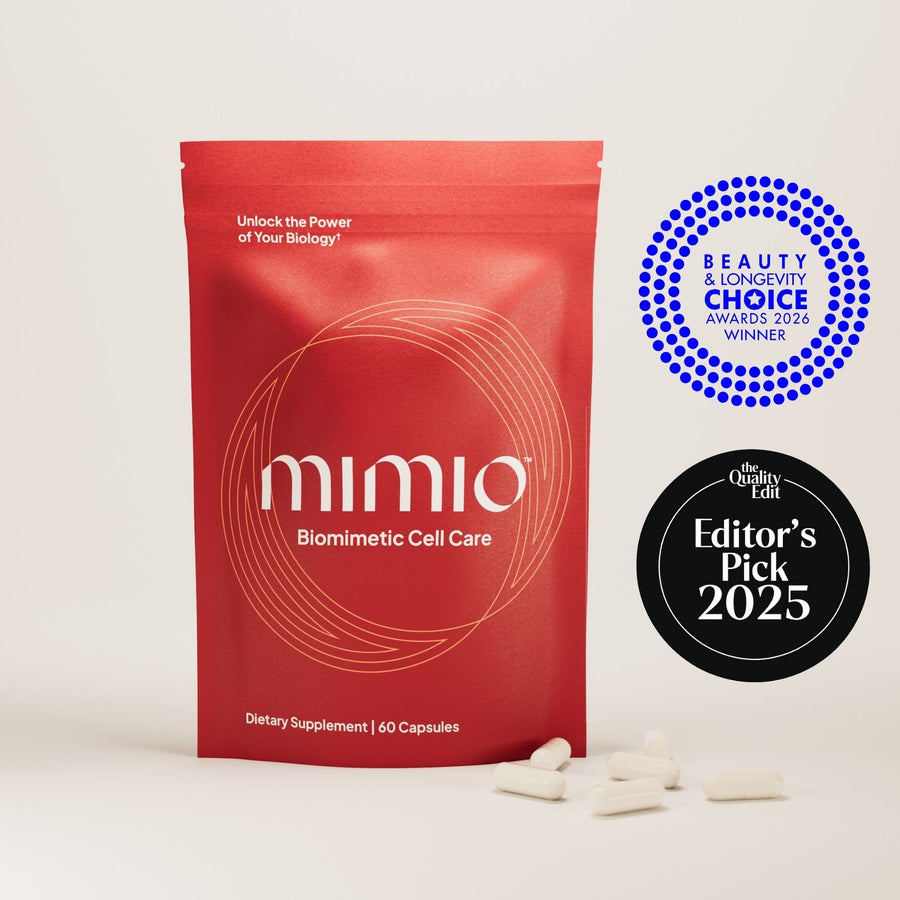
Mimio Biomimetic Cell Care is a daily supplement with four active ingredients: spermidine, nicotinamide, PEA and OEA. It grew out of the study behind Mimio, in which Dr. Rhodes and UC Davis colleagues measured how blood molecules changed during a 36 hour fast.¹⁸ The label directs two capsules with your first meal, so it fits your eating window, not your fast.
In an 8-week randomized, placebo-controlled trial of 42 older adults with overweight, 91% of people taking Mimio reported improved mealtime appetite, versus 47% on placebo.¹⁹ The trial was small, was funded by Mimio Health and didn't test fasting schedules.
Questions People Ask About the 12 Hour Fast
Is fasting for 12 hours enough?
It's enough to count as a fast, curb late-night eating and build a routine. For changes in weight or blood markers, trials suggest 14 to 16 hours, ideally earlier in the day, gives modestly better odds.⁸˒⁹˒¹⁰
Is a 12 hour fast good for you?
For most healthy adults, yes, even daily: it's one of the gentlest ways to fast, with three meals intact. The exceptions are listed above, including pregnancy, disordered eating and medicines that lower blood sugar.¹⁶˒¹⁷
How many calories do I burn if I fast for 12 hours?
About what you'd burn in any 12 hours: a bit under half your daily total (under 1,000 if you burn 2,000 a day), since much of it is sleep. Fasting changes which fuel you burn more than how much.⁶
What happens to your body after 12 hours of fasting?
Insulin is low, your liver is supplying glucose from glycogen and newly made glucose, and fat covers a growing share of your energy. The full switch to fat and ketones typically comes between 12 and 36 hours.²˒³
How much weight do you lose in 12 hours?
The overnight drop on the scale is mostly water, plus some glycogen, which your body stores with three to four times its weight in water.²⁰ It returns when you eat and drink. Fat loss takes weeks.
This article is for general education and does not replace individualized medical advice. Talk with your clinician before changing when you eat, especially if you take medication, are pregnant or breastfeeding, or have a health condition.
These statements have not been evaluated by the Food and Drug Administration. This product is not intended to diagnose, treat, cure, or prevent any disease.
References
- Gill S, Panda S. A smartphone app reveals erratic diurnal eating patterns in humans that can be modulated for health benefits. Cell Metab. 2015;22(5):789-798. doi:10.1016/j.cmet.2015.09.005.
- Rothman DL, Magnusson I, Katz LD, et al. Quantitation of hepatic glycogenolysis and gluconeogenesis in fasting humans with 13C NMR. Science. 1991;254(5031):573-576. doi:10.1126/science.1948033.
- Anton SD, Moehl K, Donahoo WT, et al. Flipping the metabolic switch: understanding and applying the health benefits of fasting. Obesity (Silver Spring). 2018;26(2):254-268. doi:10.1002/oby.22065.
- Jamshed H, Beyl RA, Della Manna DL, et al. Early time-restricted feeding improves 24-hour glucose levels and affects markers of the circadian clock, aging, and autophagy in humans. Nutrients. 2019;11(6):1234. doi:10.3390/nu11061234.
- Sutton EF, Beyl R, Early KS, et al. Early time-restricted feeding improves insulin sensitivity, blood pressure, and oxidative stress even without weight loss in men with prediabetes. Cell Metab. 2018;27(6):1212-1221.e3. doi:10.1016/j.cmet.2018.04.010.
- Ravussin E, Beyl RA, Poggiogalle E, et al. Early time-restricted feeding reduces appetite and increases fat oxidation but does not affect energy expenditure in humans. Obesity (Silver Spring). 2019;27(8):1244-1254. doi:10.1002/oby.22518.
- Jamshed H, Steger FL, Bryan DR, et al. Effectiveness of early time-restricted eating for weight loss, fat loss, and cardiometabolic health in adults with obesity: a randomized clinical trial. JAMA Intern Med. 2022;182(9):953-962. doi:10.1001/jamainternmed.2022.3050.
- Phillips NE, Mareschal J, Schwab N, et al. The effects of time-restricted eating versus standard dietary advice on weight, metabolic health and the consumption of processed food: a pragmatic randomised controlled trial in community-based adults. Nutrients. 2021;13(3):1042. doi:10.3390/nu13031042.
- Peeke PM, Greenway FL, Billes SK, et al. Effect of time restricted eating on body weight and fasting glucose in participants with obesity: results of a randomized, controlled, virtual clinical trial. Nutr Diabetes. 2021;11(1):6. doi:10.1038/s41387-021-00149-0.
- Grimaldi D, Reid KJ, Abbott SM, et al. Sleep-aligned extended overnight fasting improves nighttime and daytime cardiometabolic function. Arterioscler Thromb Vasc Biol. 2026;46(4):e323355. doi:10.1161/ATVBAHA.125.323355.
- Lowe DA, Wu N, Rohdin-Bibby L, et al. Effects of time-restricted eating on weight loss and other metabolic parameters in women and men with overweight and obesity: the TREAT randomized clinical trial. JAMA Intern Med. 2020;180(11):1491-1499. doi:10.1001/jamainternmed.2020.4153.
- Liu D, Huang Y, Huang C, et al. Calorie restriction with or without time-restricted eating in weight loss. N Engl J Med. 2022;386(16):1495-1504. doi:10.1056/NEJMoa2114833.
- Semnani-Azad Z, Khan TA, Chiavaroli L, et al. Intermittent fasting strategies and their effects on body weight and other cardiometabolic risk factors: systematic review and network meta-analysis of randomised clinical trials. BMJ. 2025;389:e082007. doi:10.1136/bmj-2024-082007.
- Vujović N, Piron MJ, Qian J, et al. Late isocaloric eating increases hunger, decreases energy expenditure, and modifies metabolic pathways in adults with overweight and obesity. Cell Metab. 2022;34(10):1486-1498.e7. doi:10.1016/j.cmet.2022.09.007.
- Lin S, Cienfuegos S, Ezpeleta M, et al. Time-restricted eating without calorie counting for weight loss in a racially diverse population: a randomized controlled trial. Ann Intern Med. 2023;176(7):885-895. doi:10.7326/M23-0052.
- Mass General Brigham. Intermittent fasting benefits, risks, and how it works. Health and wellness guidance.
- National Institute of Diabetes and Digestive and Kidney Diseases. Fasting safely with diabetes. Clinical guidance.
- Rhodes CH, Zhu C, Agus J, et al. Human fasting modulates macrophage function and upregulates multiple bioactive metabolites that extend lifespan in Caenorhabditis elegans: a pilot clinical study. Am J Clin Nutr. 2023;117(2):286-297. doi:10.1016/j.ajcnut.2022.10.015.
- Grant AD, Erfe MCB, Kazaryan A, et al. A novel fasting mimetic (Mimio) creates fasting-like benefits to hunger control, oxidative stress, and cardiometabolic health in humans. Sci Rep. 2026;16(1):7812. doi:10.1038/s41598-026-38495-7.
- Kreitzman SN, Coxon AY, Szaz KF. Glycogen storage: illusions of easy weight loss, excessive weight regain, and distortions in estimates of body composition. Am J Clin Nutr. 1992;56(1 Suppl):292S-293S. doi:10.1093/ajcn/56.1.292S.