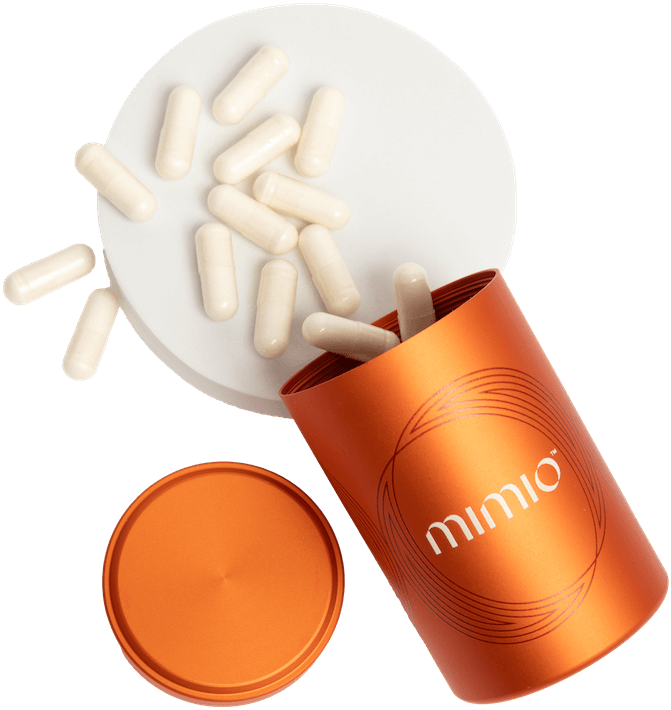
Feeling hungry soon after meals, or thinking about food much of the day, is common, and it usually has a cause you can find: most often sleep, what's on your plate or what's happening in your day, and sometimes a medicine or medical condition. Here are 11 common reasons for feeling hungry all the time, what the research shows, what to do about each and when to see a doctor.
Quick answer: Constant hunger usually has an everyday cause: short sleep, meals low in protein or fiber, ultra-processed foods, sweet drinks or alcohol, stress, thirst or more exercise. Some medicines raise appetite too. Less often, it signals diabetes, low blood sugar or an overactive thyroid. If hunger comes with heavy thirst, frequent urination, unexplained weight loss or a racing heart, see a doctor.
Why You're Always Hungry: 11 Reasons at a Glance
Most constant hunger traces back to daily habits, and a few medical causes are worth ruling out.
Reason |
Clues it may be you |
Try this first |
|---|---|---|
1. Short sleep |
Hungrier after short nights |
7 or more hours of sleep |
2. Low protein |
Hungry again soon after meals |
Protein at every meal |
3. Low fiber |
Few vegetables, beans or whole grains |
A fiber-rich food at every meal |
4. Processed foods |
Packaged foods; fast or distracted meals |
Whole foods, eaten slowly |
5. Liquid calories |
Soda, juice, sweet coffee, alcohol |
Water, coffee or tea |
6. Stress |
Snacking on hard days |
Pause before you snack |
7. Thirst |
Little water all day |
A glass of water first |
8. More exercise |
New or harder training |
Plan meals around workouts |
9. Medication |
Started with a new drug or dose |
Talk to your prescriber |
10. Blood sugar or diabetes |
Thirst, frequent urination, fatigue |
A blood sugar test |
11. Thyroid and other medical causes |
Weight loss, racing heart, shaky hands |
A doctor visit |
1. You're Not Getting Enough Sleep
Short sleep turns up your hunger signals. In a University of Chicago study of 12 healthy young men, two days of short sleep, compared with two days of long sleep, raised the hunger hormone ghrelin by 28%, cut the appetite-suppressing hormone leptin by 18% and increased hunger by 24%, with appetite for calorie-dense, carbohydrate-rich foods rising most.¹ Across 11 studies, people ate about 385 more calories a day after partial sleep loss, without burning more.²
What to do: Adults need at least 7 hours a night.³ Keep a steady wake time, and if evening snacking is your pattern, try an earlier bedtime. Our guide to healthy sleep habits walks through a nightly routine.
2. Your Meals Are Low in Protein
Meals light on protein tend to wear off quickly. When 19 adults raised protein from 15% to 30% of their calories, with carbohydrates unchanged, they felt markedly fuller, ate about 441 fewer calories a day without trying and lost about 11 pounds in 12 weeks.⁴ A review of feeding trials confirmed a modest fullness effect from higher-protein meals and points to at least 25 to 30 grams of protein per meal.⁵
What to do: Build each meal around eggs, Greek yogurt, fish, chicken, tofu, beans or lentils. Spreading protein through the day, sometimes called protein pacing, is one way to get there.
3. You're Not Getting Enough Fiber
Most people eat far less fiber than recommended, and fiber-rich foods tend to be filling. National surveys suggest only about 5% of Americans meet fiber recommendations.⁶ In a classic test of 38 foods, fiber, protein and water content each tracked with how full a food kept people.⁷ Lab results for single fibers are mixed: 39% of 107 short-term tests reduced appetite, and beta-glucan (the soluble fiber in oats and barley) and rye were among the few with support from more than one study.⁸
What to do: Add beans, lentils, vegetables, berries, oats or whole grains to every meal. Increase slowly and drink enough fluids to keep your gut comfortable.
4. Highly Processed Foods Make It Easy to Overeat
Ultra-processed foods may not make you hungrier, but they make it easy to eat more before fullness catches up. In an NIH inpatient trial, 20 adults ate about 500 more calories a day on an ultra-processed diet than on an unprocessed one, though the meals offered were matched for calories, sugar, fat, fiber and salt, and they gained about 2 pounds in two weeks. They rated both diets the same for hunger and fullness but ate the processed meals faster.⁹ Pace matters on its own: across 22 experiments, slower eating lowered intake,¹⁰ and eating while distracted raised it, especially at later meals.¹¹
What to do: Build most meals from minimally processed foods like eggs, fish, beans, potatoes, rice, vegetables and fruit. Eat at a table, away from screens.
5. You're Drinking Your Calories
Calories in drinks don't register the way calories you chew do. When 15 adults added about 450 calories a day for four weeks, as jelly beans in one period and soda in another, they ate less food to offset the jelly beans but not the soda, and gained weight only in the soda period.¹² Alcohol adds a twist: across 12 trials, drinking it raised food intake by about 80 calories, on top of the drink's own calories.¹³
What to do: Make water, plain coffee or tea your default, and eat fruit whole instead of as juice. If you drink alcohol, have it with a meal, not before one; see how alcohol affects your metabolism.
6. Stress Is Driving Your Appetite
Stress pushes many people toward snack foods, though it blunts appetite in others. Among 212 students, 73% said they snack more under stress, yet for overall intake, 38% reported eating more and 42% less.¹⁴ In a lab study of 59 women, those who released the most cortisol under stress ate more calories that day and more sweet food overall.¹⁵
What to do: Before a stress snack, ask whether a plain meal, like eggs or chicken and vegetables, sounds good; if only a treat will do, it's probably not hunger. A short walk can break the loop, and a therapist or dietitian can help if eating to cope feels out of control.
7. You May Be Thirsty, Not Hungry
Thirst and hunger signals can blur, and neither is a precise guide. When 50 adults rated both every hour for a week, thirst ratings weren't linked with drinking, and hunger was only moderately linked with eating.¹⁶ Water before meals is better tested: older adults with overweight or obesity who drank 500 mL (about 2 cups) of water 30 minutes before breakfast ate about 13% less at that meal.¹⁷
What to do: When hunger shows up soon after a meal, drink a glass of water and wait a few minutes. Constant thirst with frequent urination is a different signal; see reason 10.
8. You're Exercising More
Moving more raises your fuel needs, and more hunger is a normal response to strenuous exercise.¹⁸ A single workout usually doesn't push people to eat back what they burned, and regular training may sharpen fullness after meals, but responses vary widely from person to person.¹⁹
What to do: Eat enough to match your training, include protein at the meal after a workout, and plan a real snack for long or hard days instead of grazing later. If you train before breakfast, our guide to fasted cardio covers timing and what to eat after.
9. A Medication Is Raising Your Appetite
Several common medicines can increase appetite. They include corticosteroids such as prednisone, some antidepressants (tricyclics and mirtazapine), antipsychotics such as olanzapine, and the antihistamine cyproheptadine.²⁰˒²¹˒²² Cannabinoids can do it too.¹⁸ Insulin and diabetes medicines that make the pancreas release more insulin can drop blood sugar too low, and hunger is a common sign.²³
What to do: If hunger started with a new medicine or dose, tell your prescriber, and don't stop a medicine on your own.²⁰
Stopping an appetite-lowering medicine works the other way. In a 12-week trial, semaglutide cut how much people with obesity ate at self-serve meals by 24% and reduced hunger and cravings.²⁴ In the STEP 1 trial, people who stopped weekly semaglutide and the trial's lifestyle program regained about two-thirds of the weight they had lost within a year.²⁵ Our guides to what happens when you stop a GLP-1 and food noise after stopping a GLP-1 cover what helps.
10. Blood Sugar Swings or Diabetes
Sharp drops in blood sugar a few hours after a meal are linked with earlier hunger, and constant hunger is a classic sign of diabetes. In 1,070 people wearing glucose monitors, bigger dips 2 to 3 hours after a meal predicted more hunger, a shorter wait until the next meal and more calories eaten over the next 24 hours.²⁶ If meals leave you sleepy rather than hungry, see feeling tired after eating.
What does diabetes hunger feel like?
It's an intense hunger that eating doesn't settle, unless the cause is low blood sugar. When the body can't use glucose for energy, hunger rises.¹⁸ Common signs of diabetes, when blood sugar runs high, include:²⁷
- Feeling very hungry, even after eating
- Feeling very thirsty and urinating more
- Fatigue and blurred vision
- Sores that don't heal and frequent infections
Type 1 diabetes can also cause weight loss you can't explain.²⁷
Warning signs of prediabetes
Prediabetes usually has no clear symptoms, and more than 2 in 5 American adults have it.²⁸ Ask your doctor about a blood sugar test if you have risk factors such as overweight, age 45 or older, a parent or sibling with type 2 diabetes, activity less than 3 times a week, past gestational diabetes or polycystic ovary syndrome.²⁸
What to do: Pair carbohydrates with protein and fiber rather than eating them alone. If constant hunger comes with heavy thirst and frequent urination, get your blood sugar tested soon.
11. Hyperthyroidism and Other Medical Causes
An overactive thyroid speeds up your metabolism, so you can be hungry all the time and still lose weight.¹⁸˒²⁹ Other signs can include a rapid or irregular heartbeat, nervousness or irritability, trouble sleeping, shaky hands, sweating or trouble tolerating heat, and more frequent bowel movements; older adults may instead lose their appetite.²⁹
Other causes to know about:
- Premenstrual changes: Across 15 datasets, women ate about 168 more calories a day in the second half of the menstrual cycle (the luteal phase) than in the first.³⁰
- Pregnancy and breastfeeding: Pregnancy adds about 300 calories a day to your needs,³¹ and breastfeeding adds 330 to 400.³²
- Mood and eating disorders: Increased appetite is a key symptom of atypical depression, and anxiety can drive frequent hunger.¹⁸ Bulimia is another recognized cause.²⁰
- Rare conditions: These include an insulin-making tumor of the pancreas (insulinoma), Prader-Willi syndrome and Kleine-Levin syndrome.¹⁸
What to do: See your doctor. Blood tests, including thyroid function tests, can help find the cause.²⁰
Foods That Keep You Full Longer
The most filling foods are high in protein, fiber or water for their calories. In the satiety index study, 240-calorie portions of 38 foods were compared with white bread: boiled potatoes kept people fullest, at about seven times the score of a croissant, the least filling. Protein, fiber and water content tracked with fullness, and fat ran the other way.⁷
Volume helps too. Starting lunch with a large, low-calorie salad cut total meal calories by 12% in 42 women,³³ and vegetable soup before lunch cut them by 20% in 60 adults.³⁴ Foods to lean on:
- Starchy staples: boiled potatoes, oats, beans, lentils and whole grains
- Protein foods: eggs, fish, Greek yogurt, chicken and tofu
- Water-rich foods: vegetables, broth-based soups, salads and whole fruit
When to See a Doctor About Constant Hunger
Most constant hunger has an everyday cause, and extreme hunger from a medical condition is relatively uncommon.¹⁸ Still, an unexplained, persistent increase in appetite deserves a checkup.²⁰ If you're suddenly hungry all the time, ask what changed: a new medicine, sleep, stress, exercise or pregnancy.
See a doctor soon if constant hunger comes with any of these:²³˒²⁷˒²⁹
- Heavy thirst and frequent urination
- Weight loss you can't explain
- A racing or irregular heartbeat, shaky hands or trouble tolerating heat
- Shakiness, dizziness or confusion
- Fatigue or blurry vision
Go to an emergency room if you or your child has extreme hunger along with extreme thirst, frequent urination and weight loss. Untreated type 1 diabetes can lead to diabetic ketoacidosis, which can be fatal.¹⁸
Get support, too, if food thoughts feel constant or distressing, or you swing between strict dieting and out-of-control eating. If you take insulin or other medicines that lower blood sugar, are pregnant or breastfeeding, have a history of an eating disorder or are under 18, talk with your clinician before cutting calories or trying fasting to manage hunger.
Where Mimio Fits
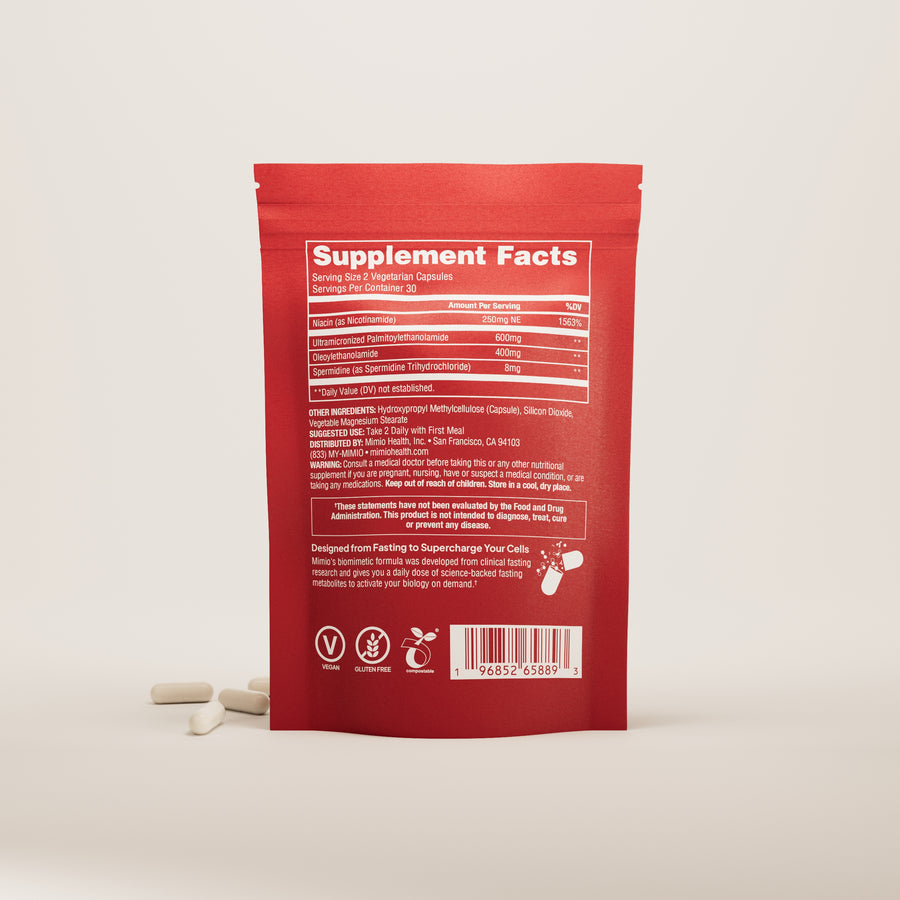
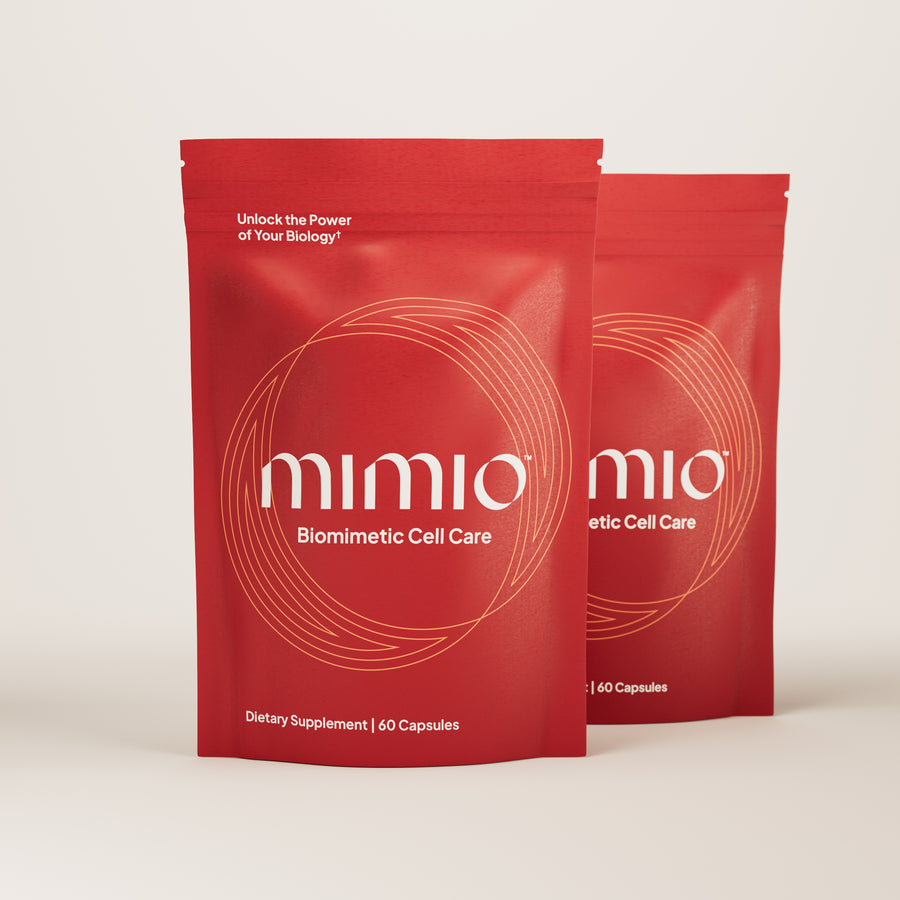
No supplement fixes the causes on this list, and Mimio isn't a treatment for constant hunger or any condition above. Mimio Biomimetic Cell Care is a daily supplement for people who fast, with four active ingredients: spermidine, nicotinamide, PEA and OEA. They trace back to the study behind Mimio, Dr. Rhodes's 36 hour fasting study at UC Davis, in which blood levels of spermidine, PEA, OEA and a nicotinamide metabolite rose during the fast.³⁵ The label directs two capsules with your first meal.
In an 8-week randomized, placebo-controlled trial of the finished formula in 42 older adults with overweight, 91% of participants taking Mimio reported improved mealtime appetite, compared with 47% on placebo.³⁶ The trial was small, funded by Mimio Health and not a fasting study. Review the full formula on the Mimio product page.
The Bottom Line
Being hungry all the time is a signal to decode, not a failure of willpower. Start with sleep, protein, fiber and what you drink; if hunger persists or comes with thirst, weight loss or a racing heart, get checked.
Questions People Ask About Always Feeling Hungry
How can I stop feeling hungry all the time?
Sleep at least 7 hours, build each meal around protein and a fiber-rich food, choose whole foods over ultra-processed ones, drink water instead of calories and eat slowly, away from screens. If hunger doesn't ease within a few weeks, ask your doctor about blood sugar and thyroid tests.
Why am I so hungry but I've eaten a lot?
A big meal can still be a poor match for fullness if it's low in protein, fiber or water, ultra-processed or eaten fast. In the NIH trial, people ate about 500 more calories a day on ultra-processed meals and ate them faster, yet rated hunger and fullness the same as on unprocessed meals.⁹ Feeling very hungry even after eating, with thirst and frequent urination, is a reason to check your blood sugar.²⁷
Is being hungry every 3 hours normal?
Often, yes. The hunger hormone ghrelin nearly doubles just before mealtimes and falls within an hour after eating, so hunger by the next meal is normal.³⁷ If you're ravenous every hour or two, look at protein, fiber and sleep first. Our guide to hunger pangs explains why hunger comes in waves.
What is my body lacking if I'm always hungry?
Most often protein, fiber, sleep or simply enough food. Eating too little overall, or not absorbing nutrients well, can itself cause intense hunger.¹⁸
What can be mistaken for hunger?
Thirst, stress, boredom, tiredness and habit can all feel like hunger. If a plain meal sounds good, you're probably hungry; if only one particular snack appeals, it's more likely a craving.
How can I trick my body into eating less?
Use volume and pace rather than willpower: start meals with a salad or broth-based soup, fill half your plate with vegetables and eat more slowly.¹⁰˒³⁴ For products marketed to curb appetite, see our guide to appetite suppressants.
Does intermittent fasting make you hungrier?
Not necessarily. In a small trial, 11 adults with overweight who ate only between 8 a.m. and 2 p.m. had lower average ghrelin and steadier hunger than when they ate from 8 a.m. to 8 p.m.³⁸ See our intermittent fasting schedule guide for a gentle start and our guide to what to drink while fasting.
This article is for general education and does not replace individualized medical advice. Talk with your clinician about constant hunger, especially if it is new, comes with other symptoms or started with a medication.
These statements have not been evaluated by the Food and Drug Administration. This product is not intended to diagnose, treat, cure, or prevent any disease.
References
- Spiegel K, Tasali E, Penev P, et al. Brief communication: sleep curtailment in healthy young men is associated with decreased leptin levels, elevated ghrelin levels, and increased hunger and appetite. Ann Intern Med. 2004;141(11):846-850. doi:10.7326/0003-4819-141-11-200412070-00008.
- Al Khatib HK, Harding SV, Darzi J, et al. The effects of partial sleep deprivation on energy balance: a systematic review and meta-analysis. Eur J Clin Nutr. 2017;71(5):614-624. doi:10.1038/ejcn.2016.201.
- Centers for Disease Control and Prevention. About sleep. Sleep guidance.
- Weigle DS, Breen PA, Matthys CC, et al. A high-protein diet induces sustained reductions in appetite, ad libitum caloric intake, and body weight despite compensatory changes in diurnal plasma leptin and ghrelin concentrations. Am J Clin Nutr. 2005;82(1):41-48. doi:10.1093/ajcn.82.1.41.
- Leidy HJ, Clifton PM, Astrup A, et al. The role of protein in weight loss and maintenance. Am J Clin Nutr. 2015;101(6):1320S-1329S. doi:10.3945/ajcn.114.084038.
- Quagliani D, Felt-Gunderson P. Closing America's fiber intake gap: communication strategies from a Food and Fiber Summit. Am J Lifestyle Med. 2017;11(1):80-85. doi:10.1177/1559827615588079.
- Holt SH, Miller JC, Petocz P, et al. A satiety index of common foods. Eur J Clin Nutr. 1995;49(9):675-690. PubMed 7498104.
- Clark MJ, Slavin JL. The effect of fiber on satiety and food intake: a systematic review. J Am Coll Nutr. 2013;32(3):200-211. doi:10.1080/07315724.2013.791194.
- Hall KD, Ayuketah A, Brychta R, et al. Ultra-processed diets cause excess calorie intake and weight gain: an inpatient randomized controlled trial of ad libitum food intake. Cell Metab. 2019;30(1):67-77.e3. doi:10.1016/j.cmet.2019.05.008.
- Robinson E, Almiron-Roig E, Rutters F, et al. A systematic review and meta-analysis examining the effect of eating rate on energy intake and hunger. Am J Clin Nutr. 2014;100(1):123-151. doi:10.3945/ajcn.113.081745.
- Robinson E, Aveyard P, Daley A, et al. Eating attentively: a systematic review and meta-analysis of the effect of food intake memory and awareness on eating. Am J Clin Nutr. 2013;97(4):728-742. doi:10.3945/ajcn.112.045245.
- DiMeglio DP, Mattes RD. Liquid versus solid carbohydrate: effects on food intake and body weight. Int J Obes Relat Metab Disord. 2000;24(6):794-800. doi:10.1038/sj.ijo.0801229.
- Kwok A, Dordevic AL, Paton G, et al. Effect of alcohol consumption on food energy intake: a systematic review and meta-analysis. Br J Nutr. 2019;121(5):481-495. doi:10.1017/S0007114518003677.
- Oliver G, Wardle J. Perceived effects of stress on food choice. Physiol Behav. 1999;66(3):511-515. doi:10.1016/s0031-9384(98)00322-9.
- Epel E, Lapidus R, McEwen B, et al. Stress may add bite to appetite in women: a laboratory study of stress-induced cortisol and eating behavior. Psychoneuroendocrinology. 2001;26(1):37-49. doi:10.1016/s0306-4530(00)00035-4.
- McKiernan F, Hollis JH, McCabe GP, et al. Thirst-drinking, hunger-eating; tight coupling? J Am Diet Assoc. 2009;109(3):486-490. doi:10.1016/j.jada.2008.11.027.
- Davy BM, Dennis EA, Dengo AL, et al. Water consumption reduces energy intake at a breakfast meal in obese older adults. J Am Diet Assoc. 2008;108(7):1236-1239. doi:10.1016/j.jada.2008.04.013.
- Cleveland Clinic. Polyphagia (hyperphagia). Health library.
- Dorling J, Broom DR, Burns SF, et al. Acute and chronic effects of exercise on appetite, energy intake, and appetite-related hormones: the modulating effect of adiposity, sex, and habitual physical activity. Nutrients. 2018;10(9):1140. doi:10.3390/nu10091140.
- MedlinePlus, National Library of Medicine. Appetite, increased. Medical encyclopedia.
- MedlinePlus, National Library of Medicine. Mirtazapine. Drug information.
- MedlinePlus, National Library of Medicine. Olanzapine. Drug information.
- National Institute of Diabetes and Digestive and Kidney Diseases. Low blood glucose (hypoglycemia). Health information.
- Blundell J, Finlayson G, Axelsen M, et al. Effects of once-weekly semaglutide on appetite, energy intake, control of eating, food preference and body weight in subjects with obesity. Diabetes Obes Metab. 2017;19(9):1242-1251. doi:10.1111/dom.12932.
- Wilding JPH, Batterham RL, Davies M, et al. Weight regain and cardiometabolic effects after withdrawal of semaglutide: the STEP 1 trial extension. Diabetes Obes Metab. 2022;24(8):1553-1564. doi:10.1111/dom.14725.
- Wyatt P, Berry SE, Finlayson G, et al. Postprandial glycaemic dips predict appetite and energy intake in healthy individuals. Nat Metab. 2021;3(4):523-529. doi:10.1038/s42255-021-00383-x.
- National Institute of Diabetes and Digestive and Kidney Diseases. Symptoms and causes of diabetes. Health information.
- Centers for Disease Control and Prevention. Prediabetes: your chance to prevent type 2 diabetes. Diabetes guidance.
- National Institute of Diabetes and Digestive and Kidney Diseases. Hyperthyroidism (overactive thyroid). Health information.
- Tucker JAL, McCarthy SF, Bornath DPD, et al. The effect of the menstrual cycle on energy intake: a systematic review and meta-analysis. Nutr Rev. 2025;83(3):e866-e876. doi:10.1093/nutrit/nuae093.
- MedlinePlus, National Library of Medicine. Eating right during pregnancy. Patient instructions.
- Centers for Disease Control and Prevention. Maternal diet and breastfeeding. Guidance for health care providers.
- Rolls BJ, Roe LS, Meengs JS. Salad and satiety: energy density and portion size of a first-course salad affect energy intake at lunch. J Am Diet Assoc. 2004;104(10):1570-1576. doi:10.1016/j.jada.2004.07.001.
- Flood JE, Rolls BJ. Soup preloads in a variety of forms reduce meal energy intake. Appetite. 2007;49(3):626-634. doi:10.1016/j.appet.2007.04.002.
- Rhodes CH, Zhu C, Agus J, et al. Human fasting modulates macrophage function and upregulates multiple bioactive metabolites that extend lifespan in Caenorhabditis elegans: a pilot clinical study. Am J Clin Nutr. 2023;117(2):286-297. doi:10.1016/j.ajcnut.2022.10.015.
- Grant AD, Erfe MCB, Kazaryan A, et al. A novel fasting mimetic (Mimio) creates fasting-like benefits to hunger control, oxidative stress, and cardiometabolic health in humans. Sci Rep. 2026;16(1):7812. doi:10.1038/s41598-026-38495-7.
- Cummings DE, Purnell JQ, Frayo RS, et al. A preprandial rise in plasma ghrelin levels suggests a role in meal initiation in humans. Diabetes. 2001;50(8):1714-1719. doi:10.2337/diabetes.50.8.1714.
- Ravussin E, Beyl RA, Poggiogalle E, et al. Early time-restricted feeding reduces appetite and increases fat oxidation but does not affect energy expenditure in humans. Obesity (Silver Spring). 2019;27(8):1244-1254. doi:10.1002/oby.22518.