You finish lunch, sit back down, and soon your eyelids feel heavy. Most of us call it a food coma. It's common and usually harmless, but how hard it hits depends on how much you ate, what was on the plate, how you slept and the time of day. Here's why you get tired after eating, how to stay alert, and when it's worth a doctor's visit.
Quick answer: Feeling tired after eating is usually normal. Your body clock tends to dip in the midafternoon, even without lunch, and a big meal, a sugary drink, alcohol or a short night's sleep makes that dip deeper. A moderate, balanced plate, a 10 to 15 minute walk, daylight and enough sleep all help. Tiredness after most meals despite good sleep deserves a doctor's check.
What Is a Food Coma?
A food coma is the drowsy, slow, heavy feeling that can follow a meal, especially a big one. The medical name, postprandial somnolence, simply means sleepiness after eating. It isn't a real coma, and it usually passes: studies have tracked lower alertness from within the first hour after eating to about three hours later.¹˒²
It's very common. In one study of 35 women, every group felt less alert, less clear-headed and more "dreamy" after lunch, whether the meal was smaller than usual, normal or larger.³ Even fruit flies sleep more after bigger meals.⁴
One popular explanation doesn't hold up: that digestion pulls blood away from your brain. When researchers measured blood flow in the main neck arteries of 20 healthy adults before and after a high energy meal, flow went up, not down.⁵
Why Do You Get Tired After Eating?
Several things stack up: a natural dip in your body clock, the size of the meal, and signals from your gut and blood to the brain areas that keep you awake.
Your body clock dips in the midafternoon
Alertness doesn't fall in a straight line through the day. Some people have a dip in the midafternoon, tied to a rise in the tendency to fall asleep at that time of day. It can show up even when people skip lunch and don't know what time it is.⁶ A high carbohydrate lunch makes it worse, and strong morning types may be more prone to it.⁶ So lunch can take the blame for a slump your body clock had already scheduled.
Bigger meals mean a bigger slump
Meal size is one of the clearest triggers. In a driving simulator study, 12 young men slept 5 hours, then ate either a light 305 calorie lunch or a heavy 922 calorie lunch before a two hour afternoon drive. After the heavy lunch, they drifted out of their lane more often and their brain waves showed more sleepiness, with the gap opening after the first 30 minutes.⁷
In another study, women who ate about 40% more than their usual energy needs at lunch made more errors on attention tasks than women who ate a normal or smaller lunch.³ Solid food matters too: in a sleep lab, men fell asleep faster at nap times after a solid meal than after the same volume of water, while a liquid meal didn't have that effect.⁸
What happens in your brain and gut
Researchers are still mapping the details. Three signals stand out:
- Orexin, the brain's wake signal. Glucose can quiet the orexin cells that help keep you awake, while amino acids switched them on in mouse studies.⁹ That's lab work, not proof that protein keeps people alert.
- Gut hormones. A breakfast high in fat raised the digestive hormone cholecystokinin (CCK) and brought more fatigue three hours later than a high carbohydrate breakfast.² Blocking CCK didn't make people more alert, so it isn't the whole story.¹⁰
- Inflammatory messengers. A calorie-rich meal raises immune signals called cytokines. Men given a drug that blocks one of them, interleukin 1, felt less sleepy after a rich meal, especially men with obesity.¹¹
Carbs vs. Protein vs. Fat: Which Foods Make You Sleepy?
No single nutrient is the villain. The clearest signals in the research are a large portion and a big hit of sugar on its own, not carbohydrate in a mixed meal.
What you eat |
What studies found |
What it means |
|---|---|---|
Sugar on its own, or a sugary drink |
Across 31 studies with 1,259 people, carbohydrate was linked to more fatigue and less alertness than placebo within the first hour.¹ A glucose drink at breakfast was linked to the biggest drop in alertness of any breakfast tested in 833 adults.¹² |
The "sugar rush" is mostly a myth |
A mixed, higher carbohydrate meal |
Linked to higher morning alertness than a standard mixed breakfast in the same 833 adults¹² |
Carbs in a meal aren't the problem by themselves |
A meal high in fat |
More fatigue three hours after a high fat breakfast than a high carbohydrate one² |
Very rich meals can drag |
A meal high in protein |
Linked to lower morning alertness than the standard breakfast¹² |
Protein alone doesn't guarantee energy |
A large meal of any kind |
A 922 calorie lunch worsened sleepy driving; in a sleep lab, fat, carbohydrate or mixed meals made no difference to nap sleepiness⁷˒⁸ |
Portion size is the bigger lever |
Many of these studies are small, and people respond differently. In the 833 adult study, a smaller rise in blood sugar after breakfast predicted better alertness, independently of what the meal contained.¹²
Blood Sugar Spikes and the Sugar Crash
A sharp rise in blood sugar after eating is linked to lower alertness,¹² and the "sugar crash" has some research behind it. A truly low blood sugar is different: it most often comes from diabetes medicines, and after meals, stomach surgery is another cause.¹³˒¹⁴
In a classic study, 18 volunteers either ate a candy bar or took a brisk 10 minute walk. The candy bar gave a short lift, then, an hour later, more tiredness and less energy, along with more tension. The walk raised energy for two hours.¹⁵ If the slump comes with a growling stomach, see what causes hunger pangs.
If you fast and wear a glucose monitor, our guide to glucose and ketone meters explains what the readings can tell you.
Insulin and drugs that make the body release more insulin are the most common cause of true low blood sugar. In people without diabetes, guidelines advise looking into it only when symptoms line up with a measured low glucose that improves once blood sugar is raised.¹³ After stomach surgery, including gastric bypass and gastric sleeve, "late dumping" can drop blood sugar 1 to 3 hours after a meal and cause tiredness, shakiness, sweating and trouble concentrating.¹⁴
Alcohol, Short Sleep and Other Things That Deepen the Slump
Short sleep and alcohol both deepen the slump, and together they're worse than either alone.¹⁶
- Short sleep. The CDC recommends at least 7 hours of sleep a night for adults, and in 2022 the share of adults not getting enough ranged from 30% in Vermont to 46% in Hawaii.¹⁷ A poor night worsens the afternoon dip; the heavy lunch study above followed a 5 hour night, which the researchers called unexceptional.⁷ Our guide to healthy sleep habits covers the basics.
- Alcohol. In an afternoon driving simulator study of 12 young men, a modest dose of alcohol, about half the UK legal driving limit, worsened lane drifting on its own and more so after short sleep, though the sleep deprived drivers didn't feel noticeably sleepier for it.¹⁶ For the wider picture, see how alcohol affects your metabolism.
- Time of day. In UK crash data, crashes caused by falling asleep at the wheel peaked at around 2 a.m., 6 a.m. and 4 p.m.¹⁸ If a meal leaves you fighting to keep your eyes open, don't drive until it passes.
How to Feel Less Tired After Eating
Eat a moderate portion, put vegetables and protein before the carbs, skip sugary drinks and lunchtime alcohol, then walk for 10 to 15 minutes, ideally outside.
- Keep portions moderate. A heavy lunch made afternoon driving sleepier than a light one.⁷
- Eat vegetables and protein first, carbs last. In 11 adults with type 2 diabetes, eating the same meal in that order cut the blood sugar rise over two hours by 73% compared with eating the carbs first.¹⁹
- Skip sugary drinks. Sugar on its own brings the clearest drop in alertness.¹˒¹²
- Walk for 10 to 15 minutes. In 41 adults with type 2 diabetes, a 10 minute walk after each main meal left after-meal blood sugar 12% lower than one 30 minute daily walk.²⁰ Three 15 minute walks after meals improved 24 hour blood sugar in 10 older adults at risk of glucose intolerance,²¹ and across seven trials, light walking breaks from sitting beat standing breaks for after-meal blood sugar.²² A brisk walk also lifted energy in the candy bar study.¹⁵
- Get daylight. Sitting near a bright window for 30 minutes at midday reduced signs of afternoon sleepiness for at least an hour in 16 women, compared with dim room light.²³
- Nap for 10 to 20 minutes. After a short night, a 10 minute nap improved alertness, fatigue and performance right away, with some benefits lasting up to 155 minutes; a 30 minute nap brought grogginess first.²⁴
- Use caffeine early. In a study of 48 adults tested in the late morning and after lunch, caffeine improved attention and self-rated alertness.²⁵ Stop at least 6 hours before bed: 400 mg of caffeine taken 6 hours before bedtime still disrupted sleep.²⁶ If you're fasting, see whether black coffee breaks a fast.
- Protect your sleep. Aim for at least 7 hours a night.¹⁷
Breaking a Fast Without a Food Coma
The meal that ends a fast is often the biggest of the day, and portion size is one of the most reliable triggers of a food coma. Break your fast with a moderate, balanced plate rather than a feast. Our 48 hour fast guide covers how to break a longer fast.
We found no study of food comas right after a fast, so this table applies the research above to common schedules.
Fasting pattern |
Where the slump tends to hit |
What helps |
|---|---|---|
16:8, eating from noon to 8 p.m. |
Your first meal lands close to the midafternoon dip⁶ |
A moderate lunch, vegetables and protein first, then a short walk |
One meal a day (OMAD) or 20:4 |
A whole day's food in one sitting |
Eat slowly, stop at comfortably full, and time it so a dip won't matter |
24 hour fast, dinner to dinner |
A large dinner after a day without food |
Let the slump work for you: in 12 men, a high glycemic dinner 4 hours before bed roughly halved the time to fall asleep compared with a low glycemic one²⁷ |
Longer than 24 hours |
The first meal after a long fast |
Start smaller and build up over the day |
For first meal ideas, see our guide on what to eat after a fast. Still choosing a window? Our intermittent fasting schedule guide compares the options.
Do Diabetics Feel Tired After Eating?
Often, yes. Fatigue is common in diabetes overall: a meta-analysis of 51 studies put it at 44% of people with type 1 diabetes and 50% with type 2.²⁸
High blood sugar plays a direct part. When researchers held blood sugar at about 300 mg/dL (16.5 mmol/L) in 20 adults with type 2 diabetes, they felt less energetic and processed information more slowly than at normal levels.²⁹ Since blood sugar peaks in the hours after a meal, poorly controlled diabetes may make that window feel worse. Our explainer on how insulin manages blood sugar covers the basics.
The opposite matters too. Insulin and sulfonylureas can push blood sugar too low, and mild symptoms include feeling tired, shaky, hungry or dizzy.³⁰ Walking after meals helps with the highs,²⁰ but if you take these medicines, talk with your care team before changing meals, fasting or exercise.
Other Medical Causes of Feeling Tired After Eating
If you're tired after most meals even when you sleep well and eat moderately, look wider. Each condition below lists tiredness as a symptom, along with other clues.
Condition |
Other clues |
Common first step |
|---|---|---|
Diabetes |
Frequent urination, strong thirst, hunger even after eating, blurred vision, sores that don't heal³¹ |
A blood sugar test |
Anemia |
Weakness, paleness, shortness of breath, dizziness, headache³² |
A complete blood count³³ |
Underactive thyroid (hypothyroidism) |
Weight gain, trouble tolerating cold, dry skin or thinning hair, joint and muscle pain³⁴ |
Thyroid blood tests³⁴ |
Celiac disease |
Bloating, diarrhea or constipation, gas, joint or bone pain³⁵ |
A blood test while you still eat gluten³⁶ |
Food intolerance |
Diarrhea, bloating, gas or tummy pain a few hours after a trigger food³⁷ |
A food and symptom diary, and guided elimination³⁷ |
Sleep apnea |
Loud snoring, gasping, pauses in breathing, daytime sleepiness³⁸ |
Ask about a sleep evaluation |
Dumping syndrome after stomach surgery |
Diarrhea, bloating, flushing or a fast heartbeat soon after eating; shakiness 1 to 3 hours later¹⁴ |
Talk with your surgical team |
Many of these symptoms are common and don't prove a condition on their own; a thyroid diagnosis, for example, can't rest on symptoms alone.³⁴
When to See a Doctor
See a clinician if tiredness after eating lasts for weeks despite enough sleep and moderate meals, or comes with:
- Strong thirst, frequent urination, blurred vision or unexplained weight loss³¹
- Shakiness, sweating, a racing heart or confusion within a few hours of eating, especially if you take insulin or a sulfonylurea or have had stomach surgery¹⁴˒³⁰
- Paleness, shortness of breath or dizziness³²
- Diarrhea, bloating or tummy pain linked to certain foods³⁵˒³⁷
- Loud snoring, gasping at night, or nodding off when you don't mean to³⁸
Get emergency care for fainting, chest pain, severe confusion or a seizure. And talk with your clinician before fasting if you take diabetes medicines, are pregnant or breastfeeding, have a history of eating disorders, or are under 18. If you feel wiped out during a fast rather than after a meal, our guide to fasting side effects covers fatigue and brain fog.
Where Mimio Fits
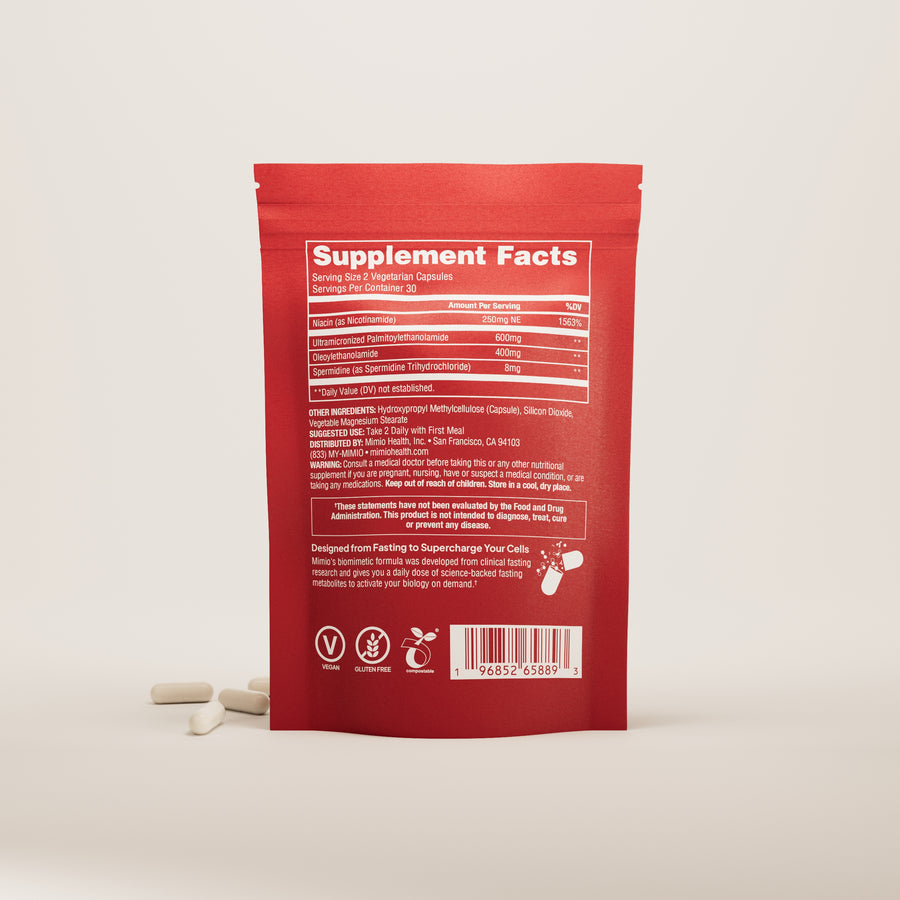
Mimio Biomimetic Cell Care isn't a stimulant or an energy product, and it isn't designed to prevent a food coma. It's a daily supplement with four active ingredients, spermidine, nicotinamide, PEA and OEA, that trace back to the study behind Mimio: Dr. Rhodes's 36 hour fasting study at UC Davis, in which blood levels of spermidine, PEA, OEA and a nicotinamide metabolite rose during the fast in 20 young adults.³⁹
The label directs two capsules with your first meal. For after-meal alertness, rely on the habits above; review the full formula on the Mimio product page.
The Bottom Line
A food coma is your body clock, your portion size and your sleep debt adding up. Eat moderate, balanced meals, go easy on sugar and lunchtime alcohol, walk after eating, get daylight and protect your sleep. If you're wiped out after most meals anyway, or notice thirst, shakiness, paleness or gut symptoms, get checked.
Questions People Ask About Feeling Tired After Eating
Is it normal to feel tired after eating?
Yes. Feeling a little less alert after a meal is common, even after a small lunch.³ It's worth a closer look when it's intense, follows most meals or comes with other symptoms.
How long does a food coma last?
There's no fixed length. Studies have tracked lower alertness from within the first hour after carbohydrate¹ to about three hours after a breakfast high in fat.²
Does turkey make you sleepy?
Not by itself. Turkey contains tryptophan, an amino acid the body uses to make serotonin, but so do red meat, other poultry, eggs and dairy.⁴⁰ In a protein-rich meal, other amino acids compete with tryptophan to get into the brain.⁴¹ The size of a holiday meal, the desserts and the wine are likelier culprits.¹˒⁷˒¹⁶
Is feeling tired after eating a sign of diabetes?
Not on its own. Fatigue is one of several common diabetes symptoms, along with frequent urination, strong thirst and blurred vision.³¹ Tiredness with any of those is worth a blood sugar test.
This article is for general education and does not replace individualized medical advice. Talk with your clinician about tiredness that is new, persistent or comes with other symptoms, and before fasting if you take medication, are pregnant or breastfeeding, or have a health condition.
These statements have not been evaluated by the Food and Drug Administration. This product is not intended to diagnose, treat, cure, or prevent any disease.
References
- Mantantzis K, Schlaghecken F, Sünram-Lea SI, Maylor EA. Sugar rush or sugar crash? A meta-analysis of carbohydrate effects on mood. Neurosci Biobehav Rev. 2019;101:45-67. doi:10.1016/j.neubiorev.2019.03.016.
- Wells AS, Read NW, Uvnas-Moberg K, Alster P. Influences of fat and carbohydrate on postprandial sleepiness, mood, and hormones. Physiol Behav. 1997;61(5):679-686. PMID: 9145937.
- Smith A, Ralph A, McNeill G. Influences of meal size on post-lunch changes in performance efficiency, mood, and cardiovascular function. Appetite. 1991;16(2):85-91. PMID: 2064394.
- Murphy KR, Deshpande SA, Yurgel ME, et al. Postprandial sleep mechanics in Drosophila. eLife. 2016;5:e19334. doi:10.7554/eLife.19334.
- Eicke BM, Seidel E, Krummenauer F. Volume flow in the common carotid artery does not decrease postprandially. J Neuroimaging. 2003;13(4):352-355. PMID: 14569828.
- Monk TH. The post-lunch dip in performance. Clin Sports Med. 2005;24(2):e15-e23. doi:10.1016/j.csm.2004.12.002.
- Reyner LA, Wells SJ, Mortlock V, Horne JA. 'Post-lunch' sleepiness during prolonged, monotonous driving: effects of meal size. Physiol Behav. 2012;105(4):1088-1091. doi:10.1016/j.physbeh.2011.11.025.
- Orr WC, Shadid G, Harnish MJ, Elsenbruch S. Meal composition and its effect on postprandial sleepiness. Physiol Behav. 1997;62(4):709-712. PMID: 9284488.
- Karnani MM, Apergis-Schoute J, Adamantidis A, et al. Activation of central orexin/hypocretin neurons by dietary amino acids. Neuron. 2011;72(4):616-629. doi:10.1016/j.neuron.2011.08.027.
- Wells AS, Read NW, Fried M, Borovicka J, D'Amato M. Effects of a specific CCK-A antagonist, Loxiglumide, on postprandial mood and sleepiness. J Psychopharmacol. 1997;11(3):241-246. doi:10.1177/026988119701100307.
- Lehrskov LL, Dorph E, Widmer AM, et al. The role of IL-1 in postprandial fatigue. Mol Metab. 2018;12:107-112. doi:10.1016/j.molmet.2018.04.001.
- Vallat R, Berry SE, Tsereteli N, et al. How people wake up is associated with previous night's sleep together with physical activity and food intake. Nat Commun. 2022;13(1):7116. doi:10.1038/s41467-022-34503-2.
- Cryer PE, Axelrod L, Grossman AB, et al. Evaluation and management of adult hypoglycemic disorders: an Endocrine Society clinical practice guideline. J Clin Endocrinol Metab. 2009;94(3):709-728. doi:10.1210/jc.2008-1410.
- National Institute of Diabetes and Digestive and Kidney Diseases. Symptoms and causes of dumping syndrome. Reviewed January 2019. Health information.
- Thayer RE. Energy, tiredness, and tension effects of a sugar snack versus moderate exercise. J Pers Soc Psychol. 1987;52(1):119-125. doi:10.1037/0022-3514.52.1.119.
- Horne JA, Reyner LA, Barrett PR. Driving impairment due to sleepiness is exacerbated by low alcohol intake. Occup Environ Med. 2003;60(9):689-692. doi:10.1136/oem.60.9.689.
- Centers for Disease Control and Prevention. Sleep facts and stats: adults. May 15, 2024. Data and statistics.
- Horne JA, Reyner LA. Sleep related vehicle accidents. BMJ. 1995;310(6979):565-567. doi:10.1136/bmj.310.6979.565.
- Shukla AP, Iliescu RG, Thomas CE, Aronne LJ. Food order has a significant impact on postprandial glucose and insulin levels. Diabetes Care. 2015;38(7):e98-e99. doi:10.2337/dc15-0429.
- Reynolds AN, Mann JI, Williams S, Venn BJ. Advice to walk after meals is more effective for lowering postprandial glycaemia in type 2 diabetes mellitus than advice that does not specify timing: a randomised crossover study. Diabetologia. 2016;59(12):2572-2578. doi:10.1007/s00125-016-4085-2.
- DiPietro L, Gribok A, Stevens MS, et al. Three 15-min bouts of moderate postmeal walking significantly improves 24-h glycemic control in older people at risk for impaired glucose tolerance. Diabetes Care. 2013;36(10):3262-3268. doi:10.2337/dc13-0084.
- Buffey AJ, Herring MP, Langley CK, et al. The acute effects of interrupting prolonged sitting time in adults with standing and light-intensity walking on biomarkers of cardiometabolic health in adults: a systematic review and meta-analysis. Sports Med. 2022;52(8):1765-1787. doi:10.1007/s40279-022-01649-4.
- Kaida K, Takahashi M, Haratani T, et al. Indoor exposure to natural bright light prevents afternoon sleepiness. Sleep. 2006;29(4):462-469. doi:10.1093/sleep/29.4.462.
- Brooks A, Lack L. A brief afternoon nap following nocturnal sleep restriction: which nap duration is most recuperative? Sleep. 2006;29(6):831-840. doi:10.1093/sleep/29.6.831.
- Smith AP, Kendrick AM, Maben AL. Effects of breakfast and caffeine on performance and mood in the late morning and after lunch. Neuropsychobiology. 1992;26(4):198-204. doi:10.1159/000118920.
- Drake C, Roehrs T, Shambroom J, Roth T. Caffeine effects on sleep taken 0, 3, or 6 hours before going to bed. J Clin Sleep Med. 2013;9(11):1195-1200. doi:10.5664/jcsm.3170.
- Afaghi A, O'Connor H, Chow CM. High-glycemic-index carbohydrate meals shorten sleep onset. Am J Clin Nutr. 2007;85(2):426-430. doi:10.1093/ajcn/85.2.426.
- Romadlon DS, Hasan F, Wiratama BS, Chiu HY. Prevalence and risk factors of fatigue in type 1 and type 2 diabetes: a systematic review and meta-analysis. J Nurs Scholarsh. 2022;54(5):546-553. doi:10.1111/jnu.12763.
- Sommerfield AJ, Deary IJ, Frier BM. Acute hyperglycemia alters mood state and impairs cognitive performance in people with type 2 diabetes. Diabetes Care. 2004;27(10):2335-2340. doi:10.2337/diacare.27.10.2335.
- National Institute of Diabetes and Digestive and Kidney Diseases. Low blood glucose (hypoglycemia). Reviewed July 2021. Health information.
- National Institute of Diabetes and Digestive and Kidney Diseases. Symptoms and causes of diabetes. Reviewed October 2024. Health information.
- National Heart, Lung, and Blood Institute. Anemia: symptoms. Updated March 24, 2022. Health topic.
- National Heart, Lung, and Blood Institute. Anemia: diagnosis. Updated December 18, 2025. Health topic.
- National Institute of Diabetes and Digestive and Kidney Diseases. Hypothyroidism (underactive thyroid). Reviewed March 2021. Health information.
- National Institute of Diabetes and Digestive and Kidney Diseases. Symptoms and causes of celiac disease. Reviewed October 2020. Health information.
- National Institute of Diabetes and Digestive and Kidney Diseases. Diagnosis of celiac disease. Reviewed October 2020. Health information.
- NHS. Food intolerance. Reviewed June 18, 2026. Health A to Z.
- National Heart, Lung, and Blood Institute. Sleep apnea: symptoms. Updated January 9, 2025. Health topic.
- Rhodes CH, Zhu C, Agus J, et al. Human fasting modulates macrophage function and upregulates multiple bioactive metabolites that extend lifespan in Caenorhabditis elegans: a pilot clinical study. Am J Clin Nutr. 2023;117(2):286-297. doi:10.1016/j.ajcnut.2022.10.015.
- MedlinePlus. L-tryptophan. US National Library of Medicine. Reviewed November 2, 2026. Herbs and supplements.
- Fernstrom JD. Large neutral amino acids: dietary effects on brain neurochemistry and function. Amino Acids. 2013;45(3):419-430. doi:10.1007/s00726-012-1330-y.