It's day two of your fast. Your head aches, your focus drifts, and the pantry is calling. Here's what causes each of these fasting side effects, from a fasting headache to brain fog, what helps, and when to stop.
Quick answer: Headaches, fatigue, brain fog, irritability and poor sleep are common in the first days of a fast and usually ease as your body adapts. Likely culprits include missing caffeine, too little fluid or sodium, hunger and the switch from glucose to fat. Stop and get help for fainting, confusion or a sudden, severe headache.
Fasting Side Effects at a Glance
Symptom |
Likely causes |
What helps |
Stop and get help if |
|---|---|---|---|
Headache |
Missing caffeine, too little fluid, headache history |
Water, your usual coffee if allowed, eating |
Sudden or severe pain, confusion, weakness, vision changes |
Fatigue, brain fog |
The fuel switch, short sleep, missing caffeine |
Rest, lighter days, a shorter fast |
Confusion, or too weak for daily tasks |
Irritability |
Hunger waves |
Stay busy until it passes |
It's disrupting your day |
Poor sleep |
Hunger, late caffeine |
Morning-only caffeine |
It lasts past a few nights |
Dizziness |
Fluid and sodium shifts; low blood sugar on diabetes medicines |
Sit down, drink, eat |
Fainting, or a racing or skipping heartbeat |
How Common Are Fasting Side Effects?
It depends on how long and how strictly you fast.
Fast and who was studied |
What people reported |
|---|---|
Intermittent fasting: 15 trials, 1,365 adults with excess weight |
No more headache or fatigue than control diets¹ |
25 hours without food or drink (Yom Kippur): 211 fasters |
Headache 39%, vs 7% of non-fasters² |
4 to 21 days on 200 to 250 calories a day: 1,311 clinic participants |
Sleep problems 15%, fatigue 14%, headache 5%, mostly early on³ |
Supervised water-only fasts of 2 or more days: 768 clinic stays |
Fatigue 48%, insomnia 34%, nausea 32%, headache 30%, near-fainting 28%⁴ |
Fasting Headache: Causes, Relief and How Long It Lasts
A fasting headache is a dull, pressing ache across the forehead or whole head, usually mild to moderate, that starts after at least 8 hours without food and improves after eating.⁵ Most start after 16 hours or more.⁶
Why do you get a headache when fasting?
The cause is debated, and triggers overlap:
- A history of headaches. During the 25 hour fast, 66% of headache-prone people got one, vs 29% of others,² and risk rises with the length of the fast.⁶
- Missing caffeine. In controlled studies, withdrawal brings on a headache in about half of people, usually 12 to 24 hours after the last dose.⁷ It was the main outside factor in a first-of-Ramadan study,⁸ though not the Yom Kippur one.²
- Too little fluid. About 1 in 10 people get headaches from going without water, usually relieved within 3 hours of drinking.⁹
- Sodium loss, possibly. On longer fasts, your kidneys shed extra sodium, peaking around day two.¹⁰
- Low blood sugar, mainly with diabetes medicines. Fasting headache often occurs without it,⁵ but on insulin or some other diabetes medicines, low blood sugar is a real risk and can cause headache.¹¹˒¹²
What helps a headache when fasting?
- Drink water if fluid is the trigger.⁹ Here's what to drink while fasting.
- Keep your usual coffee or tea if your fast allows it, so withdrawal never starts. Our guide to what breaks a fast covers both. Tea drinkers can check which teas fit a fast and how much caffeine each has.
- Think sodium on fasts longer than a day. A sugar-free electrolyte drink suits many people (check the list below first). Our guide to electrolytes for fasting covers amounts.
- Eat if it keeps building. A fasting headache improves after eating.⁵ Stopping early is a sensible call, not a failure.
How long until fasting headaches go away?
Most improve once you eat and resolve within 72 hours.⁶ Caffeine withdrawal symptoms can last 2 to 9 days.⁷ If headaches come back with every fast, see your clinician.¹³
Fatigue, Brain Fog and "Keto Flu"
Feeling tired while fasting often comes down to fuel. As stored glycogen runs low over the first day or two, your body shifts toward burning fat and making ketones. Fatigue, headaches and fogginess tend to cluster during that changeover, the pattern people starting a ketogenic diet call "keto flu," which peaks in the first week and fades after about four.¹⁴
Brain fog while fasting varies: a systematic review found that some short fasts had no effect on thinking, while others found deficits in reaction speed and executive function.¹⁵ Some people report fasting mental clarity instead: in a small, uncontrolled study, concentration ratings rose during a one-week modified fast.¹⁶
What helps: keep fasting days light, protect your sleep, and shorten the fast if fatigue lingers. If you train, see our guide to working out while fasting.
Hunger, Irritability and Being "Hangry"
Hunger comes in waves. In a small 24 hour fasting study, the hunger hormone ghrelin still rose and fell at people's usual mealtimes,¹⁷ so each wave passes. "Hangry" holds up, too: in a 21-day study of 64 adults, hungrier moments brought more anger and irritability.¹⁸ Stress hormones may add to it: a meta-analysis found fasting sharply raises cortisol at first, unlike milder calorie cutting.¹⁹
Fasting and Sleep
Sleep trouble was the most common mild symptom in the large clinic study, mostly early on,³ and insomnia affected a third of supervised water-only fasts.⁴ Everyday time-restricted eating looks gentler: a 2025 meta-analysis of 51 studies found that outside Ramadan, it didn't worsen sleep quality and was linked to longer self-reported sleep.²⁰
What helps: keep caffeine to the morning, since 400 mg even six hours before bed disrupted sleep in a controlled study,²¹ and adjust if poor sleep outlasts the first few nights.
Dizziness, Constipation, Bad Breath and Nausea
Dizziness. Lightheadedness, especially on standing, affected under 20% of people in an alternate-day fasting trial,²² and near-fainting occurred in 28% of supervised water-only fasts.⁴ Sit or lie down, drink, and eat if it doesn't pass.
Constipation. Eating less means fewer bowel movements, but low fiber and fluid can cause true constipation²³ (17% reported it in the alternate-day trial²²). Favor fiber-rich meals and fluids.
Bad breath. Burning fat produces acetone, which you exhale.²⁴ Water and brushing help.
Nausea. If supplements upset an empty stomach, take them with meals; our fasting supplements guide covers timing.
How to Prevent Fasting Side Effects
"If you're trying to do 16-8 or OMAD, you really don't have to take any special precautions," says Dr. Chris Rhodes, PhD, Mimio's CEO and scientific founder. The trials agree.¹ Longer fasts take more care:
- Build up gradually. Lengthen an overnight fast over a few weeks, as in our beginner's intermittent fasting schedule, before trying something like a 36 hour fast. Going too big, too soon is one of the most common fasting mistakes.
- Taper caffeine over the week or two before, if your fast excludes coffee.⁸
- Consider electrolytes. "During a fast, you can also drink plenty of electrolytes, and that's what I would recommend people to do," Rhodes says. Choose sugar-free, and if you have heart, kidney or liver disease or take diuretics or blood pressure medicine, check with your clinician first.²⁵
- Prime your fuel for multi-day fasts. Rhodes describes two approaches: carbo-loading beforehand, or eating a more ketogenic diet going in, "so that you are adapting your body to ketones before going into the fast." That way, he says, "you kind of avoid the keto flu that can happen as your brain adjusts from going to mainly consuming glucose to then mainly consuming ketones." If you take diabetes medicines, don't change your diet or doses without your clinician.¹²
- Ease out. Break the fast with a modest, balanced meal; here's what to eat after a fast.
When to Stop Fasting and Get Help
Hunger and feeling a little flat are normal. End your fast, eat and rest if you have:
- Dizziness, shakiness or near-fainting
- A racing, pounding or irregular heartbeat
- Confusion or trouble thinking clearly
- Ongoing nausea or vomiting, or weakness that makes everyday tasks hard
If you take glucose-lowering medicine, several of these can signal low blood sugar, which needs prompt treatment.¹¹
Get medical care right away (your provider, an emergency room or 911) for a headache that:¹³
- Is sudden and explosive, or the worst you've ever had
- Comes with slurred speech, vision changes, trouble moving an arm or leg, loss of balance or confusion
- Comes with fever, a stiff neck, nausea and vomiting
- Follows a head injury or gets worse over 24 hours
Who Should Skip Fasting or Get Medical Advice First
Mass General Brigham dietitian Mary Hyer recommends not fasting, or talking to a doctor first, if you:²⁵
- Are pregnant, breastfeeding or still growing (children, teens and young adults)
- Have a history of an eating disorder or disordered eating
- Have diabetes, low blood pressure, or heart, kidney or liver disease
- Take blood thinners, diuretics, blood pressure medicines or medicines that affect blood sugar
- Are over 65
Ask first if you've had gout, too: uric acid rose by almost half in the large clinic study.³ After more than five days of little or no food, eating again can trigger refeeding syndrome (dangerous electrolyte shifts), so plan very long fasts with a clinician.²⁶
Where Mimio Fits
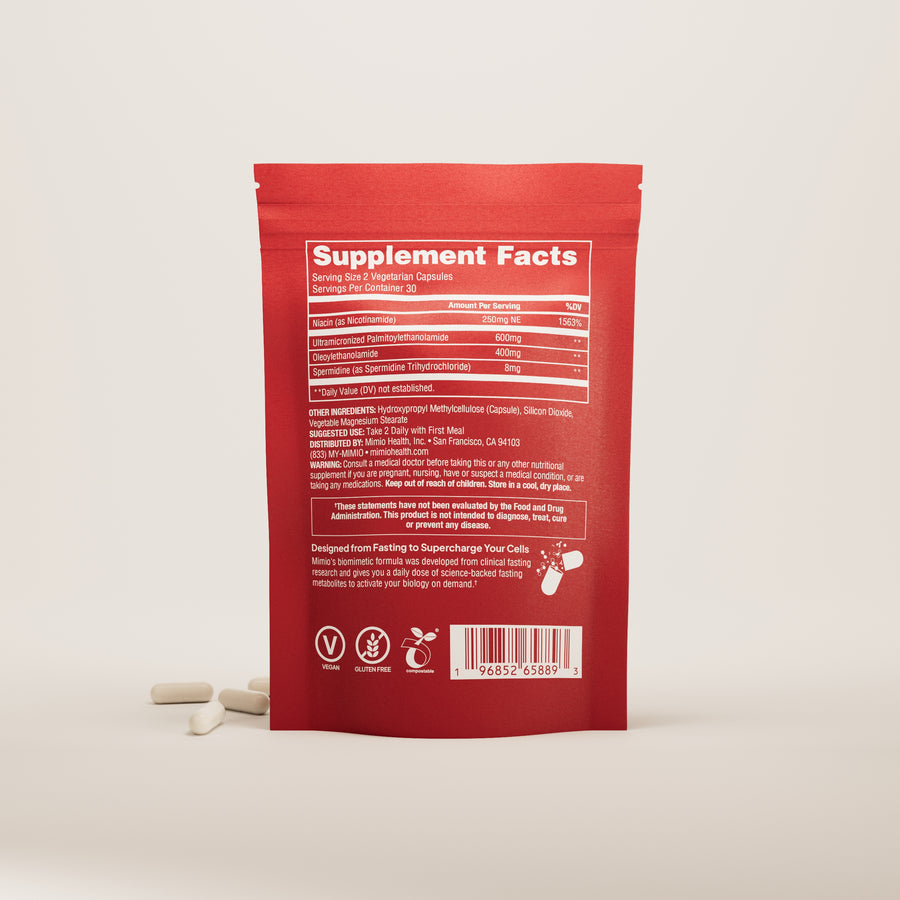
Mimio Biomimetic Cell Care is a daily supplement developed from the 36 hour fasting study behind Mimio, which Dr. Rhodes co-authored at UC Davis.²⁷ It contains spermidine, nicotinamide (250 mg), PEA and OEA, taken as two capsules with your first meal. It isn't a remedy for fasting side effects, and it doesn't replace food, fluids, electrolytes or sleep.
Questions People Ask About Fasting Side Effects
Are headaches normal when fasting?
Common, yes: about 4 in 10 people got one during a 25 hour fast,² though intermittent fasting trials found no more headaches than control diets.¹
Can you get a headache from not eating?
Yes. Headache specialists recognize it as its own condition: a diffuse headache after 8 or more hours without food that improves after eating.⁵
Do you feel hungry when fasting?
Usually, in waves around your normal mealtimes.¹⁷ On longer fasts, hunger often fades: 93% of people in the large clinic study reported none, on about 200 to 250 calories a day.³
What are the 5 stages of fasting?
There's no official scale. Charts usually show the fed state, early fasting on glycogen, a shift toward fat and ketones, deeper ketosis over several days, and prolonged fasting, when the brain runs largely on ketones.²⁸
How long until fasting is unhealthy?
There's no single cutoff; it depends on your health. Risk rises with length: refeeding needs care after more than five days of little or no food,²⁶ and multi-day water fasts are mainly studied under medical supervision.⁴
What are signs that fasting is working?
No symptom proves it, and headaches aren't milestones. Judge a routine over weeks by your energy, sleep and hunger, plus any lab results you review with your clinician.
Will I lose belly fat if I fast for 2 days?
The scale will drop, but much of that is water: glycogen is stored with three to four times its weight in water, which comes back when you eat.²⁹ Lasting fat loss depends on your eating pattern over weeks, not one fast. Our guide to the 48 hour fast runs the numbers.
This article is for general education and does not replace individualized medical advice. Talk with your clinician before fasting or starting a supplement, especially if you take medication, are pregnant or breastfeeding, or have a health condition.
These statements have not been evaluated by the Food and Drug Administration. This product is not intended to diagnose, treat, cure, or prevent any disease.
References
- Zhong F, Zhu T, Jin X, et al. Adverse events profile associated with intermittent fasting in adults with overweight or obesity: a systematic review and meta-analysis of randomized controlled trials. Nutr J. 2024;23(1):72. doi:10.1186/s12937-024-00975-9. PMID: 38987755.
- Mosek A, Korczyn AD. Yom Kippur headache. Neurology. 1995;45(11):1953-1955. doi:10.1212/wnl.45.11.1953. PMID: 7501139.
- Wilhelmi de Toledo F, Grundler F, Bergouignan A, et al. Safety, health improvement and well-being during a 4 to 21-day fasting period in an observational study including 1422 subjects. PLoS One. 2019;14(1):e0209353. doi:10.1371/journal.pone.0209353. PMID: 30601864.
- Finnell JS, Saul BC, Goldhamer AC, et al. Is fasting safe? A chart review of adverse events during medically supervised, water-only fasting. BMC Complement Altern Med. 2018;18(1):67. doi:10.1186/s12906-018-2136-6. PMID: 29458369.
- Headache Classification Committee of the International Headache Society (IHS). The International Classification of Headache Disorders, 3rd edition. Cephalalgia. 2018;38(1):1-211. doi:10.1177/0333102417738202. PMID: 29368949. Section 10.5, Headache attributed to fasting: ICHD-3 online.
- Torelli P, Manzoni GC. Fasting headache. Curr Pain Headache Rep. 2010;14(4):284-291. doi:10.1007/s11916-010-0119-5. PMID: 20490742.
- Juliano LM, Griffiths RR. A critical review of caffeine withdrawal: empirical validation of symptoms and signs, incidence, severity, and associated features. Psychopharmacology (Berl). 2004;176(1):1-29. doi:10.1007/s00213-004-2000-x. PMID: 15448977.
- Awada A, al Jumah M. The first-of-Ramadan headache. Headache. 1999;39(7):490-493. doi:10.1046/j.1526-4610.1999.3907490.x. PMID: 11279933.
- Blau JN, Kell CA, Sperling JM. Water-deprivation headache: a new headache with two variants. Headache. 2004;44(1):79-83. doi:10.1111/j.1526-4610.2004.04014.x. PMID: 14979888.
- Kolanowski J, Salvador G, Desmecht P, et al. Influence of glucagon on natriuresis and glucose-induced sodium retention in the fasting obese subject. Eur J Clin Invest. 1977;7(3):167-175. doi:10.1111/j.1365-2362.1977.tb01593.x. PMID: 408142.
- National Institute of Diabetes and Digestive and Kidney Diseases. Low blood glucose (hypoglycemia). Patient guidance.
- National Institute of Diabetes and Digestive and Kidney Diseases. Fasting safely with diabetes. Clinical guidance.
- MedlinePlus, US National Library of Medicine. Headaches: danger signs. Reviewed October 27, 2025. Patient guidance.
- Bostock ECS, Kirkby KC, Taylor BV, et al. Consumer reports of "keto flu" associated with the ketogenic diet. Front Nutr. 2020;7:20. doi:10.3389/fnut.2020.00020. PMID: 32232045.
- Benau EM, Orloff NC, Janke EA, et al. A systematic review of the effects of experimental fasting on cognition. Appetite. 2014;77:52-61. doi:10.1016/j.appet.2014.02.014. PMID: 24583414.
- Michalsen A, Schlegel F, Rodenbeck A, et al. Effects of short-term modified fasting on sleep patterns and daytime vigilance in non-obese subjects: results of a pilot study. Ann Nutr Metab. 2003;47(5):194-200. doi:10.1159/000070485. PMID: 12748412.
- Natalucci G, Riedl S, Gleiss A, et al. Spontaneous 24-h ghrelin secretion pattern in fasting subjects: maintenance of a meal-related pattern. Eur J Endocrinol. 2005;152(6):845-850. doi:10.1530/eje.1.01919. PMID: 15941923.
- Swami V, Hochstöger S, Kargl E, et al. Hangry in the field: an experience sampling study on the impact of hunger on anger, irritability, and affect. PLoS One. 2022;17(7):e0269629. doi:10.1371/journal.pone.0269629. PMID: 35793289.
- Nakamura Y, Walker BR, Ikuta T. Systematic review and meta-analysis reveals acutely elevated plasma cortisol following fasting but not less severe calorie restriction. Stress. 2016;19(2):151-157. doi:10.3109/10253890.2015.1121984. PMID: 26586092.
- Lima GS, Vallim JRDS, Marques CG, et al. Effects of time restricted feeding on sleep: a systematic review and meta-analysis. Chronobiol Int. 2025;42(12):1744-1764. doi:10.1080/07420528.2025.2577859. PMID: 41208478.
- Drake C, Roehrs T, Shambroom J, et al. Caffeine effects on sleep taken 0, 3, or 6 hours before going to bed. J Clin Sleep Med. 2013;9(11):1195-1200. doi:10.5664/jcsm.3170. PMID: 24235903.
- Hoddy KK, Kroeger CM, Trepanowski JF, et al. Safety of alternate day fasting and effect on disordered eating behaviors. Nutr J. 2015;14:44. doi:10.1186/s12937-015-0029-9. PMID: 25943396.
- National Institute of Diabetes and Digestive and Kidney Diseases. Symptoms and causes of constipation. Patient guidance.
- Anderson JC. Measuring breath acetone for monitoring fat loss: review. Obesity (Silver Spring). 2015;23(12):2327-2334. doi:10.1002/oby.21242. PMID: 26524104.
- Mass General Brigham. Intermittent fasting benefits, risks, and how it works (contributor Mary Hyer, RD, LDN). Health guidance.
- Mehanna HM, Moledina J, Travis J. Refeeding syndrome: what it is, and how to prevent and treat it. BMJ. 2008;336(7659):1495-1498. doi:10.1136/bmj.a301. PMID: 18583681.
- Rhodes CH, Zhu C, Agus J, et al. Human fasting modulates macrophage function and upregulates multiple bioactive metabolites that extend lifespan in Caenorhabditis elegans: a pilot clinical study. Am J Clin Nutr. 2023;117(2):286-297. doi:10.1016/j.ajcnut.2022.10.015. PMID: 36811567.
- Owen OE, Morgan AP, Kemp HG, et al. Brain metabolism during fasting. J Clin Invest. 1967;46(10):1589-1595. doi:10.1172/JCI105650. PMID: 6061736.
- Kreitzman SN, Coxon AY, Szaz KF. Glycogen storage: illusions of easy weight loss, excessive weight regain, and distortions in estimates of body composition. Am J Clin Nutr. 1992;56(1 Suppl):292S-293S. doi:10.1093/ajcn/56.1.292S. PMID: 1615908.