Can you drink coffee while fasting? Usually, yes. Does coffee break a fast? Black coffee doesn't for most goals; what you stir into it, and why you're fasting, decide the rest. For water, tea and other drinks, see our guide to what to drink while fasting.
Quick answer: Black coffee doesn't break a fast for most goals: an 8 oz cup has about 2 calories and no carbohydrate. Milk, cream, sugar, butter and MCT oil add calories, so they technically end a fast, though a splash of milk matters little for weight loss. For autophagy, gut rest, a water fast or a fasting blood test, keep it black or skip it.
Does Black Coffee Break a Fast?
No, not for most fasting goals. An 8 oz cup of brewed black coffee has about 2 calories, no carbohydrate, about a quarter gram of protein and roughly 95 mg of caffeine.¹ On nutrients alone, there's very little in it for insulin to respond to.
In one small trial, 10 healthy adults drank 8 oz of black coffee or water after a 10 hour overnight fast, and 30 minutes later their blood sugar and triglycerides were the same either way.² It was small and short, so treat it as a good sign, not the final word.
What Happens If You Drink Coffee When Fasting?
Caffeine, not calories, drives most of what you'll notice:
- You burn slightly more energy. In one study, 100 mg of caffeine raised resting metabolic rate by 3% to 4% for about two and a half hours.³
- Fat release and ketones may rise. In 10 healthy adults, caffeine taken with breakfast raised blood ketones by 88% to 116%, depending on the dose, along with free fatty acids.⁴
- Your gut may wake up. In 12 healthy volunteers, a cup of caffeinated coffee stimulated the colon about as much as a 1,000 calorie meal.⁵ Coffee also stimulates stomach acid.⁶
- Your next meal's blood sugar may run higher. In a review of seven trials, caffeine briefly lowered insulin sensitivity.⁷ In 29 young adults after a night of broken sleep, a strong black coffee (about 300 mg of caffeine) 30 minutes before a sugary drink raised their peak blood sugar and insulin.⁸
- Hunger may or may not ease. Caffeine taken 30 minutes to 4 hours before a meal may cut how much people eat, but effects on hunger itself are inconsistent.⁹
- You won't dry out. In 50 men who drank coffee daily, four cups a day kept them as well hydrated as the same amount of water.¹⁰
Does Coffee Break a Fast? It Depends on Your Goal
Different goals draw the line in different places. For religious fasts, follow your tradition's rules; our guide to the types of fasting covers the main approaches.
Your goal |
Black coffee? |
A splash of milk or cream? |
Why |
|---|---|---|---|
Weight loss |
Yes |
Usually fine |
Calories decide most of the result; a tablespoon of whole milk has about 9 calories¹ |
Metabolic health |
Yes |
Keep it small |
Black coffee left fasting blood sugar unchanged;² milk products raise insulin more than their blood sugar effect predicts¹¹ |
Autophagy |
Yes, kept black |
Skip it |
Protein and insulin signal the pathway that holds autophagy back¹² |
Gut rest |
Better skipped |
Skip it |
Coffee stimulates the colon and stomach acid⁵˒⁶ |
Water fast |
No |
No |
Water only means water only |
Fasting blood test |
No, unless told otherwise |
No |
Coffee can affect results¹³ |
For Weight Loss
Black coffee fits, and a splash of milk is a small compromise rather than a reset. Cream adds up faster, at about 51 calories a tablespoon.¹ The bigger lever is an intermittent fasting schedule you can keep, with the latte moved into your eating window.
For Metabolic Health: Insulin and Blood Sugar
Black coffee on its own left fasting blood sugar unchanged in the trial above.² Caffeine's catch shows up at your next meal: it briefly lowers insulin sensitivity,⁷ and a strong coffee just before a sugary drink raised the blood sugar peak.⁸ Leaving some time between your last coffee and your first meal may help, though that hasn't been tested directly.
The long view is more encouraging. Across 28 studies with more than 1.1 million people, each daily cup was linked to about a 9% lower risk of type 2 diabetes for caffeinated coffee and 6% for decaf.¹⁴ Those are associations, not proof. If you track your numbers, glucose and ketone meters can show how your own first meal responds.
For Autophagy: What the Evidence Shows and What It Doesn't
Coffee's autophagy reputation rests largely on a 2014 mouse study. One to four hours after coffee, both regular and decaf increased autophagy in the liver, muscle and heart, while lowering the activity of mTOR, a growth signal that holds autophagy back.¹⁵ That's a real finding in mice, not proof of the same effect in people.
Human evidence is thin even for fasting itself. A 2026 review found human autophagy data much more limited than animal data: few studies have measured autophagic flux, the more rigorous readout, and those that did often found negative or inconclusive results.¹⁶ We found no human study testing whether coffee changes autophagy during a fast.
The practical rule is to keep it black. Amino acids from protein switch on mTOR, insulin signaling activates it, and active mTOR suppresses autophagy.¹² So milk, collagen and sweetened creamers are the bigger concern, not the coffee. Our guide to autophagy and fasting explains how fasting triggers the process.
For Gut Rest
Coffee is a poor fit, since it stimulates both the colon and stomach acid.⁵˒⁶ Stick to water, or try decaf, which had a smaller effect on the colon.⁵
What Can You Put in Coffee Without Breaking Your Fast?
A pinch of cinnamon and pure stevia or monk fruit are the safest add-ins. Anything with sugar, protein or fat ends a strict fast. Calories for foods are USDA values.¹
Add-in |
Calories (about) |
Weight loss fast |
Autophagy or strict fast |
|---|---|---|---|
Black coffee, 8 oz |
2 |
Fits |
Fits |
Cinnamon, ¼ teaspoon |
2 |
Fits |
Fits in practice |
Pure stevia or monk fruit |
Essentially 0¹⁷ |
Fits |
Your call |
Whole milk, 1 tablespoon |
9 |
Small compromise |
Breaks |
Half and half, 1 tablespoon |
20 |
Small compromise |
Breaks |
Heavy cream, 1 tablespoon |
51 |
Counts toward intake |
Breaks |
Flavored liquid creamer, 1 tablespoon |
38, with about 5 g of carbs |
Breaks |
Breaks |
Sugar, 1 teaspoon |
16 |
Breaks |
Breaks |
Butter, 1 tablespoon |
102 |
Breaks |
Breaks |
Coconut oil, 1 tablespoon |
121 |
Breaks |
Breaks |
Collagen |
Varies by label |
Breaks |
Breaks |
Milk, Cream and Creamer
Milk carries lactose and protein, and in one study milk products raised insulin three to six times more than their glycemic index would predict.¹¹ That was with full servings, so a tablespoon sends a much smaller signal, but not zero. Heavy cream has less sugar than milk but more than five times the calories per tablespoon.¹ Flavored creamers and plant milks vary widely, so check the label.
Sweeteners
Pure stevia and monk fruit add essentially no calories. In a crossover trial of 30 men, stevia and monk fruit drinks avoided the blood sugar and insulin spike a sugar-sweetened drink caused in the first hour, though responses after the next meal ran higher, so 3 hour totals matched.¹⁷ Sucralose is less clear-cut: in 17 people with obesity who didn't normally use sweeteners, sucralose taken 10 minutes before a glucose drink raised the insulin response by about 20%.¹⁸
Two caveats. US labels can list anything under 5 calories per serving as zero,¹⁹ so check packets for dextrose or maltodextrin, which are carbohydrates. And for weight control, the World Health Organization advises against relying on non-sugar sweeteners, a conditional recommendation that excludes people with diabetes.²⁰
Bulletproof Coffee, Butter and MCT Oil
Bulletproof or butter coffee blends coffee with butter and MCT or coconut oil. It has no carbohydrate and almost no protein, but a cup made with a tablespoon each of butter and coconut oil carries more than 200 calories,¹ a small breakfast by any definition. MCT oil can raise blood ketones: in a study of nine adults, pure C8 (caprylic) oil raised them most, peaking about four times higher than coconut oil.²¹ If ketones are your aim, that may suit you. If you want a true fast, autophagy or gut rest, butter coffee ends it. Our guide to whether supplements break a fast covers MCT oil and collagen too.
What Is Dirty Fasting?
Dirty fasting means allowing a small number of calories in your fasting window, such as a splash of cream, a spoon of MCT oil or a cup of bone broth, instead of zero. It's an internet term, not a research definition, and we found no study that tests it directly. Clean fasting means water, black coffee and plain tea only.
It can work as a stepping stone when weight is the goal, since total calories matter most there, but it's a poor fit for autophagy or gut rest. Our guide to how many calories break a fast compares the stricter and looser approaches. For other foods, drinks and supplements, see what breaks a fast.
Does Decaf Coffee Break a Fast?
No. Decaf follows the same rules as regular coffee, with almost no caffeine: about 2 mg in an 8 oz cup by USDA data,¹ or 2 to 15 mg by FDA estimates.²² It's a good swap if caffeine leaves you jittery on an empty stomach or keeps you up after a late eating window. It isn't inert, though: in the mouse study, decaf triggered autophagy just as regular coffee did,¹⁵ and in the colon study, its effect was smaller than regular coffee's.⁵
Espresso follows the same rules: a 1 oz shot has about 3 calories and 63 mg of caffeine.¹ Plain cold brew fits too. For bottled coffee drinks, check the label for milk and sugar.
Caffeine Timing, Sleep and How Much Is Too Much
For most adults, the FDA cites 400 mg of caffeine a day, about two to three 12 oz cups of brewed coffee, as an amount not generally linked to negative effects. A 12 oz cup can hold 113 to 247 mg. Too much can cause jitters, a racing heart, an upset stomach, nausea, headaches and poor sleep.²²
On fasting days, an afternoon coffee is a tempting way to push through to dinner. But in a study of 12 healthy sleepers, 400 mg of caffeine taken six hours before bed still cut sleep by more than an hour.²³ Have your last caffeinated cup at least six hours before bedtime, and switch to decaf after that. Our guide to improving your sleep habits has more.
One more timing tip: drink coffee during your fast rather than with your first meal. Coffee with a meal cut iron absorption by 39% in one study, and coffee an hour after the meal did the same, but coffee an hour before had no effect.²⁴ That matters most if your iron runs low.
Coffee on Longer Fasts: 24 Hours and Beyond
On a 24, 36 or 72 hour fast, coffee can make the hours easier or harder:
- Don't quit cold turkey on day one. About half of people who stop caffeine get a headache, usually starting 12 to 24 hours in, with symptoms lasting 2 to 9 days.²⁵ If your fast excludes coffee, taper over the week before. Our guide to fasting headaches covers the other causes and relief.
- Drink water too. Moderate coffee counts toward your fluids,¹⁰ but plain water should do most of the work. For sodium and other minerals, see our guide to electrolytes for fasting.
- Know your stop signs. Fainting, chest pain, confusion or a racing heartbeat that won't settle mean end the fast and get medical help. For nausea or heartburn, switch to decaf or stop.
A water fast means no coffee at all. Fasts longer than a few days belong under medical supervision.
Who Should Be Careful With Coffee While Fasting
Talk with your clinician first if any of these apply:
- Diabetes medicines: insulin, sulfonylureas and meglitinides can cause low blood sugar during a fast and usually need adjusting first.²⁶
- Reflux, ulcers or a sensitive stomach: coffee stimulates stomach acid, and its effect on reflux is still debated.⁶
- Anxiety, palpitations, high blood pressure or a heart rhythm problem: some conditions and medicines make people more sensitive to caffeine.²²
- Pregnancy, trying to conceive or breastfeeding: ask about caffeine limits,²² and don't fast without medical guidance.
- A history of eating disorders, or being under 18: skip fasting unless a clinician guides it.
Where Mimio Fits
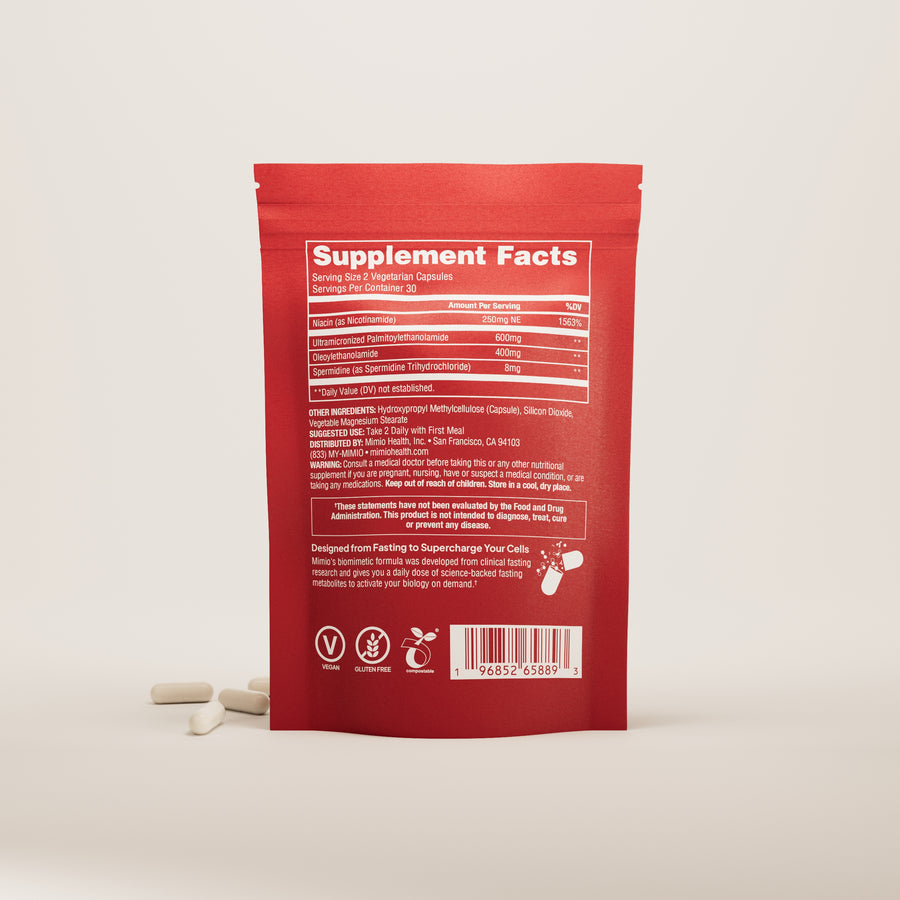
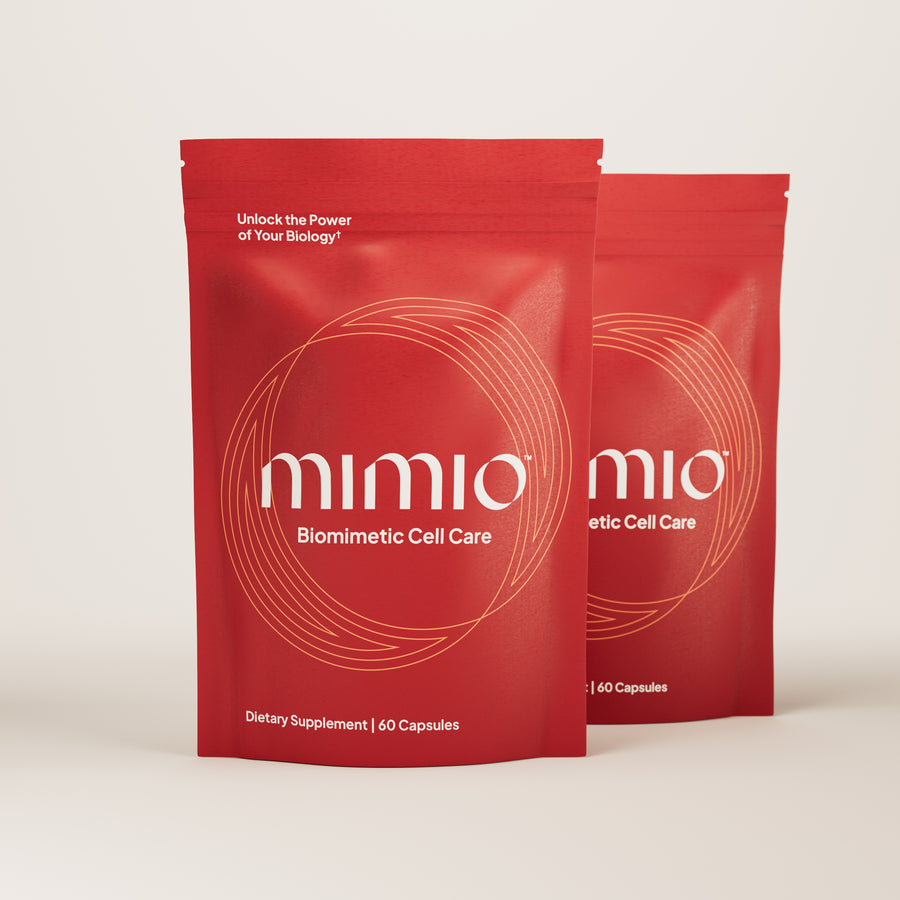
Mimio Biomimetic Cell Care isn't a coffee add-in or a fasting drink. It's a daily supplement with four active ingredients, spermidine, nicotinamide, PEA and OEA, that trace back to the study behind Mimio: Dr. Rhodes's 36 hour fasting study at UC Davis, in which blood levels of spermidine, PEA, OEA and a nicotinamide metabolite rose during the fast.²⁷
The label directs two capsules with your first meal, so Mimio belongs in your eating window, while black coffee and water carry the fasting hours. Review the full formula on the Mimio product page.
The Bottom Line
Black coffee fits most fasts. Milk, cream, sweeteners and butter are where the line moves, depending on your goal. Keep coffee black when the goal is strict, keep caffeine six hours from bedtime, and save the latte for your eating window.
Questions People Ask About Coffee and Fasting
What drink won't break a fast?
Plain water, still or sparkling, fits any fast that allows fluids. Black coffee and plain, unsweetened tea fit most. Anything with sugar, milk, juice, protein or alcohol breaks one. Diet sodas and sweetened waters raise the same questions as sweeteners in coffee.
Can you drink coffee while intermittent fasting?
Yes, as long as it's black. Plain coffee fits 16:8, one meal a day and most other intermittent fasting schedules. Save milk, sugar and flavored drinks for your eating window.
Does caffeine break a fast?
No. Caffeine has no calories; what travels with it can, such as the sugar and milk in coffee drinks or the sugar in many energy drinks. Plain caffeine still briefly lowers insulin sensitivity⁷ and can disturb sleep if you have it late.²³
Does coffee break a fast for blood work?
Treat it as if it does. Coffee can affect blood test results, so unless your clinician says otherwise, drink only plain water for the usual 8 to 12 hours.¹³
This article is for general education and does not replace individualized medical advice. Talk with your clinician before fasting or changing your caffeine intake if you take medication, are pregnant or breastfeeding, or have a health condition.
These statements have not been evaluated by the Food and Drug Administration. This product is not intended to diagnose, treat, cure, or prevent any disease.
References
- U.S. Department of Agriculture, Agricultural Research Service. FoodData Central, SR Legacy: brewed coffee (FDC 171890), decaffeinated brewed coffee (171889), espresso (171891), whole milk (171265), half and half (171255), heavy whipping cream (170859), flavored liquid cream substitute (173453), granulated sugar (169655), salted butter (173410), coconut oil (171412) and ground cinnamon (171320). Database.
- Sciarrillo CM, Keirns BH, Elliott DC, Emerson SR. The effect of black coffee on fasting metabolic markers and an abbreviated fat tolerance test. Clin Nutr ESPEN. 2021;41:439-442. doi:10.1016/j.clnesp.2020.11.020.
- Dulloo AG, Geissler CA, Horton T, et al. Normal caffeine consumption: influence on thermogenesis and daily energy expenditure in lean and postobese human volunteers. Am J Clin Nutr. 1989;49(1):44-50. doi:10.1093/ajcn/49.1.44.
- Vandenberghe C, St-Pierre V, Courchesne-Loyer A, et al. Caffeine intake increases plasma ketones: an acute metabolic study in humans. Can J Physiol Pharmacol. 2017;95(4):455-458. doi:10.1139/cjpp-2016-0338.
- Rao SS, Welcher K, Zimmerman B, Stumbo P. Is coffee a colonic stimulant? Eur J Gastroenterol Hepatol. 1998;10(2):113-118. doi:10.1097/00042737-199802000-00003.
- Nehlig A. Effects of coffee on the gastro-intestinal tract: a narrative review and literature update. Nutrients. 2022;14(2):399. doi:10.3390/nu14020399.
- Shi X, Xue W, Liang S, et al. Acute caffeine ingestion reduces insulin sensitivity in healthy subjects: a systematic review and meta-analysis. Nutr J. 2016;15(1):103. doi:10.1186/s12937-016-0220-7.
- Smith HA, Hengist A, Thomas J, et al. Glucose control upon waking is unaffected by hourly sleep fragmentation during the night, but is impaired by morning caffeinated coffee. Br J Nutr. 2020;124(10):1114-1120. doi:10.1017/S0007114520001865.
- Schubert MM, Irwin C, Seay RF, et al. Caffeine, coffee, and appetite control: a review. Int J Food Sci Nutr. 2017;68(8):901-912. doi:10.1080/09637486.2017.1320537.
- Killer SC, Blannin AK, Jeukendrup AE. No evidence of dehydration with moderate daily coffee intake: a counterbalanced cross-over study in a free-living population. PLoS One. 2014;9(1):e84154. doi:10.1371/journal.pone.0084154.
- Östman EM, Liljeberg Elmståhl HG, Björck IM. Inconsistency between glycemic and insulinemic responses to regular and fermented milk products. Am J Clin Nutr. 2001;74(1):96-100. doi:10.1093/ajcn/74.1.96.
- Saxton RA, Sabatini DM. mTOR signaling in growth, metabolism, and disease. Cell. 2017;168(6):960-976. doi:10.1016/j.cell.2017.02.004.
- MedlinePlus, National Library of Medicine. Fasting for a blood test. Updated August 28, 2025. Medical test information.
- Ding M, Bhupathiraju SN, Chen M, et al. Caffeinated and decaffeinated coffee consumption and risk of type 2 diabetes: a systematic review and a dose-response meta-analysis. Diabetes Care. 2014;37(2):569-586. doi:10.2337/dc13-1203.
- Pietrocola F, Malik SA, Mariño G, et al. Coffee induces autophagy in vivo. Cell Cycle. 2014;13(12):1987-1994. Mouse study. doi:10.4161/cc.28929.
- Singh S, Sargeant TJ. Increasing autophagy with fasting and diet: separating fact from fiction. Biochem Soc Trans. 2026;54(10):1497-1511. doi:10.1042/BST20260632.
- Tey SL, Salleh NB, Henry J, Forde CG. Effects of aspartame-, monk fruit-, stevia- and sucrose-sweetened beverages on postprandial glucose, insulin and energy intake. Int J Obes (Lond). 2017;41(3):450-457. doi:10.1038/ijo.2016.225.
- Pepino MY, Tiemann CD, Patterson BW, et al. Sucralose affects glycemic and hormonal responses to an oral glucose load. Diabetes Care. 2013;36(9):2530-2535. doi:10.2337/dc12-2221.
- Nutrition labeling of food. 21 CFR 101.9(c)(1). Regulation text.
- World Health Organization. WHO advises not to use non-sugar sweeteners for weight control in newly released guideline. News release, May 15, 2023. News release.
- Vandenberghe C, St-Pierre V, Pierotti T, et al. Tricaprylin alone increases plasma ketone response more than coconut oil or other medium-chain triglycerides: an acute crossover study in healthy adults. Curr Dev Nutr. 2017;1(4):e000257. doi:10.3945/cdn.116.000257.
- U.S. Food and Drug Administration. Spilling the beans: how much caffeine is too much? Content current as of August 28, 2024. Consumer update.
- Drake C, Roehrs T, Shambroom J, Roth T. Caffeine effects on sleep taken 0, 3, or 6 hours before going to bed. J Clin Sleep Med. 2013;9(11):1195-1200. doi:10.5664/jcsm.3170.
- Morck TA, Lynch SR, Cook JD. Inhibition of food iron absorption by coffee. Am J Clin Nutr. 1983;37(3):416-420. doi:10.1093/ajcn/37.3.416.
- Juliano LM, Griffiths RR. A critical review of caffeine withdrawal: empirical validation of symptoms and signs, incidence, severity, and associated features. Psychopharmacology (Berl). 2004;176(1):1-29. doi:10.1007/s00213-004-2000-x.
- National Institute of Diabetes and Digestive and Kidney Diseases. Fasting safely with diabetes. August 26, 2020. Clinical guidance.
- Rhodes CH, Zhu C, Agus J, et al. Human fasting modulates macrophage function and upregulates multiple bioactive metabolites that extend lifespan in Caenorhabditis elegans: a pilot clinical study. Am J Clin Nutr. 2023;117(2):286-297. doi:10.1016/j.ajcnut.2022.10.015.