There is a specific sound a person makes standing up from the couch the morning after four games. If you're over 50 and you play regularly, you know the one.
The good news is that most of what determines how you feel tomorrow happens in the six hours after you leave the court, and almost none of it requires buying anything.
The short version: walk for five to ten minutes before you get in the car. Drink roughly 16 to 24 ounces of fluid in the first hour, with sodium if you sweated heavily. Eat a real meal with protein and carbohydrate within a couple of hours. Protect a full night of sleep. Move gently the next morning and judge your next session by how you actually feel, not by what's on the schedule. Supplements can close specific gaps. None of them replace that sequence.
Why recovery feels different after 50
Recovery is the process of restoring fluid, fuel, nervous system readiness, and tissue capacity after a load. Age doesn't break that process. It narrows the margin.
Two things change. Older muscle is less responsive to a small dose of protein, meaning the same 15-gram snack that would trigger a repair response at 25 may not do much at 62.¹ ⁴ And tissue remodeling after an unfamiliar load simply takes longer.²
Now layer on what pickleball actually is: two hours of lunging, gripping, rotating, and hard stopping, often on concrete, frequently after a week spent mostly sitting. The demand isn't extreme in any single moment. It's the volume of repeated moments that adds up.
The answer isn't to stop challenging your body. Training stress is the signal that drives adaptation, the same hormetic principle that makes exercise beneficial in the first place. The answer is to make the challenge repeatable.
What's actually making you sore (it isn't lactic acid)
This one deserves killing properly, because it drives a lot of wasted effort.
Lactate is produced during hard efforts and it clears from your blood within roughly an hour of stopping. It is gone long before you wake up stiff. It is also not a waste product; your body uses it as fuel.
What you're feeling the next morning is delayed onset muscle soreness, and it comes from microscopic mechanical damage to muscle fibers and the inflammatory repair response that follows. It's driven most strongly by eccentric loading, the lengthening-under-tension that happens every time you decelerate, reach low for a dink, or catch yourself changing direction. Which is to say: by pickleball.
DOMS typically shows up 12 to 24 hours after an unfamiliar load and peaks somewhere in the next one to three days.
Why this matters practically: no amount of "flushing lactic acid" does anything, because there's nothing left to flush. What actually helps is fluid, protein, sleep, and gentle movement. Everything else on the recovery aisle is comfort, and comfort has real value, but it should be priced honestly.
Your pickleball recovery plan, hour by hour
|
Timing |
What to do |
Why it helps |
|---|---|---|
|
Final 5 to 10 minutes |
Walk, breathe, gentle range of motion for calves, hamstrings, hips, and shoulders |
Brings intensity down gradually and reveals pain adrenaline was masking |
|
First hour |
Roughly 16 to 24 oz of fluid; add sodium if play was long, hot, or heavy-sweat |
Begins replacing fluid and sodium losses |
|
Within 1 to 2 hours |
A real meal with protein and carbohydrate |
Supplies amino acids for repair and carbohydrate to restore fuel |
|
Evening |
Keep alcohol modest or skip it; protect the wind-down |
Alcohol fragments sleep, which is where most of the repair happens |
|
Overnight |
7 to 9 hours of sleep opportunity |
The highest-leverage recovery input available, and the only one that's free |
|
Next morning |
20 to 30 minutes of easy walking or cycling; reassess |
Reduces stiffness and gives you an honest read on what hurts |
|
Next 24 to 48 hours |
Train or play by readiness, not by guilt |
Prevents stacking hard sessions on unresolved fatigue |
One correction to something you'll read everywhere: the 30-minute "anabolic window" is not a trapdoor. Total daily intake matters far more than precise timing.³ The first post-play meal is simply a convenient place to start, and it genuinely does matter more when you're playing again within about 24 hours.
Step 1: Cool down long enough to notice what hurts
Walk for five to ten minutes instead of going straight from a sprint to the driver's seat. Open and close your hands. Move your ankles and shoulders through their range. Let your breathing settle.
This isn't about flushing anything. It's a transition, and it's the moment you're most likely to notice that the thing you thought was general fatigue is actually one specific angry tendon.
If you felt a pop, took a hard fall, can't bear weight, or now have significant swelling, weakness, visible deformity, head injury symptoms, numbness, chest pain, or unusual shortness of breath, stop reading about recovery and get assessed. Our guide on telling a pickleball injury from ordinary soreness walks through the distinction.
Step 2: Replace what you actually lost
You don't need a neon sports drink after every casual game. After a shorter session in mild conditions, water and a normal meal will cover it.
A reasonable starting point is 16 to 24 ounces of fluid in the first hour after play, more if the session was long or hot. Add sodium when you played over an hour in heat, sweated heavily, can see salt marks dried on your shirt or hat, or have another session coming soon. Sodium is the electrolyte lost in the largest quantity through sweat, and it's the one that matters most for actually holding onto the fluid you drink.
Two cautions worth stating plainly. Drinking far past thirst without replacing sodium can be genuinely dangerous, so "more water" is not an unlimited strategy. And anyone with heart, kidney, or blood pressure conditions, or on medications affecting fluid balance, should get individualized guidance rather than following a generic number.
A useful personal calibration: if you consistently finish sessions noticeably lighter than you started, you're arriving underhydrated and drinking too little during play.
Step 3: Build a meal that does something
Three components:
- Protein. Eggs, Greek yogurt, poultry, fish, tofu, tempeh, beans, or a shake.
- Carbohydrate. Fruit, oats, rice, potatoes, or bread to restore muscle fuel.
- Color and fluid. Vegetables, fruit, or soup for micronutrients and hydration.
For most active older adults, roughly 25 to 35 grams of high quality protein in that meal is a sensible target, though needs vary with body size, total daily intake, training load, and health status.¹ ⁴ That's a meaningfully higher threshold than younger athletes need, and it's the single most common gap I see in recovery routines: the post-game snack is too small to trigger anything.
Spreading protein across the day beats eating almost nothing until one enormous dinner. Carbohydrate deserves its place too, particularly after longer sessions. Recovery is not the moment to turn every meal into a purity test.
Combinations that work:
- Greek yogurt, berries, oats, and nuts
- Eggs, whole grain toast, fruit, and water
- Chicken or tofu with rice, vegetables, and soup
- A protein shake and a banana when a real meal has to wait
Step 4: Move the next day, don't punish yourself
Gentle walking, easy cycling, or comfortable mobility work can reduce stiffness. They don't shorten the underlying repair timeline, and that's fine. Feeling better is a legitimate goal.
Make the next session easier if soreness is changing your footwork, limiting your range of motion, or forcing you to compensate. Technique degrades under fatigue, and degraded technique is how a recovery problem becomes an injury.
Step 5: Treat sleep as the actual supplement
This is where most players quietly undo everything else. A 7pm match becomes a 9pm dinner, a drink, bright screens, and six hours of sleep.
Aim for a 7 to 9 hour sleep opportunity. Keep the room dark and cool. Don't use alcohol as a sleep aid; it helps you fall asleep and then fragments the back half of the night, which is precisely the part you need. Move caffeine earlier if you're playing evenings.
If pain regularly wakes you, or if snoring plus daytime sleepiness suggests sleep apnea, that's worth raising with a clinician. No powder compensates for chronically short sleep.
Step 6: Get stronger so the same match costs less
Recovery improves when your capacity rises relative to the demand. Stronger legs, calves, hips, upper back, and grip mean a normal match consumes a smaller share of what you've got.
Two well-designed resistance sessions a week builds that reserve. Squat or sit-to-stand patterns, hinges, step-ups, calf raises, rows, presses, and carries. Add balance work and controlled direction changes. Progress gradually, and remember that strength work is itself a load requiring recovery.
This is the highest-return item on the entire page, and it's the one nobody sells because you can't put it in a bottle.
Why am I so exhausted after pickleball?
More tired than you expect is normal and usually explainable:
- The stop-start structure. Repeated accelerations and decelerations are metabolically expensive in a way steady walking isn't. Two hours of pickleball is not two hours of strolling.
- Cognitive load. Tracking a fast ball, a partner, and two opponents while making rapid decisions is genuinely fatiguing.
- Heat. Outdoor play in warm conditions adds cardiovascular strain and fluid loss.
- Underfueling. Morning ladder play on coffee alone is a common pattern and a reliable route to afternoon exhaustion.
- Sleep debt. Fatigue accumulates across a week and often shows up on the court before anywhere else.
Fatigue that persists for days, arrives with declining performance despite training, or comes with elevated resting heart rate, poor sleep, irritability, and lost enthusiasm may be non-functional overreaching, sometimes called overtraining. The treatment is reduced load and genuine rest, usually over weeks rather than days. If it doesn't resolve, get it checked. Persistent unexplained fatigue has plenty of medical causes that have nothing to do with pickleball.
Recovery tools: what's worth the money
|
Tool |
What the evidence supports |
Honest verdict |
|---|---|---|
|
Foam roller |
May temporarily reduce perceived soreness and improve short-term range of motion |
Cheap, useful, doesn't speed tissue repair |
|
Lacrosse ball |
Targeted pressure for feet, forearms, and shoulders |
Effective for the small areas a roller can't reach |
|
Compression socks |
Mixed evidence; some studies show modestly reduced perceived soreness |
Low risk, modest benefit, popular for travel and long tournament days |
|
Massage |
Reliably improves how you feel; effects on performance are less clear |
Genuine comfort value, not a repair accelerator |
|
Cold plunge or ice bath |
Reduces perceived soreness, but regular post-training use may blunt strength adaptations |
Fine occasionally in tournament blocks, questionable as a daily habit after strength work |
|
Heat and hot tub |
Comfortable, improves subjective stiffness |
Enjoyable and harmless; no meaningful repair effect |
|
Static stretching |
Helps maintain range of motion in calves, hamstrings, hips, and lower back |
Worth doing, doesn't prevent soreness |
The pattern across that whole table: most recovery tools change how you feel rather than how fast you repair. That's not a dismissal. Feeling better matters, and a player who feels better shows up more consistently. Just don't buy comfort while believing you bought biology.
Which supplements earn a place
|
Supplement |
Best-supported role |
What it won't do |
|---|---|---|
|
Protein powder |
Conveniently closes a protein gap when food falls short |
Beat adequate food-based protein |
|
Creatine monohydrate |
Supports strength and lean mass gains over weeks alongside resistance training, including in older adults⁵ |
Act as an instant post-game soreness cure |
|
Electrolytes |
Replaces sodium during long, hot, or heavy-sweat sessions |
Fix dehydration without adequate fluid, or prevent every cramp |
|
Carbohydrate drink or food |
Speeds refueling when sessions run long or come close together |
Substitute for an overall nourishing diet |
|
Tart cherry |
May modestly affect soreness markers in some settings; products vary widely |
Guarantee faster return to play |
|
BCAAs |
Supplies three amino acids |
Add much when total protein intake is already sufficient |
Creatine is the strongest entry on that list, and it's worth understanding why: its value is improved training adaptation across weeks, not a sensation ten minutes after you take it.⁵ If you want the fuller picture on evidence quality across categories, see our guide to healthy aging supplements.
Anyone with a medical condition or a complex medication list should review new supplements with a clinician or pharmacist.
Where Mimio fits
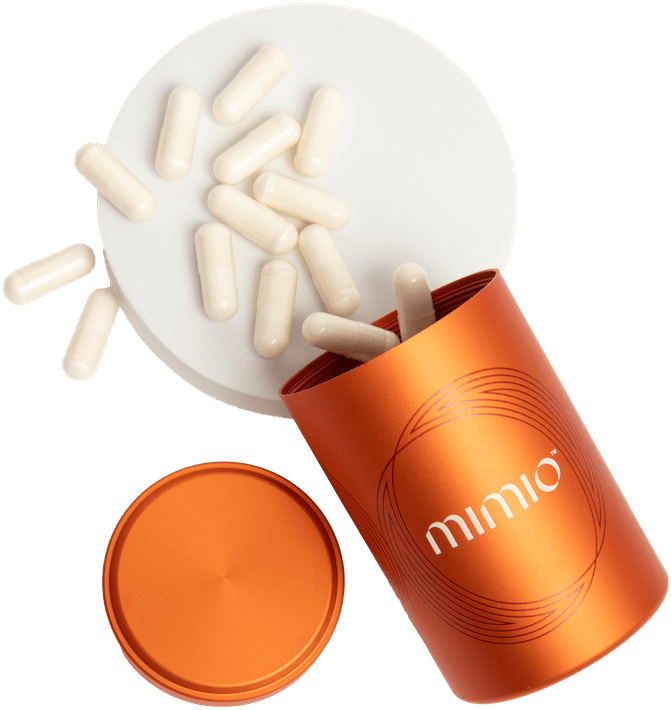
Mimio is a daily fasting mimetic formula, and in its eight-week randomized, double-blind, placebo-controlled trial in adults averaging 62 years old measured appetite, digestion, and cardiometabolic markers, showing improvements in hunger and satiety, bloating and abdominal pain, fasting glucose, several cholesterol measures, and oxidized LDL.⁶ It did not measure muscle soreness, tissue repair, or return-to-play time, so nobody should take it expecting an effect on tomorrow morning.
The accurate place for it in an active life is as a daily routine sitting underneath the recovery foundation, taken per the label rather than as an extra dose after a hard match. For players thinking about the decade rather than the next 24 hours, our guide to supplements for pickleball players covers that case directly.
Explore Mimio Biomimetic Cell Care or review the published research first.
A sample 24 hours after evening play
- 7:30pm, finish. Walk five minutes. Drink water. Note anything focal.
- 8:00pm, dinner. Salmon or tofu, rice or potatoes, vegetables, fruit. Salt to your needs.
- 9:30pm, downshift. Set out tomorrow's gear, dim the screens, gentle mobility if it feels good.
- 10:30pm, sleep opportunity. Give yourself the full window.
- 7:00am, reassess. Ten to twenty minute walk. Diffuse soreness that's easing means proceed. Focal pain that changes your gait means reduce load and look at it properly.
- Later that day. Easy skill work, strength training for unaffected areas, or rest. Do not try to make up for yesterday with a punishing session.
Recovery is a sequence, not a shopping list
Fluids, then food, then sleep, then a next-day load your body can absorb. Protein, creatine, and electrolytes solve specific problems well. None of them rescues a schedule that never allows recovery in the first place.
Build the basics thoroughly enough that supplements stay what they should be: supplements.
Frequently asked questions
How long does it take to recover from pickleball?
After a normal session most players feel ready within a day or two. An unfamiliar tournament load can produce soreness for three to five days. Recovery time varies with conditioning, sleep, food, heat, and session length. Sharp, worsening, or function-limiting pain shouldn't be managed as routine soreness.
Why am I so tired after pickleball?
The stop-start structure is metabolically expensive, the cognitive load of tracking ball, partner, and opponents is genuinely fatiguing, and heat adds cardiovascular strain. Underfueling and accumulated sleep debt are the two most common amplifiers. Fatigue lasting several days alongside declining performance may signal overreaching and warrants reduced load.
Does lactic acid cause soreness after pickleball?
No. Lactate clears from the blood within about an hour of stopping and is used as fuel rather than being a waste product. Next-day soreness comes from microscopic muscle fiber damage and the inflammatory repair response, driven mostly by the deceleration and lengthening-under-load that pickleball produces constantly.
Do compression socks speed up recovery after pickleball?
The evidence is mixed. Some studies show modestly reduced perceived soreness and swelling, while effects on actual performance recovery are less consistent. They're low risk and many players find them useful for travel and long tournament days, but they belong in the comfort category rather than the repair category.
What should I eat after pickleball?
A meal with a meaningful protein source, carbohydrate, colorful plants, and fluid. Yogurt with oats and fruit; eggs with toast and fruit; or fish, tofu, or chicken with rice and vegetables. For most active older adults, roughly 25 to 35 grams of protein in that meal is a reasonable target.
Are electrolytes good after pickleball?
They're useful after long, hot, or heavy-sweat sessions, especially with another match coming soon. Water and a normal meal cover shorter sessions. Needs vary substantially, and heart, kidney, or blood pressure conditions require individualized guidance.
Is creatine good for pickleball players over 50?
Creatine monohydrate supports strength and lean mass gains when combined with resistance training, including in older adults.⁵ It's not an instant energy boost or an injury treatment. Review it with a clinician if you have a medical condition or medication concern.
Should I play pickleball when I'm sore?
Mild, diffuse soreness that eases as you move is usually compatible with an easier session. Don't play normally if it's changing your gait, grip, range of motion, or coordination. Sharp, localized, worsening, or swollen pain needs a different plan entirely.
Medical note: this article is educational and is not a substitute for diagnosis, treatment, rehabilitation, or personalized nutrition advice.
These statements have not been evaluated by the Food and Drug Administration. This product is not intended to diagnose, treat, cure, or prevent any disease.
References
-
Bauer J, Biolo G, Cederholm T, et al. Evidence-based recommendations for optimal dietary protein intake in older people: a position paper from the PROT-AGE Study Group. J Am Med Dir Assoc. 2013;14(8):542-559. https://pubmed.ncbi.nlm.nih.gov/23867520/
-
Recovery and adaptation of skeletal muscle with aging. 2008. https://pubmed.ncbi.nlm.nih.gov/18268815/
-
Kerksick CM, Arent S, Schoenfeld BJ, et al. International Society of Sports Nutrition position stand: nutrient timing. J Int Soc Sports Nutr. 2017. https://pubmed.ncbi.nlm.nih.gov/28919842/
-
Moore DR, et al. Protein ingestion and myofibrillar protein synthesis after resistance exercise in older men. 2015. https://pubmed.ncbi.nlm.nih.gov/26894275/
-
Devries MC, Phillips SM. Creatine supplementation during resistance training in older adults: a meta-analysis. Med Sci Sports Exerc. 2014;46(6):1194-1203. https://pubmed.ncbi.nlm.nih.gov/24576864/
-
Rhodes CH, et al. A novel fasting mimetic (Mimio) creates fasting-like benefits to hunger control, oxidative stress, and cardiometabolic health in humans. Sci Rep. 2026;16:7812. https://www.nature.com/articles/s41598-026-38495-7