The pursuit of longevity has reached an exciting milestone with the Targeting Aging with Metformin (TAME) trial. This groundbreaking clinical trial is designed to test whether metformin, which is a widely used diabetes medication, can slow the biological processes of aging in humans, regardless of whether they have diabetes or not. For decades, scientists have suspected that metformin may hold promise beyond blood sugar control, and the TAME trial represents the first large-scale effort to validate those claims.
But what do the latest updates reveal? And how does this research connect with natural strategies such as fasting and innovations like Mimio, a biomimetic supplement designed to replicate the biological benefits of fasting? In this article, we’ll explore the science behind the TAME trial metformin, its implications for human longevity, and complementary approaches you can use today.
What Is the TAME Trial?
The TAME trial is the first clinical trial explicitly designed to evaluate whether a drug can target the biological aging process, rather than a single disease.¹ Led by Dr. Nir Barzilai and his team at the Albert Einstein College of Medicine, the study seeks to recruit more than 3,000 older adults across the United States.
Key features include:
-
Multi-Site Design: Conducted at over 14 centers nationwide.
-
Target Population: Adults aged 65–79 with at least one age-related condition.
-
Primary Goal: To determine whether metformin can delay the onset of multiple age-related diseases, such as cardiovascular disease, cancer, and cognitive decline.
If successful, the TAME trial could mark a paradigm shift in medicine, reframing aging itself as a treatable condition.
Why Metformin?
Metformin is one of the most prescribed drugs in the world, with a long track record of safety. Its primary role is to improve insulin sensitivity and lower blood glucose, but evidence suggests broader benefits:
-
AMPK Activation: Metformin activates AMP-activated protein kinase (AMPK), a master regulator of cellular energy.²
-
Reduced Inflammation: Chronic inflammation is a hallmark of aging, and metformin lowers systemic inflammation markers.³
-
Cancer Risk Reduction: Observational studies show metformin users have lower cancer incidence.⁴
-
Cardiovascular Protection: Metformin supports vascular health and reduces cardiovascular risk.⁵
These effects overlap with mechanisms known to support longevity, making metformin a strong candidate for testing in aging research.
Metformin as a Geroprotective Agent Beyond Diabetes
Research into metformin’s broader applications has exploded in recent years. Observational studies suggest that metformin users often experience reduced incidence of multiple chronic diseases beyond diabetes, including neurodegeneration and certain cancers.¹⁰
-
Cognitive Benefits: Some studies link metformin use to lower rates of Alzheimer’s disease and other forms of cognitive decline.¹¹
-
Longevity Clues in Diabetic Populations: Intriguingly, diabetics taking metformin have been observed to live longer than healthy controls not taking the drug.¹²
-
Anti-Inflammatory Properties: By dampening low-grade inflammation (“inflammaging”), metformin may improve resilience against age-related diseases.³
This expanding body of evidence is why metformin has become the first drug tested explicitly for its role in slowing aging biology.
Latest Updates on the TAME Trial
As of 2025, the TAME trial is still underway, with preliminary findings generating excitement:
-
Recruitment Progress: Enrollment has been robust, with thousands of participants screened.
-
Biomarker Insights: Early analyses suggest metformin influences biomarkers of aging, such as inflammatory cytokines and metabolic markers.⁶
-
Expanding Research: The TAME trial has sparked parallel studies into other geroprotective drugs, including rapamycin analogs and senolytics.
While definitive results are still pending, the trial underscores a growing belief: slowing aging is a legitimate and achievable goal of medicine.
The Fasting Connection
One reason metformin is so intriguing is its overlap with fasting biology. Both metformin and fasting activate AMPK, reduce inflammation, and improve metabolic flexibility.⁷ Fasting, in particular, has long been known to extend lifespan in animal studies by triggering autophagy (cellular cleanup) and mitophagy (mitochondrial renewal).
Learn more about fasting’s benefits: The 36-Hour Fast Benefits Guide.
This connection explains why researchers often describe metformin as a “fasting mimetic.” But while metformin is a pharmaceutical with potential side effects, fasting is a natural intervention, and Mimio takes it one step further.
Mimio: A Natural Alternative That Biomimics Fasting
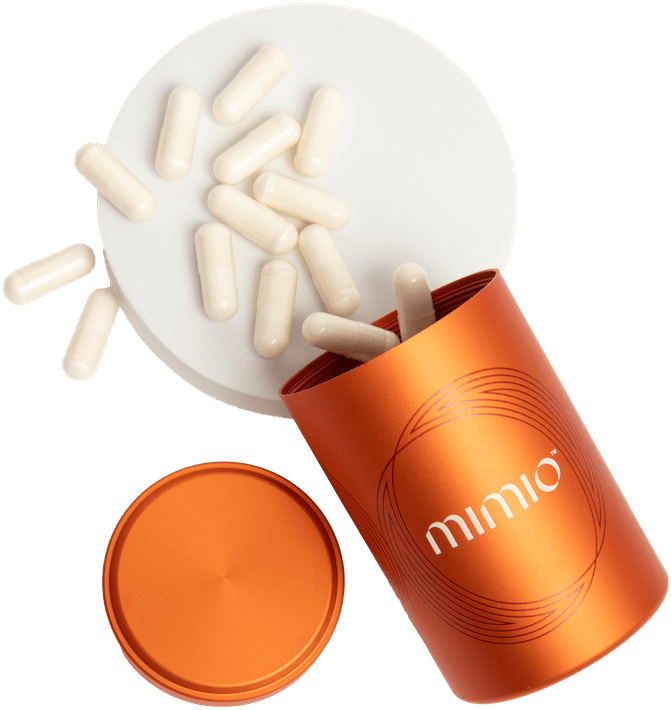
Mimio is the world’s first biomimetic supplement designed to mimic the effects of a 36-hour fast. By recreating the natural metabolic signature of fasting, Mimio activates the same regenerative pathways targeted by interventions like metformin.
Here’s how Mimio compares:
-
AMPK Activation: Like metformin, Mimio stimulates AMPK, promoting energy balance and cellular repair.²
-
Autophagy & Mitophagy: Mimio encourages the recycling of damaged cells and mitochondria, enhancing resilience.⁸
-
NAD+ Support: Mimio sustains NAD+ metabolism, essential for mitochondrial energy production.⁹
-
Daily Usability: Unlike metformin, Mimio is designed for healthy individuals as a safe, daily supplement.
Ready to explore biomimetic longevity? Discover Mimio Biomimetic Cell Care.
Comparing Metformin, Fasting, and Mimio
|
Approach |
Mechanism |
Benefits |
Limitations |
|
Metformin |
Pharmaceutical AMPK activator |
Well-studied, may reduce disease risk |
Prescription only, side effects |
|
Fasting |
Natural trigger of autophagy & AMPK |
Deep cellular renewal |
Difficult for many to sustain |
|
Mimio |
Biomimics fasting metabolome |
Safe, daily longevity support |
Requires supplementation |
This comparison shows how Mimio builds on fasting biology in a way that parallels metformin, without the barriers of pharmaceuticals.
Practical Implications for Longevity
While we await the results of the TAME trial, several takeaways are already clear:
-
Metabolic Health Matters: Whether through metformin, fasting, or biomimetics, supporting metabolic flexibility is key.
-
Combination Strategies Work Best: Lifestyle, diet, and supplementation synergize for stronger results.
-
Natural Options Are Available Today: You don’t have to wait for trial outcomes to support healthy aging. Mimio provides a daily, accessible way to tap into fasting biology now.
The Future of Aging Research After the TAME Trial
The TAME trial is only the beginning. By treating aging as a modifiable condition, it paves the way for a new era of geroscience research.
-
Expanding Beyond Metformin: Other promising compounds, such as rapamycin, senolytics, and NAD+ boosters, are already being considered for large-scale human trials.¹³
-
Combination Therapies: Many experts believe the most effective interventions will combine pharmaceuticals, lifestyle strategies, and biomimetic solutions.
-
Regulatory Implications: If the FDA recognizes aging as a treatable condition, it could transform how drugs are tested and approved, opening doors for dozens of new therapies.
For individuals, this means we are on the cusp of a future where aging itself is viewed not as destiny, but as a biological process we can slow, modify, and potentially reverse.
The Quest to Slow Aging
The TAME trial represents a landmark effort to validate a drug for slowing aging, signaling a shift in how medicine and science view longevity. Metformin may prove to be a valuable tool, but it’s not the only one. Fasting biology, and biomimetic solutions like Mimio already empower us to activate the same pathways for cellular resilience and healthspan.
Whether through pharmaceuticals or natural biomimetics, the science is clear: targeting the root biology of aging is the key to living longer, healthier lives.
Take the next step in your longevity journey: Explore Mimio Biomimetic Cell Care.
References
1. Barzilai, N., et al. (2016). Metformin as a tool to target aging. Cell Metabolism.
2. Jäger, S., et al. (2007). AMP-activated protein kinase (AMPK) action in skeletal muscle. PNAS.
3. Cameron, A. R., et al. (2016). Anti-inflammatory effects of metformin. Diabetes & Metabolism.
4. Gandini, S., et al. (2014). Metformin and cancer risk reduction. Annals of Oncology.
5. Roussel, R., et al. (2010). Cardiovascular benefits of metformin. Diabetes & Vascular Disease Research.
6. Kulkarni, A. S., et al. (2020). Metformin effects on aging biomarkers. Aging Cell.
7. Longo, V. D., & Panda, S. (2016). Fasting, circadian rhythms, and healthspan. Cell Metabolism.
8. Madeo, F., et al. (2019). Autophagy and cellular longevity. Nature Reviews Molecular Cell Biology.
9. Verdin, E. (2015). NAD+ in aging, metabolism, and neurodegeneration. Science.
10. Campbell, J. M., et al. (2017). Metformin use associated with reduced risk of dementia in patients with diabetes: A systematic review and meta-analysis. Journal of Alzheimer’s Disease.
11. Ng, T. P., et al. (2014). Metformin usage and cognitive function among older adults with diabetes. Journal of Alzheimer’s Disease.
12. Bannister, C. A., et al. (2014). Can people with type 2 diabetes live longer than those without? A comparison of mortality in people initiated with metformin or sulphonylurea monotherapy. Diabetes, Obesity and Metabolism.
13. Kennedy, B. K., & Pennypacker, J. K. (2014). Drugs that target aging: The promising pathway of rapalogs, senolytics, and NAD+ boosters. Nature Reviews Drug Discovery.