Aging is shaped by damaged cells, shifting metabolic signals and a gradual decline in the body’s ability to repair itself. One of the most important discoveries in modern longevity science is the role of senescent cells, often called zombie cells. These cells accumulate with age and contribute to inflammation, mitochondrial decline and tissue dysfunction. This has led to a growing interest in senolytics, a category of interventions that help the body clear senescent cells. Many people ask what senolytics are, how they work and whether they can be activated without fasting.
This article explores what senolytics are, how fasting influences them and how biomimetic strategies may offer similar cellular benefits without requiring extended fasting windows.
What Are Senescent Cells and Why They Matter
Senescent cells are cells that have stopped dividing but remain active in the body. Instead of clearing out, they release inflammatory molecules known as the senesecence associated secretory phenotype, or SASP. Chronic SASP signaling contributes to low grade inflammation often described as inflammaging¹⁰. Senescent cells also influence mitochondrial stress, since oxidative damage to mitochondrial DNA accelerates the senescence process¹.
In small amounts, senescence is protective. It helps prevent damaged cells from dividing. Problems arise when senescent cells accumulate faster than the body can remove them. They disrupt tissue function, increase oxidative stress and impair metabolic health.
This is why senolytics are gaining attention. They support the clearance of these dysfunctional cells, helping restore a healthier cellular environment.
What Are Senolytics
Senolytics are compounds or interventions that help remove senescent cells. Senomorphics, by contrast, reduce SASP signaling but do not clear the cells themselves. Senolytics are the focus of most longevity research because they target an upstream driver of aging.
Senolytic activity often intersects with pathways related to mitochondrial repair⁵, NAD metabolism², autophagy⁹ and AMPK activation³. These same pathways are activated during fasting, which is why the conversation about senolytics often overlaps with fasting biology, and the benefits of skipping meals.
How Fasting Influences Senolytic Activity
Fasting promotes a series of repair centered pathways. As nutrient availability declines, insulin drops and AMPK rises³. Autophagy increases, allowing cells to recycle damaged components⁹. Mitochondrial efficiency improves and oxidative stress decreases.
While fasting is not a direct senolytic, it supports the internal conditions that make senescent cell accumulation less likely. Circadian alignment during fasting periods also contributes to metabolic and cellular stability⁸.
Because fasting is powerful but not always practical, convenient, or possible, many individuals look for ways to mimic the beneficial signals of fasting with fewer restrictions. This is where biomimetic approaches come into play.
Decoding Senolytics Beyond Fasting
Traditional fasting is effective but challenging for many people due to health conditions, schedules or individual preference. Biomimetics offer an option for individuals who want to support senolytic adjacent pathways without skipping meals for long periods of time.
The science of biomimetics introduces the principle of replicating beneficial biological states. In longevity science, this means recreating the surge of protective cellular signals seen during fasting. By mimicking metabolic stress in a safe and controlled way, biomimetic interventions may activate similar pathways that influence mitochondrial resilience, oxidative stress response and inflammatory balance.
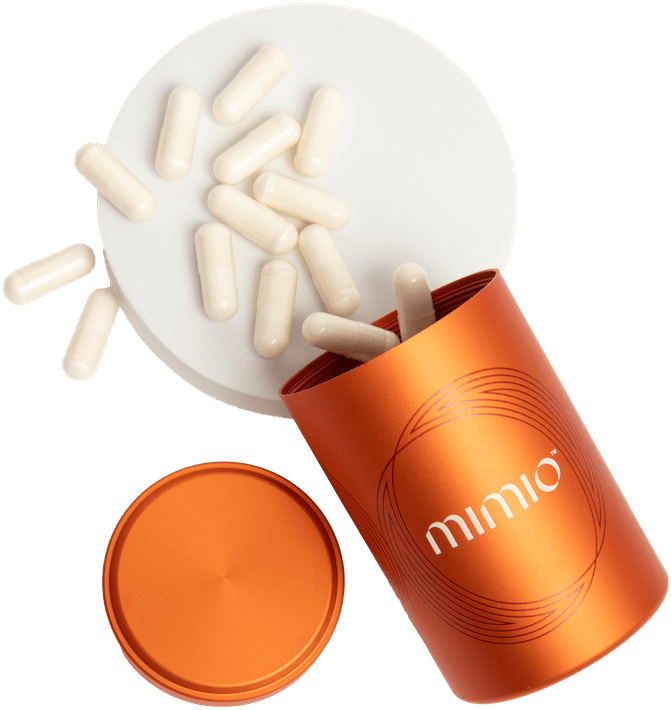
Mimio is one such biomimetic technology. It is designed to recreate key metabolic signals observed during a 36 hour fast, including antioxidant responses, mitochondrial repair and inflammatory regulation. These processes help support a cellular environment where senescent cells are less likely to accumulate. Learn more about Mimio here:
Biomimetic Cell Care
What Is the Best Natural Senolytic
Many people searching for what senolytics are also want natural senolytic-like options. While human research is still developing, several nutrients are studied for their ability to influence cellular stress and senescence related pathways. These include:
- Fisetin
- Quercetin
- Curcumin
- EGCG from green tea
- Resveratrol
These compounds support antioxidant balance⁴, mitochondrial signaling² and inflammatory regulation⁸. Most studies involve higher isolated doses compared to dietary amounts. Individuals seeking consistent support often pair nutrient rich diets with biomimetic formulations that target fasting related repair signals.
What Foods Contain Senolytics
Search trends show high interest in senolytic foods. Many flavonoid rich plants contain molecules examined for senolytic or senomorphic activity.
|
Food |
Key Compound |
Support Pathway |
|
Strawberries |
Fisetin |
Supports antioxidant response |
|
Apples and Onions |
Quercetin |
Influences oxidative signaling |
|
Green Tea |
EGCG |
Supports mitochondrial efficiency |
|
Turmeric |
Curcumin |
Modulates inflammatory pathways |
|
Berries and Grapes |
Resveratrol |
Supports NAD related signaling² |
These foods contribute to a senolytic supportive lifestyle, although dietary amounts are typically lower than levels tested in controlled studies.
Do Senolytics Really Work
In animal studies, senolytics consistently remove senescent cells and improve metabolic and tissue function. Early human trials show promising outcomes, especially regarding reduced inflammatory signaling and improved markers of tissue resilience. Although still emerging, senolytics are considered one of the most promising categories in longevity research.
However, senolytics work best when the core cellular environment is healthy. Mitochondrial quality⁵, NAD levels², inflammation⁸ and metabolic flexibility also influence senescent cell burden. Biomimetic fasting support offers an accessible way to support these upstream factors daily.
Who Should Not Take Senolytics
Because pharmaceutical senolytics are still experimental, safety concerns apply to certain groups:
-
Individuals with immune suppression
-
Pregnant or breastfeeding individuals
-
Those with liver or kidney impairment
-
People on medications that influence clotting or immune response
- Anyone taking high dose senolytic stacks without medical supervision
For most health conscious individuals, supporting natural repair pathways is a more accessible starting point. Fasting, movement, sleep optimization¹² and biomimetic supplementation provide foundational support for metabolic and mitochondrial stability.
Why Clearing Senescent Cells Matters for Longevity
Lower senescent cell burden has been linked to improved energy, better tissue function and slower or even improved biological aging. Senescent cells increase oxidative stress, impair mitochondrial function and accelerate inflammation. Clearing them improves cellular clarity and supports long term resilience.
Supporting mitochondrial health, autophagy and metabolic flexibility helps the body regulate senescence naturally. Biomimetic fasting support offers a daily, approachable way to encourage these pathways.
Explore Mimio Biomimetic Cell Care here: Biomimetic Cell Care
References
-
Shokolenko, I. N., et al. (2009). Oxidative stress induces degradation of mitochondrial DNA. Nucleic Acids Research.
-
Verdin, E. (2015). NAD+ in aging, metabolism, and neurodegeneration. Science.
-
Jäger, S., et al. (2007). AMP-activated protein kinase (AMPK) action in skeletal muscle. PNAS.
-
Murphy, M. P. (2009). How mitochondria produce reactive oxygen species. Biochemical Journal.
-
McCully, J. D., et al. (2017). Mitochondrial transplantation for therapeutic use. Journal of Thoracic and Cardiovascular Surgery.
-
Chang, J. C., et al. (2016). Mitochondrial transplantation in Parkinson’s disease models. Frontiers in Cell and Developmental Biology.
-
Islam, M. N., et al. (2012). Mitochondrial transfer in immune modulation. Nature Medicine.
-
Franceschi, C., & Campisi, J. (2014). Chronic inflammation and age-associated diseases. Journals of Gerontology.
-
Madeo, F., et al. (2019). Mitophagy and cellular longevity. Nature Reviews Molecular Cell Biology.
-
López-Otín, C., et al. (2013). The hallmarks of aging. Cell.
-
Little, J. P., et al. (2010). High-intensity interval training induces mitochondrial biogenesis in humans. Journal of Physiology.
-
Irwin, M. R. (2015). Why sleep is important for health: A psychoneuroimmunology perspective. Annual Review of Psychology.