Energy is often described as a battery you can charge or deplete. In reality, your energy is a biological conversation between two powerful systems inside the body: the microorganisms living in your gut and the mitochondria inside your cells. These two systems work together through a network known as the gut-mitochondria axis. When your microbiome is balanced and thriving, your mitochondria produce cleaner, more efficient energy. When it is disrupted, mitochondrial stress rises, inflammation increases and fatigue becomes more common.
Understanding the gut-mitochondria axis reveals why so many people who focus on longevity and cellular health pay close attention to their microbiome. It also explains why supporting mitochondrial performance is not only about nutrition or movement, but also about cultivating a healthy microbial ecosystem. The microbiome health axis provides a direct link between digestion, metabolism and long-term energy resilience.
This article explores how gut health influences mitochondrial function, how microbial metabolites shape cellular energy and how biomimetic strategies may support both systems without requiring extreme diets or fasting windows.
Why the Gut-Mitochondria Axis Matters for Energy and Longevity
Your microbiome is composed of trillions of microorganisms that play important roles in digestion, immunity, inflammation and nutrient absorption. These microbes produce metabolites that travel throughout the body and shape mitochondrial behavior. Mitochondria generate ATP, the universal energy currency of the cell, and depend on signals from the gut to regulate oxidative stress, repair pathways and metabolic flexibility.
Research shows that mitochondrial decline is associated with oxidative damage to mitochondrial DNA¹, reduced NAD availability², impaired AMPK signaling³ and lower autophagy activity⁹. Many of these processes are directly influenced by microbial metabolites. When the microbiome shifts toward imbalance, mitochondrial stress increases, creating a feedback loop that accelerates fatigue and cellular aging.
A healthy gut supports healthier mitochondria, and healthy mitochondria support tissues that maintain a balanced gut. This bidirectional ecosystem forms the foundation of the microbiome health axis.
How the Gut Communicates With Your Mitochondria
The gut communicates with mitochondria through several pathways:
Short-chain fatty acids created from fiber fermentation regulate inflammation and enhance mitochondrial energy production.
Microbial enzymes convert bile acids into signaling molecules that influence metabolism and AMPK activity³.
A balanced microbiome reduces inflammatory cytokines⁸, creating conditions that support mitochondrial repair.
Gut bacteria influence precursors involved in NAD metabolism², which plays a central role in mitochondrial resilience.
The microbiome follows daily circadian cycles that mirror the body's internal clock⁸. When these rhythms are disrupted, mitochondrial energy regulation is impaired.
Together, these pathways demonstrate how connected the microbiome health axis is to cellular energy production.
Mitochondrial Stress Begins in the Gut
An imbalanced gut can produce toxins that harm the gut lining and increase permeability. When inflammatory compounds enter circulation, they reach the mitochondria and accelerate oxidative stress, DNA damage and metabolic rigidity. Mitochondria respond by generating reactive oxygen species⁴, which further influence microbial composition, creating a cycle of metabolic stress.
This explains why digestive issues, brain fog and fatigue often appear together.
How Diet Influences the Gut-Mitochondria Axis
Diet is one of the most powerful tools for supporting the microbiome health axis. Certain foods increase microbial diversity while others contribute to inflammation and mitochondrial stress.
Foods That Strengthen the Gut-Mitochondria Axis
|
Category |
Examples |
Benefit |
|
Fermented Foods |
Yogurt, kefir, kimchi, sauerkraut |
Introduce beneficial microbes |
|
High-Fiber Plants |
Legumes, berries, oats, sweet potatoes |
Feed beneficial bacteria |
|
Polyphenol Sources |
Green tea, olive oil, berries |
Reduce inflammation and support mitochondria |
|
Healthy Fats |
Avocado, nuts, olive oil |
Support gut lining health and reduce oxidative stress |
|
Prebiotic Sources |
Garlic, onions, asparagus, bananas |
Increase microbial diversity |
Foods That Disrupt the Microbiome Health Axis
|
Category |
Examples |
Effect |
|
Refined Sugars |
Candy, soda, pastries |
Feed inflammatory bacteria |
|
Artificial Additives |
Preservatives, artificial sweeteners |
Disrupt microbial balance |
|
Ultra-Processed Foods |
Low-fiber packaged foods |
Reduce microbial diversity |
|
Alcohol |
Heavy intake |
Damages gut lining and immune balance |
|
Processed Oils |
Deep-fried and industrial seed oils |
Increase inflammation |
How Microbial Metabolites Fuel Mitochondrial Energy
Microbial metabolites act as chemical messengers that influence inflammation, metabolism and mitochondrial performance.
Key Metabolites That Support Mitochondrial Health
|
Microbial Metabolite |
Primary Role |
Influence on Mitochondria |
|
Butyrate |
Anti-inflammatory fuel |
Enhances energy production |
|
Propionate |
Metabolic signaling |
Supports glucose regulation |
|
Acetate |
Gut barrier support |
Modulates lipid metabolism |
|
Urolithins |
Produced from polyphenols |
Activates mitophagy pathways⁹ |
|
Indoles |
Derived from tryptophan |
Regulates oxidative stress |
When these metabolites are present in balanced amounts, mitochondria operate with greater efficiency, producing cleaner energy.
Fasting, the Microbiome and Mitochondrial Synchronization
Fasting influences the gut-mitochondria axis by increasing microbial diversity, enhancing metabolic flexibility and activating autophagy⁹. Circadian-focused fasting further aligns microbial rhythms with mitochondrial cycles⁸.
However, extended fasting is not accessible for everyone. Biomimetic alternatives offer a path to mimic fasting signals without strict time windows.
Biomimetic Approaches to Supporting the Gut-Mitochondria Axis
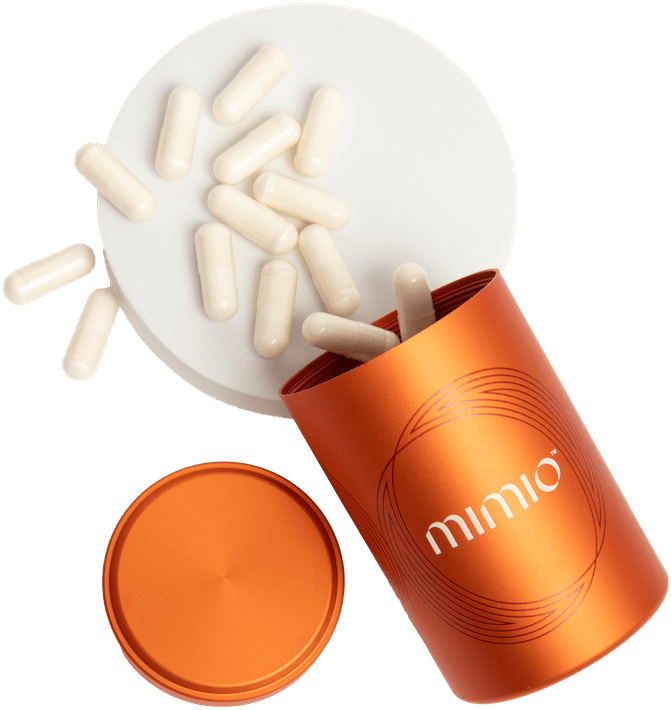
Biomimetics replicate beneficial biological states in the body. Mimio is designed to mimic the metabolic signature of a 36-hour fast using a precise set of fasting-derived molecules that support mitochondrial pathways such as antioxidant balance, autophagy⁹ and inflammatory modulation⁸.
Though not a microbiome supplement, Mimio improves mitochondrial efficiency, which contributes to a more balanced internal environment that supports beneficial microbes.
Explore Mimio Biomimetic Cell Care here: Biomimetic Cell Care
FAQs
How Can I Improve My Gut Microbiome
Improving the gut microbiome strengthens microbial diversity and enhances mitochondrial ATP production.
Simple ways to improve your gut microbiome include:
- Increase prebiotic fiber
- Add fermented foods daily
- Reduce sugar intake
- Improve sleep consistency¹²
- Increase polyphenol intake
- Manage stress
- Eat whole, minimally processed foods
- Limit alcohol
How Do I Tell If My Gut Microbiome Is Bad
Gut imbalance affects digestion, immunity and mitochondrial energy.
Common Signs of Microbiome Imbalance
- Bloating or irregular digestion
- Unexplained fatigue
- Skin irritation
- Brain fog
- Sugar cravings
- Frequent illnesses
- Poor recovery after exercise
Microbiome Imbalance Severity Chart
|
Severity Level |
Typical Symptoms |
System Impact |
|
Mild |
Bloating, cravings, gas |
Metabolite imbalance |
|
Moderate |
Fatigue, skin irritation, irregularity |
Rising inflammation |
|
Significant |
Persistent GI symptoms, brain fog |
Mitochondrial stress load |
|
Severe |
Chronic GI dysfunction, immune disruptions |
Whole system energy deficit |
How Do You Reset Your Gut Biome
Resetting the gut biome means restoring conditions that allow beneficial microbes to thrive.
Five-Step Gut Reset Framework
-
Remove irritants such as processed sugars and additives
-
Rebuild with prebiotic fibers
-
Repopulate with fermented foods or probiotics
-
Repair the gut lining
-
Reinforce mitochondrial pathways such as NAD metabolism² and autophagy⁹
Daily Gut Reset Checklist
Daily Gut Reset Checklist
|
Routine |
Actions |
|
Morning |
Hydrate before eating |
|
Light movement |
|
|
Consume a polyphenol source such as green tea |
|
|
Midday |
Fiber-rich meal |
|
Fermented food serving |
|
|
Limit processed sugars |
|
|
Evening |
Finish eating 2 to 3 hours before bed |
|
Prioritize sleep |
|
|
Gentle relaxation |
Is It True That 70 Percent of the Immune System Is in the Gut
Yes. About seventy percent of immune cells reside in the gastrointestinal system. This explains why microbiome health profoundly shapes systemic inflammation, mitochondrial stress and overall resilience.
A healthy gut produces metabolites that regulate immune balance while supporting mitochondrial oxidative stability.
The Microbiome Health Axis and Metabolic Flexibility
Metabolic flexibility is the ability to shift between fuel sources. Beneficial bacteria produce metabolites that support mitochondrial adaptation, resulting in:
- Reduced oxidative stress
- Clearer and steadier energy
- Better endurance
- More stable blood sugar regulation
- Faster recovery after exertion
Mimio supports mitochondrial pathways that complement microbiome-driven improvements in metabolic flexibility.
Comparison Table: Microbiome and Mitochondria Stress Signals
|
System |
Early Stress Signs |
Advanced Stress Signs |
|
Microbiome |
Bloating, cravings, irregularity |
Leaky gut, chronic inflammation |
|
Mitochondria |
Fatigue, brain fog, slow recovery |
Oxidative overload, metabolic rigidity |
|
Shared Signals |
Immune changes, circadian disruption |
Whole-body energy decline |
Microbiome Diversity vs Energy Output (Illustrative)
|
Microbiome Diversity Score |
Energy Output |
Notes |
|
Low |
Low |
High inflammation, low short-chain fatty acid production |
|
Moderate |
Moderate |
Some mitochondrial efficiency present |
|
High |
High |
Strong microbial metabolite output |
|
Elite |
Very High |
Exceptional metabolic flexibility |
Why the Gut-Mitochondria Axis Matters for Healthy Aging
Mitochondria sit at the center of energy, inflammation and cellular repair. When they are supported through microbial diversity and metabolic stability, the body produces cleaner energy and ages more gracefully. The microbiome health axis provides a powerful framework for understanding how gut health shapes long-term vitality.
By supporting your gut, you support your mitochondria. By supporting your mitochondria, you support your longevity.
References
-
Shokolenko, I. N., et al. (2009). Oxidative stress induces degradation of mitochondrial DNA. Nucleic Acids Research.
-
Verdin, E. (2015). NAD+ in aging, metabolism and neurodegeneration. Science.
-
Jäger, S., et al. (2007). AMP-activated protein kinase (AMPK) action in skeletal muscle. PNAS.
-
Murphy, M. P. (2009). How mitochondria produce reactive oxygen species. Biochemical Journal.
-
McCully, J. D., et al. (2017). Mitochondrial transplantation for therapeutic use. Journal of Thoracic and Cardiovascular Surgery.
-
Chang, J. C., et al. (2016). Mitochondrial transplantation in Parkinson’s disease models. Frontiers in Cell and Developmental Biology.
-
Islam, M. N., et al. (2012). Mitochondrial transfer in immune modulation. Nature Medicine.
-
Franceschi, C., & Campisi, J. (2014). Chronic inflammation and age-associated diseases. Journals of Gerontology.
-
Madeo, F., et al. (2019). Mitophagy and cellular longevity. Nature Reviews Molecular Cell Biology.
-
Nicholls, D. G., & Ferguson, S. J. (2013). Bioenergetics. Academic Press.
-
Hood, D. A., et al. (2019). Regulation of mitochondrial biogenesis in skeletal muscle. Cell Metabolism.
Irwin, M. R. (2015). Why sleep is important for health. Annual Review of Psychology.